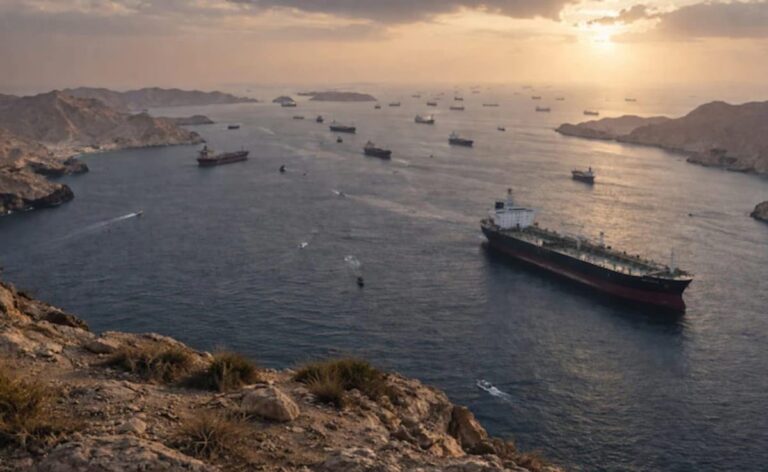

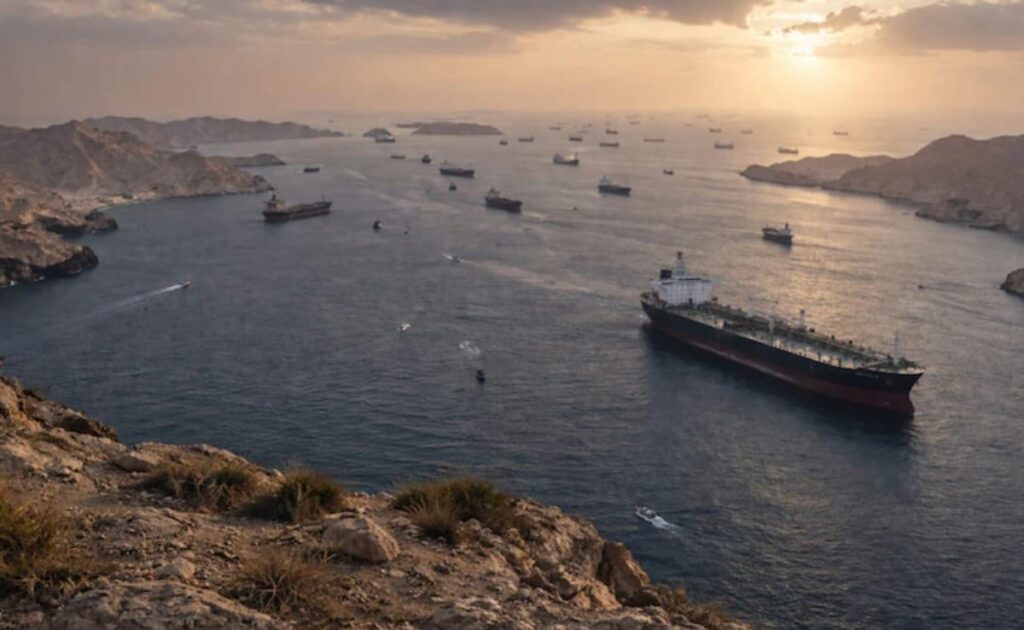
On Saturday, Iran’s military authorities once again asserted control over the Strait of Hormuz, reversing an earlier reopening of the vital shipping route just hours after commercial vessels resumed passage.
Saturday Telegraph reports that the renewed restriction has heightened uncertainty in global markets and cast doubt on recent optimism expressed by Donald Trump, who had suggested that a peace agreement to end the ongoing conflict involving the United States, Israel, and Iran was imminent.
Recall that Tehran had initially reopened the strait following a ceasefire agreement in Lebanon aimed at halting hostilities between Israel and Hezbollah.
The move briefly eased global concerns, as the waterway is responsible for transporting roughly one-fifth of the world’s oil and liquefied natural gas.
However, the tensions resurfaced after Washington insisted that its naval blockade of Iranian ports would remain in place until a broader agreement is reached. In response, Iranian authorities moved to tighten control over the strait again
According to Iranian state television, “Control of the Strait of Hormuz has returned to its previous status” and “is under strict management and control of the armed forces,” blaming the continued US blockade.
READ ALSO:
Despite the uncertainty, maritime tracking data indicated that several vessels attempted to navigate the narrow passage, with some ships reportedly identifying as Indian or Chinese to signal neutrality. Others, however, reversed course amid the fluctuating situation.
By Saturday morning, some tankers had successfully transited the route, while others aborted journeys after loading cargo in Gulf ports.
The developments come as a fragile two-week ceasefire in the broader conflict approaches its deadline, with just days remaining. The war, which began with coordinated strikes by the United States and Israel on February 28, has since escalated across the region, drawing in multiple actors, including Hezbollah.
Even so, Trump maintained a positive outlook on negotiations.
Speaking to AFP, he said “we’re very close to having a deal,” adding that there were “no sticking points at all” left with Tehran.
At a separate event, he also claimed progress on nuclear negotiations, stating, “We’re going to get it by going in with Iran, with lots of excavators.”
Iranian officials, however, have firmly rejected suggestions that their enriched uranium stockpile would be handed over.
“Iran’s enriched uranium is not going to be transferred anywhere,” said foreign ministry spokesman Esmaeil Baqaei.
“Transfer of Iran’s enriched uranium to the US has never been raised in negotiations.”
Diplomatic efforts to resolve the crisis are ongoing, with Pakistan emerging as a key mediator. Military and political leaders from Islamabad have engaged counterparts across the region, while another round of talks is expected in the coming days.
Meanwhile, Iran has reopened parts of its airspace for international flights, although restrictions on internet access within the country remain in place, with a prolonged blackout now stretching to nearly two months.
Key issues — including Iran’s nuclear programme and the status of the Strait of Hormuz — remain unresolved, leaving the outcome of negotiations uncertain.