The Lagos State Government has generated a total revenue of ₦2.6 trillion in 2025, representing a 16 per cent increase from the ₦2.3 trillion recorded in 2024, as the state intensified fiscal reforms, expanded its tax base and strengthened public financial management.
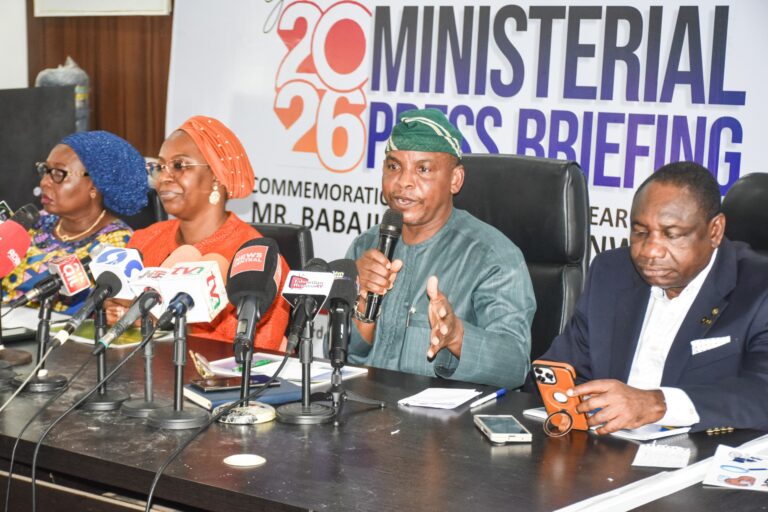
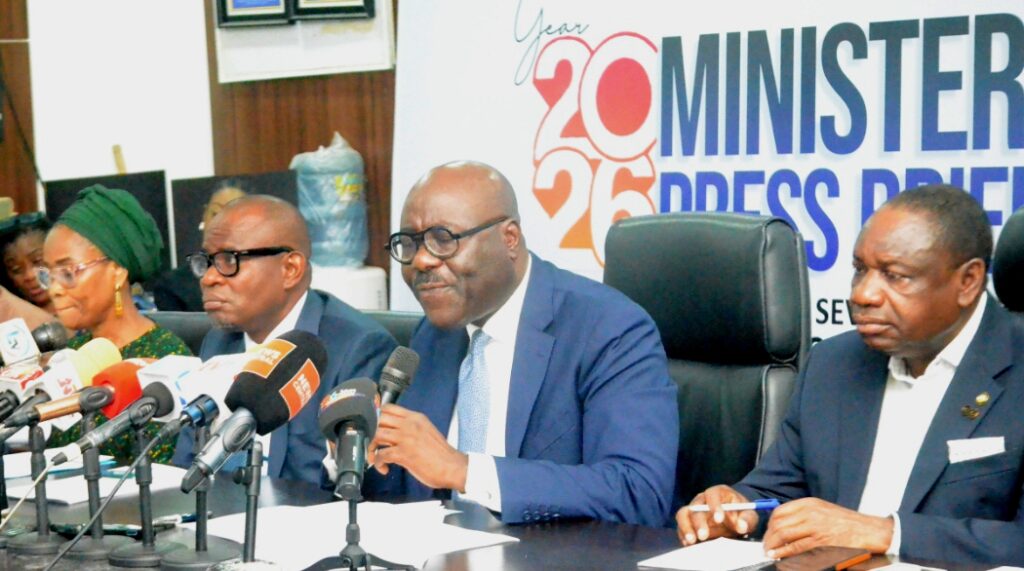
Commissioner for Finance, Mr Mryomi Oluyomi, disclosed this on Friday during the 2026 Ministerial Press Briefing held at the Bagauda Kaltho Press Centre, Alausa, to mark the seventh year of Governor Babajide Sanwo-Olu’s administration.
Oluyomi said the state’s Internally Generated Revenue (IGR) rose from ₦1.58 trillion in 2024 to ₦1.87 trillion in 2025, while tax revenue collection increased significantly from ₦678.13 billion in 2023 to ₦1.04 trillion in 2024 and further climbed to ₦1.44 trillion in 2025.
According to him, the Lagos Internal Revenue Service surpassed the ₦1 trillion revenue mark for the first time in 2024 due to digital reforms, improved tax compliance and enhanced electronic payment systems.
He explained that several Ministries, Departments and Agencies (MDAs) had been migrated to the Lagos Revenue Portal, while the e-Tax platform was upgraded to accommodate stamp duties, capital gains tax integration, geo-tagging and expatriate tracking.
The commissioner said Lagos maintained strong fiscal performance despite prevailing economic challenges, recording an 85 per cent overall revenue performance in 2025 and meeting all debt obligations without default.
Oluyomi further disclosed that the state issued a ₦230 billion bond, which he described as the largest by any sub-national government in Nigeria, at a fixed rate of 16.25 per cent to finance critical infrastructure projects.
He listed some of the projects financed through bonds and alternative funding arrangements including the Opebi Link Bridge, Blue Line Rail Phase II from Mile 2 to Okokomaiko, the Lagos Central Food Security and Logistics Hub in Epe, Massey Children’s Hospital, as well as housing projects in Sangotedo, Egan-Igando and Epe.
On debt sustainability, the commissioner stated that Lagos maintained a debt-service-to-revenue ratio of 19.2 per cent, below the World Bank threshold of 30 per cent, while the state’s debt-to-GDP ratio stood at 4.11 per cent.
He added that the state continued to enjoy favourable credit ratings from local and international agencies, with Fitch Ratings reaffirming Lagos’ AAA national long-term rating outlook.
Speaking on procurement reforms, Oluyomi said 169 MDAs had been onboarded onto the state’s electronic procurement platform to improve transparency, accountability and efficiency in governance.
He said the Lagos State Public Procurement Agency processed 6,590 approval requests within the review period and conducted post-procurement reviews for 161 MDAs to ensure compliance with procurement regulations and spending efficiency.
According to him, the agency also monitored 252 capital projects across the state to ensure compliance with contractual specifications and quality standards.
The commissioner disclosed that 1,791 service providers, 1,431 goods suppliers and 1,394 contractors had been registered on the digitised procurement portal to deepen competitiveness and improve service delivery in public contracting.
Oluyomi also revealed that the Lagos State Valuation Office conducted an extensive valuation of public assets in line with International Public Sector Accounting Standards (IPSAS).
He said assets valued in 2025 alone amounted to over ₦3.43 trillion, covering roads, bridges, walkways, waterfront projects, transportation infrastructure and energy facilities.
According to him, cumulative asset valuation carried out by the state since the adoption of IPSAS in 2016 had risen to over ₦7.59 trillion.
He noted that recent valuation exercises covered government assets in the health, education, transportation, water resources and infrastructure sectors, including facilities under the Lagos Metropolitan Area Transport Authority and the Ministry of Waterfront Infrastructure Development.
Oluyomi added that the government had continued verification and tagging of assets across MDAs to strengthen asset tracking and improve financial reporting.
The commissioner also disclosed that Lagos was advancing plans for the Lagos International Financial Centre and the proposed Lagos Wealth Fund as part of efforts to ensure long-term economic sustainability and investment growth.
He reaffirmed the commitment of the Sanwo-Olu administration to transparency, accountability and sustainable economic development under the THEMES+ agenda.
The ministerial briefing was attended by the Special Adviser on Taxation and Revenue, Mr. Ọpẹ́yẹmí Ogungbo, alongside directors in the Ministry of Finance.