




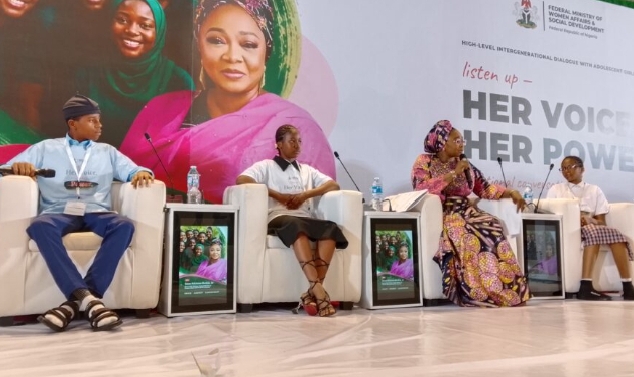
The Federal Government has activated strategic National Costed Action Plans aimed at ending violence against children, child marriage and all forms of exploitation against women and girls as part of broader efforts to strengthen social protection and inclusive development across the country.
The Minister of Women Affairs, Imaan Suleiman Usman, made this known at the Caregivers National Summit held in Abuja to commemorate the 2026 National Children’s Day. The minister said the frameworks were designed with measurable targets, defined timelines and sustainable financing mechanisms to ensure effective implementation and accountability.
It also disclosed that, in collaboration with relevant Ministries, Departments and Agencies, it is leveraging the Nigeria Education Data Infrastructure (NEDI) to digitise social development data for real-time tracking of educational gaps, vulnerabilities nd exclusion indicators.
According to the government, the initiative is intended to ensure that no Nigerian child or vulnerable household remains excluded from national development programmes. The government noted that Nigeria currently faces a dual demographic reality of a rapidly expanding youth population and a growing elderly population, revealing that over 6.5 million Nigerians are now aged 65 years and above.
It warned that the development places increasing pressure on national care systems and social support structures. The summit also drew attention to the rising cases of violence and inequality affecting women and girls, with statistics showing that nearly 30 per cent of Nigerian women between the ages of 15 and 49 have experienced physical or sexual violence.
She said: “Child marriage continues to threaten the future of many young girls, with approximately one in three married before the age of 18.” Suleiman Usman stressed that the figures represent interrupted dreams, lost opportunities and an urgent need for collective national action.
She observed that caregiving responsibilities, including raising children, supporting persons with disabilities and caring for the elderly, continue to fall disproportionately on women and adolescent girls.









