I read with genuine interest an article with the above title in the Wednesday, March 11 edition of The Sun Newspaper, wherein the author, one Tayo Williams, clinically dissected President Bola Tinubu’s dilemma and unnerving silence regarding his choice candidate for the Lagos State governorship seat with barely 10 months to the election.
The author was right to assert that, beyond his re-run election headache, Mr. President is faced with an even more daunting headache, which is about whom to support among the numerous suitable candidates available to him. Yes, he is spoilt for choice, but the president, more than anyone else, understands that one wrong decision or miscalculation can topple an otherwise enduring political empire.
Fittingly, the author describes Mr. President’s current situation as a “cliffhanging juncture that Yorubas proverbially refer to as ‘orita meta to n damu onile, to n damu alejo’ (the three-way crossroads or T-Junction that confuses both the landlord and the guest).” I cannot agree less. In backing a candidate for Lagos 2027, Mr. President has his work cut out for him.
What is paramount, and which should top all considerations, is that whoever gets his nod should embody qualities like loyalty, capacity, popularity, competence, and the political astuteness that can conveniently deliver Lagos to the All Progressives Congress, APC, during the presidential and general elections.
The article spotlights six potential candidates – Obafemi Hamzat, incumbent deputy governor; Hakeem Muri Okunola, Principal Private Secretary to the President; Femi Gbajabiamila, Chief of Staff to the President; Dr. Tunji Alausa, the Minister of Education; Senator Tokunbo Abiru, and Mudashiru Obasa, Speaker of the Lagos State House of Assembly. Former Governor Akinwunmi Ambode got a fleeting mention, but his candidature was seen as dead on arrival due to the circumstances that led to his being denied a second-term ticket.
I will start with Hamzat. As cosmopolitan and educated as they come, Dr. Hamzat has garnered several decades of political experience at the state and federal levels, and he would have been a natural for the seat, but he comes short on two fronts – glaring lack of acceptability by the political class because of his perception as an outsider who was imposed on more established politicians due to his late father’s influence. More importantly, Dr. Hamzat is widely seen as never loyal to anyone except his blinding ambition to be governor.
Whilst nobody begrudges him this ambition, Lagos politics thrives on loyalty to the party hierarchy rather than self. In 2014, when party elders unanimously decided to support Ambode during the governorship primaries, Hamzat was one of the candidates who refused point-blank to comply and went ahead to contest in the primary, which he predictably lost. He was so bitter with the outcome that he abandoned Lagos and took up an appointment as a Special Adviser to the then Minister of Works, Power, and Housing.
Hamzat returned four years later when the same party elders, whom he had defied before, decided to make him the running mate to Babajide Sanwo-Olu. He is in his second term as deputy governor. Even as deputy governor, Hamzat still bared his fangs, when Speaker Obasa was illegally removed from office by some members of the state Assembly against the wishes of party leaders. Despite several moves by the president to reconcile the disgruntled lawmakers, the deputy governor and his principal were allegedly fanning the embers of discord until reason prevailed and Obasa was returned.
So, apart from the shortcomings referenced in the article under review, Dr. Hamzat falls very short on loyalty and popularity. I concur totally with the author’s analysis and description of Gbajabiamila as an Abuja politician who does not have a broadbased relationship with the rank and file in Lagos politics. Meanwhile, Surulere, which he represented in the House of Representatives from 2003 to 2019, when he became Speaker, is merely a tiny geographical fraction of Lagos.
Dynamics of Nigerian politics have changed, and only a popular candidate can deliver the votes, not one unilaterally imposed on a discerning populace
Beyond that, what can Gbajabiamila point to as milestone projects that he attracted to Lagos for the benefit of the entirety of Lagosians, not just his Surulere constituents? As the author concluded, Gbajabiamila, who is from Lagos Central, which produced former Governors Babatunde Fashola and Sanwo-Olu, should never even be in consideration, except Mr. President does not believe in equity and justice. Similarly, Muri-Okunola, very urbane and exposed, also a thorough ‘Lagos Boy’ with strong family heritage, is from Lagos Central and cannot, in good conscience, be supported for the governorship seat. Add to that the fact that he has always been seen as Mr. President’s ‘Errand Boy’, who was lucky to be infused into the civil service, where he rose to become Permanent Secretary and later, Head of Service.
Though his loyalty to the President has never been questioned, Muri-Okunola has never played politics. For all one cares, he might not even be a card-carrying member of the APC. He cannot pass the smell test of competence, political astuteness, and the popularity required to win an election.
One person who would have been a perfect shoo-in for the clamour by Lagos East to allow it to complete its second term that was denied Ambode would have been Senator Abiru. Now in his second term as senator, Senator Abiru has not parlayed his successful technocratic background into becoming a political force in the state, a factor that sticks out like a malignant sore thumb whenever his name pops up in discussions around Governor Sanwo-Olu’s successor.
Lagos East, which he represents, extends from Somolu, Kosofe, to as far as Ibeju-Lekki and Epe, but Senator Abiru is known as the ‘Ikorodu Senator’ because some of his activities are concentrated in Ikorodu. Another person from this zone is Dr. Alausa, who, as rightly noted, is a complete newbie in Lagos politics.
Yes, he is urbane and successful, but these factors are not enough to win a hotly contested election like the one Lagos 2027 is shaping up to be. An Alausa as a governorship candidate would be akin to fielding the least experienced reserve player in a team in a World Cup final game.
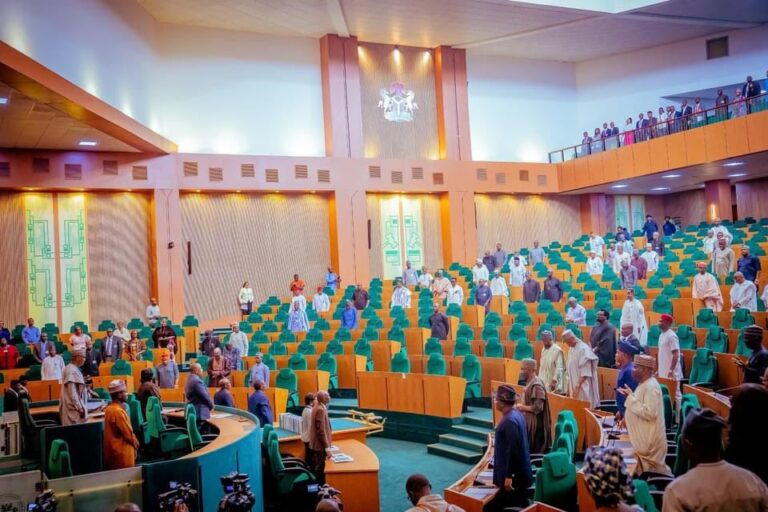
This is not only a recipe for disaster; it will sound a death knell on APC’s stronghold on Lagos. As noted in the article, Lagos West has every reason to stake a claim to the governorship seat because President Tinubu remains the only governor to have come from the zone since 1999. Speaker Obasa, who has been oiling the Lagos West structure for the past several years, is indeed a personality whose qualities should be given a closer look.
Obasa is an enigmatic Lagos politician who has won hardfought elections from one of the toughest and most populous constituencies in the House of Assembly, a record six times. He must be doing something right to keep winning elections for himself and his party over the past two decades. He is tested and trusted. A party man to the core, even when he tried to aspire for a higher political seat and was told by the party leaders to remain in Lagos, he complied without question.
Personally, I think that Obasa ticks the boxes of competence, loyalty, exposure, political astuteness, and capacity; the kind of foot-soldier that can be sent to the warfront, and you can be sure that he will shed blood rather than abdicate. The major downside to an Obasa candidacy that has often been pointed out is that he lacks a Corporate Nigeria appeal and network. I beg to differ. We cannot all be cut from the same cloth. No two politicians are like two peas in a pod. Everyone has their distinct quality. What Obasa purportedly ‘lacks’ as a ‘non-technocrat’, he makes up for as a grassroots politician and widely-travelled parliamentarian.
It is noteworthy that he was recently appointed as a SubNational Representative on the Executive Committee of the Commonwealth Parliamentary Association African Region. In his third term as Speaker of Nigeria’s most important state, Obasa is one of Nigeria’s most experienced lawmakers who has promulgated policies that have turned Lagos into an economic powerhouse and helped to enthrone a megacity that is welcoming for investors and tourists alike. On the flipside, two Christians (Ambode and Sanwo-Olu) have ruled Lagos since 2015 consecutively.
The Muslims, who constitute a major voting bloc, want their adherent as governor. And they deserve it for staying by the party even when it seemed they did not matter in the context of things. There is no gainsaying, therefore, that Lagos is critical to Mr. President’s political survival and legacy. But it is worth reminding him that the dynamics of Nigerian politics have changed, and only a popular candidate can deliver the votes, not one unilaterally imposed on a discerning populace.