
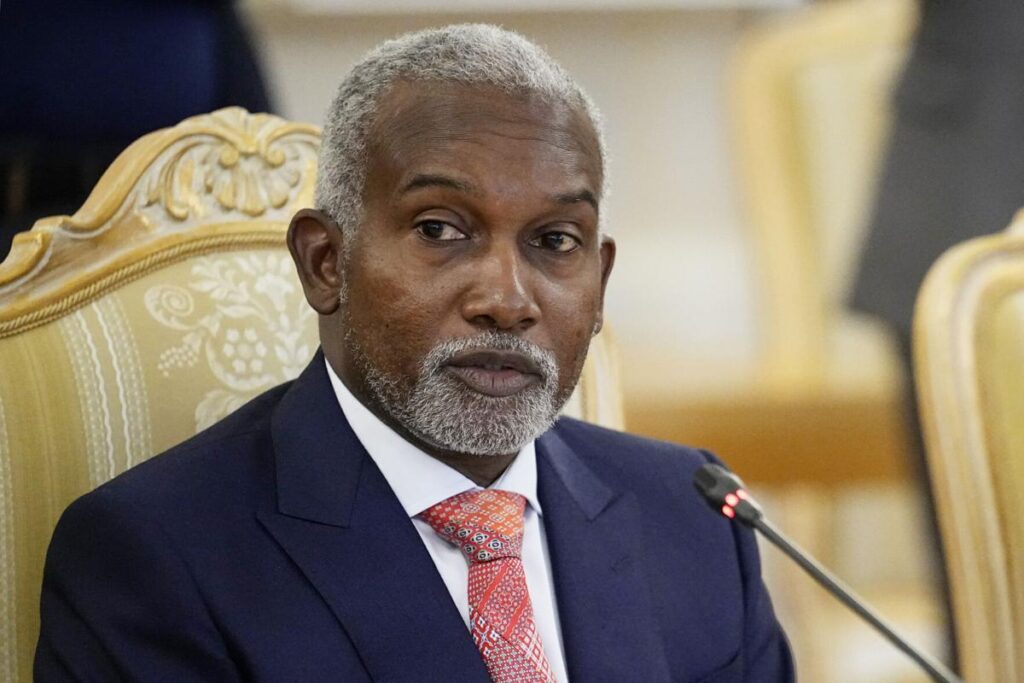
Nigeria’s Minister of Foreign Affairs, Yusuf Tuggar, has urged oil and gas producers in the Gulf region to see Nigeria as a strategic partner rather than a competitor, particularly in efforts to diversify global energy supply during crises.
Tuggar made this call on Wednesday while speaking on the implications of ongoing tensions in the Middle East.
According to him, disruptions caused by the conflict involving Iran have exposed vulnerabilities in global energy supply routes and highlighted the need for broader cooperation among oil-producing nations.
The conflict has affected shipments moving through the Strait of Hormuz, a key corridor responsible for transporting roughly one-fifth of the world’s oil supply.
The instability has forced several exporters to halt shipments, contributing to a surge in global oil prices.
Tuggar said Nigeria’s large but underdeveloped oil and gas reserves could provide an alternative source of hydrocarbons for Gulf producers seeking to spread their supply risks.
READ ALSO:
“It’s in line with what we’ve always advocated – that countries which might otherwise consider us competitors should partner with us and invest so they can diversify their market share, working with us,” he said.
Tuggar noted that the country’s production levels have improved in recent years, adding that Nigeria’s oil output has risen to about 1.7 million barrels per day from approximately 1.4 million barrels per day when Bola Tinubu assumed office in 2023.
According to him, increased capital investment in oil fields and pipeline infrastructure could help the country expand production further.
Some industry observers believe the escalating tensions involving the United States, Israel and Iran could cause Gulf countries to postpone potential investments in African energy projects.
However, Tuggar suggested that the opposite could also happen if Gulf producers seek more diversified supply partnerships.
“It could make them want to work with countries like Nigeria that are rich in gas and oil … to diversify market share for the benefit of both countries, or they could hold back,” he told Reuters.
Nigeria has also taken steps to strengthen economic ties with Gulf countries. In January, the country signed a Comprehensive Economic Partnership Agreement with the United Arab Emirates, a deal that officials say is expected to increase trade flows and attract greater investment.
Tuggar also acknowledged that rising global oil prices have affected Nigeria’s economy, especially because the country still imports large quantities of refined petroleum products. Higher oil prices, he explained, tend to increase the cost of transportation and food.
He noted that these pressures become particularly noticeable during Ramadan, when consumption levels typically rise.
However, the foreign minister expressed optimism that Nigeria’s expanding domestic refining capacity would help the country better manage future supply disruptions.
The privately owned Dangote Refinery is currently operating at its nameplate capacity of 650,000 barrels per day, a level expected to meet most of Nigeria’s domestic fuel needs.
Tuggar also stressed that global demand for oil is unlikely to decline significantly in the near future.
“Oil will remain ‘relevant for many years to come; at the moment the world consumes about 105 to 106 million barrels per day.
“I don’t see that changing much anytime soon, so we need to work together so we have enough hydrocarbons available,” Tuggar added.