

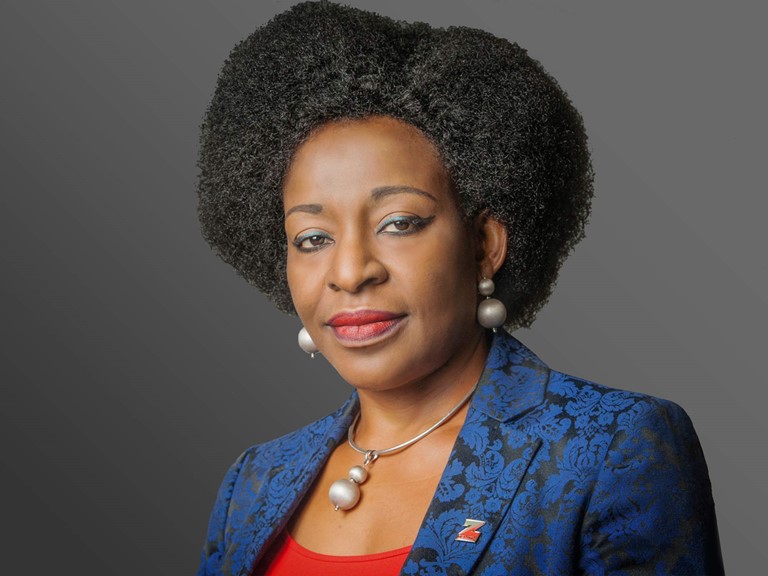
Nigeria’s ambition to expand its footprint in global trade may depend heavily on women entrepreneurs, the Executive Director and Chief Executive Officer of the Nigerian Export Promotion Council, Nonye Ayeni, has said.
Ayeni stated this in Abuja on Tuesday during her welcome address at the Women Exporters Conference, where she disclosed that despite Nigeria’s vast resource base and entrepreneurial strength, the country still commands only a marginal share of global exports.
“Ladies and gentlemen, non-oil export remains pivotal to sustainable and inclusive economic growth, especially in a country like Nigeria that has long depended on oil as a major source of revenue,” she said.
She painted a stark picture of Nigeria’s position in global trade, noting that out of the $24.5tn global merchandise exports recorded in 2024, Africa accounted for just 3.5 per cent, while Nigeria contributed only 0.26 per cent.
“Considering that Nigeria’s GDP is about $290bn with over 220 million people, there is still a gap. However, that gap represents opportunity. If Nigeria moves even modestly within global trade, the impact on businesses and on the economy will be significant,” Ayeni said.
The NEPC boss, however, said recent data showed encouraging progress, revealing that Nigeria recorded its highest-ever non-oil export performance in 2025.
“In 2025, Nigeria recorded the highest value of non-oil exports to the tune of $6.1bn. We also recorded the highest volume of non-oil exports at 8.02 million metric tonnes. These are the highest in the history of the country and since the Council was established,” she stated.
According to her, the achievement reflects policy direction under the administration of Bola Ahmed Tinubu, combined with targeted interventions by the Council and the resilience of exporters.
“These gains are attributable to the Renewed Hope Agenda of His Excellency, President Bola Ahmed Tinubu, the policy thrust of the Honourable Minister of Industry, Trade and Investment, and the hard work and dedication of our exporters, particularly SMEs,” she added.
Ayeni stressed that small and medium enterprises remain the backbone of Nigeria’s economy, accounting for about 96 per cent of businesses, while women alone make up roughly 40 per cent of that segment.
“When we narrow this further, we come to women. Women make up about 40 per cent of SMEs in Nigeria. They are building businesses, creating value, and holding key positions across the export value chain,” she said.
She emphasised that inclusive economic growth cannot be achieved without women, linking their participation directly to national development goals.
“When we talk about economic diversification, job creation, and inclusive growth, we are talking about women. Because you cannot achieve inclusive growth without them,” she stated.
The NEPC boss outlined several initiatives aimed at strengthening women-led businesses, including the establishment of dedicated export desks for women across all 36 states and extensive training programmes.
“Did you know that in 2025 alone, NEPC conducted 728 capacity-building programmes across all states and Abuja? These trainings covered packaging, labelling, export documentation, quality standards, and more. In all, we impacted over 97,000 people across the export value chain,” she said.
She further disclosed that the Council supported exporters with international certifications critical for accessing global markets.
“Last year, we provided 210 international certifications, fully paid for by the Council, and about 50 per cent went to women. These include FDA, HACCP, Halal, ISO 22000, and others. We understand that without standards, there is no access to markets,” Ayeni added.
Highlighting global partnerships, she said over 5,000 Nigerian women had benefited from the SheTrades Nigeria Hub, implemented in collaboration with the International Trade Centre.
She also revealed a strong interest in a global funding initiative targeting women in digital trade.
“In 2024, a $50m fund was launched by the WTO and ITC to support women in digital trade. When we called for applications in Nigeria, over 67,000 women applied. From that number, only 146 were selected,” she said.
According to her, the selected beneficiaries would receive training, mentorship, and grants ranging from $5,000 to $30,000 to scale their businesses and compete globally.
“These women are being positioned not just to participate locally, but to compete globally through digital platforms. It is not just a programme, it is a pathway,” Ayeni noted.
Despite the progress, she admitted that Nigeria still has significant ground to cover in achieving sustainable export growth.
“Nigeria cannot achieve sustainable non-oil export growth without the full participation of women. That is why we are here today,” she said.
She described the conference as more than a ceremonial gathering, but a practical platform designed to address real challenges facing exporters.
“This conference is a working platform. We will address export readiness, standards compliance, access to finance, digital trade, and market access. There are help desks and technical sessions to support you directly,” she explained.
Encouraging participants, Ayeni urged women entrepreneurs to take advantage of available opportunities and position themselves for the future of global commerce.
“The future of commerce will not belong to those who wait. It will belong to those who innovate and take advantage of opportunities,” she said.
“If you want to create generational wealth, invest in a woman. Women are made of sterner stuff. Our strength may not always be loud, but it has the force to break barriers and move mountains.”
Industry stakeholders at the conference echoed similar sentiments, noting that improving access to finance, infrastructure, and global market standards remains critical to unlocking the full potential of women-led export businesses.
The Women Exporters Conference, themed “Strengthening Women-led Businesses for Resilience, Recovery and Inclusive Economic Growth,” brought together policymakers, development partners, and private sector players to deepen Nigeria’s non-oil export drive and promote inclusive economic growth.
The conference gave significant attention to broader policy direction and institutional support, with strong contributions from other key stakeholders.
The Minister of Women Affairs and Social Development, Hajiya Imaan Sulaiman-Ibrahim, said strengthening women-led businesses is a national economic priority rather than a social welfare consideration.
She said global evidence consistently shows that economies grow faster and become more resilient when women are fully integrated into productive activities.
According to her, the Federal Government is focused on creating an enabling environment where women entrepreneurs can thrive through improved access to finance, expanded digital and financial literacy, and stronger policy frameworks.
“We are called not only to acknowledge the challenges facing women entrepreneurs but to dismantle them decisively,” she said. “Strengthening women-led businesses is not simply a gender issue, it is an economic imperative.”
She added that the Ministry is working closely with relevant agencies and development partners to ensure women gain better access to funding opportunities, capacity-building programmes, and market linkages.
Sulaiman-Ibrahim also emphasised the importance of partnerships, noting that the government alone cannot drive inclusive economic transformation.
“We must strengthen collaboration with the private sector, financial institutions, civil society, and international partners. Together, we can build inclusive value chains that allow women entrepreneurs to scale,” she said.
Also speaking, the Special Adviser to the President on Export Expansion, Aliyu Sheriff, described women-led businesses as a cornerstone of Nigeria’s export future, stressing that empowering them is a strategic economic decision.
He said women entrepreneurs play a vital role in employment generation, wealth creation, and community development, particularly in rural and semi-urban areas.
“Empowering women-led businesses is not charity, it is smart economics,” he said. “When women succeed in business, families are strengthened, communities prosper, and the nation earns more.”
Sheriff noted that Nigeria’s participation in global trade must be deliberately inclusive if the country is to maximise its economic potential. He called for sustained investment in training, infrastructure, and market access to help women compete globally.
He also urged stakeholders to focus on removing structural barriers that limit women’s participation in export markets, including access to finance, logistics constraints, and compliance with international trade standards.
Across the conference, participants identified several key challenges still facing women exporters, including limited financing options, inadequate export readiness, and difficulties meeting global certification requirements.
Despite these challenges, speakers expressed optimism that ongoing reforms, capacity-building initiatives, and targeted interventions by institutions like NEPC will significantly improve outcomes.