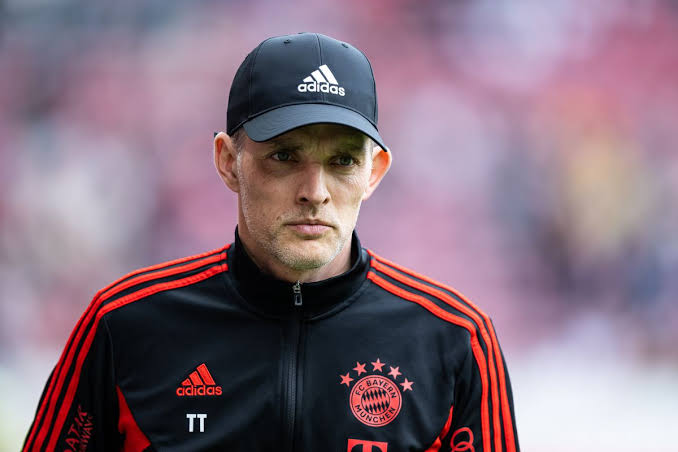
England national team’s coach, Thomas Tuchel, has triggered widespread reactions after unveiling his 26-man England national football team squad for the 2026 FIFA World Cup, leaving out several established stars in one of the country’s most surprising tournament selections in recent years.
Among the headline omissions are Cole Palmer, Phil Foden, Trent Alexander-Arnold and Harry Maguire, with Tuchel opting for a squad built around younger and more versatile options ahead of the tournament in North America.
The German coach, who is preparing for his first major tournament with England, defended the difficult decisions after naming his squad on Friday.
England’s final squad includes goalkeepers Jordan Pickford, Dean Henderson and James Trafford.
In defence, Tuchel selected Reece James, Ezri Konsa, Jarell Quansah, John Stones, Marc Guéhi, Dan Burn, Nico O’Reilly, Djed Spence and Tino Livramento.
READ ALSO:
The midfield options are Declan Rice, Elliot Anderson, Kobbie Mainoo, Jordan Henderson, Morgan Rogers, Jude Bellingham and Eberechi Eze.
Up front, Tuchel picked captain Harry Kane alongside Ivan Toney, Ollie Watkins, Bukayo Saka, Marcus Rashford, Anthony Gordon and Noni Madueke.
The return of Ivan Toney was among the biggest surprises, while the inclusions of Djed Spence, Kobbie Mainoo, Eberechi Eze and Jarell Quansah highlighted Tuchel’s willingness to trust emerging talent.
However, the exclusion of Palmer and Foden has dominated discussions among supporters and pundits. Both players struggled for consistency at the club level this season, but many fans expected their creativity and technical quality to earn them places in the final squad.
Sky Sports chief correspondent Kaveh Solhekol described the selection as “probably the most shocking since 1998,” with the omissions creating intense debate across social media and among former players.
Maguire reacted emotionally after missing out, posting online that he was “shocked and gutted” by the decision after being informed by Tuchel before the announcement.
Tuchel admitted the calls were painful but insisted his choices were based on squad balance and chemistry developed during previous international camps.
“Difficult phone calls. I respect all of them. As players, personalities. All of them have been in camp, have been excellent,” Tuchel said.
“To reduce it was difficult, sometimes painfully difficult. Even in the phone calls, I felt the emotion.”
The England manager explained that continuity and tactical structure influenced the final selections.
“In the end, we went back to the evidence we had – in September, October, November, the leadership group and the team had very few changes in November… that felt we had a bit of fresh air, younger players who played with excitement, it was a good mix of young and old and brought the best out of the players.”
He added: “For some it was a positional thing and not bringing five No 10s and making them play out of position.”
Other notable absentees include Morgan Gibbs-White, Adam Wharton, Lewis Hall, Luke Shaw and Jarrod Bowen.
With England heading into the World Cup carrying both excitement and controversy, Tuchel’s bold squad decisions are set to remain one of the major talking points before the tournament begins.