
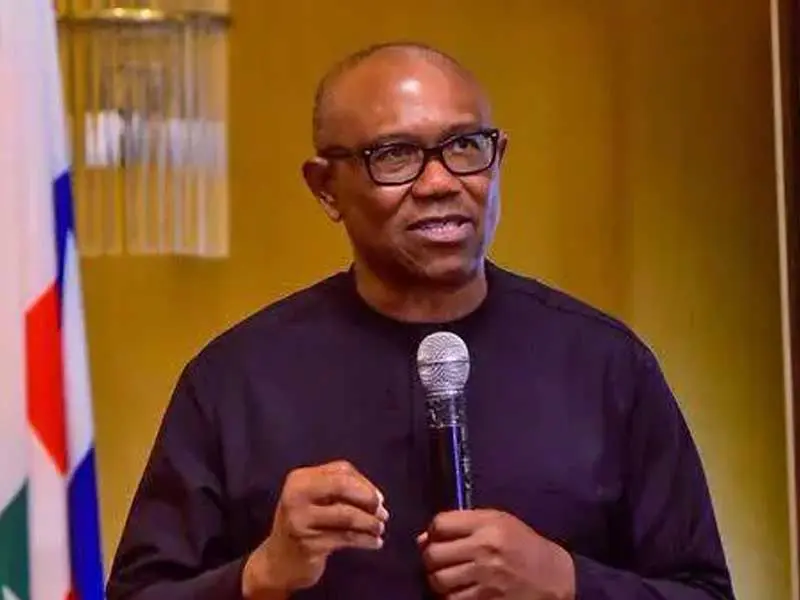
Former Labour Party presidential candidate, Peter Obi has raised fresh concerns over Nigeria’s rising debt burden, warning that the country’s fiscal priorities are increasingly skewed toward debt servicing at the expense of critical sectors like health, education, and poverty alleviation.
Reacting to recent remarks by President Bola Tinubu on Monday during a foreign tour, Obi noted that Nigeria is projected to spend about $11.6 billion on debt servicing, a figure he described as alarming given the country’s development needs.
Obi acknowledged that borrowing is not inherently harmful if it is prudently managed and channelled into productive sectors.
He cited countries such as Japan, the United Kingdom, the United States, the United Arab Emirates, Singapore, and Indonesia, noting that their debt is largely invested in infrastructure, education, healthcare, and innovation, areas that drive long-term economic growth and repayment capacity.
READ ALSO:
However, he argued that Nigeria’s situation differs significantly, alleging that a large portion of past borrowings has been directed toward consumption with limited measurable impact on development.
The former Anambra State governor also pointed out that a substantial share of the debt currently being serviced was accumulated under the present administration, even as borrowing continues.
He highlighted recent external loan arrangements, including billions of dollars sourced from international financial institutions and commercial banks, alongside ongoing domestic borrowing through bond issuances.
According to Obi, Nigeria’s 2026 budget allocates about ₦2.46 trillion to health, ₦2.56 trillion to education, and ₦865 billion to poverty alleviation, totalling roughly ₦5.885 trillion. In contrast, debt servicing, estimated at between ₦17 trillion and ₦18 trillion, is nearly three times the combined allocation to these key sectors.
He warned that such an imbalance could hinder investment in human capital and worsen poverty levels, especially if budgeted funds are not fully released or are mismanaged.
Obi stressed that the real issue is not borrowing itself, but whether borrowed funds translate into tangible economic growth, improved living standards, and sustainable development.
He cautioned that without productive use of loans, debt servicing risks becoming a long-term structural burden that could further weaken Nigeria’s economic outlook.