
…says no consensus, zoning in the state
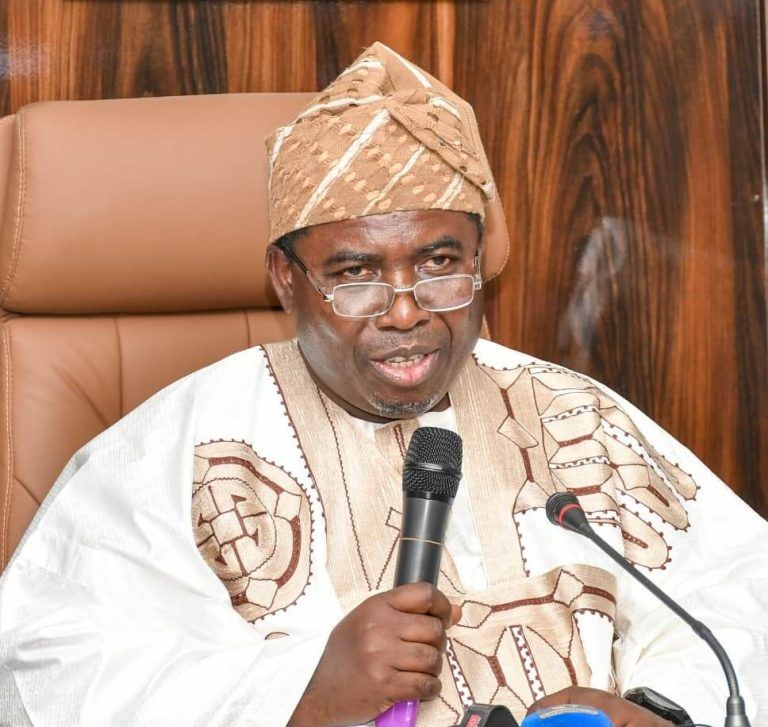
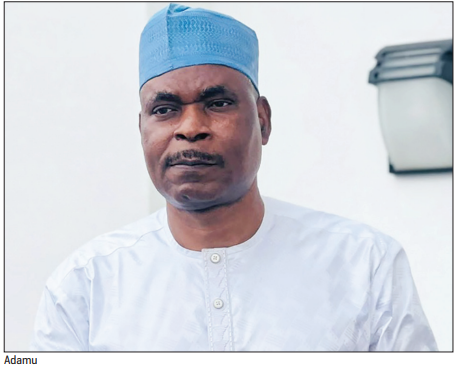
Mohammed Adamu is a former Inspector-General of Police and governorship aspirant in Nasarawa State on the platform of the All Progressives Congress (APC). In this interview, he speaks on his vision for the state, issues of insecurity, state police and President Bola Tinubu’s administration. FELIX NWANERI reports
What informed your decision to contest the Nasarawa State governorship election?
My decision is rooted in my experience and understanding of the challenges facing not just Nasarawa State, but the entire North-central region. Security issues are not isolated; what happens in Nasarawa affects neighbouring states like Benue, Kogi, Plateau, Kaduna and Niger.
And having worked at the highest level of policing in this country and been part of advising and implementing strategies to tackle insecurity, I believe the time has come for me to be in a position where I can directly apply political solutions to these challenges. Security is not just about force; it requires political will, economic planning and community engagement. Nasarawa is one of the states that are promising.
There are a lot of resources, human and material in the state. While I feel that previous administrations in the state have done their best, I decided to come out in order to add value to the development of the state. So, my coming out is really to see how we can sustain what we have on ground, and even to improve on it, harness the resources we have as well as to ensure the peace and security of the state.
And in doing so, I am concerned about developmental issues concerning the state. For example, in the area of security, we know that in the country and the North Central in particular, there have been issues of insecurity. It is not only in Nasarawa State, but also in neighboring states of Benue, Kogi, Taraba, Plateau, Niger, and the rest of them and you know that what affects one state goes on to affect the others.
So, given my background in the security sector, I know the challenges and I feel that I should be on the driving seat, knowing how some of these security issues can be solved if there is the political will not only within Nasarawa State, but also within the catchment states.
You are known more for your police career, rising to the pinnacle to become the Inspector General of Police. You have joined the political space vying to become governor; can we point to any political antecedents?
As you have mentioned, I rose from being cadet officer to become Inspector General of Police, but I have a lot of political experience too, internationally and nationally. Many professionals are politicians one way or the other, whether they climbed the podium with drumming to campaign or not. The way you define politics is not the way another person will define politics.
At my level, where you mentioned that I operate, we play politics there. A politician that goes to the electorate, sits down with them, goes to campaign grounds with drumming is another aspect. An individual who goes around studying what is happening politically within the country and proffering solutions to the political situation and giving good analysis of how things will be if certain activities take place is also a politician.
At the level of looking for peace and security in the country, and you see that certain group of people are going to cause problem in the society, heat the polity, and you get there without arms, without force, and you’re able to maneuver and solve the problem, it is also politics. So, I have done that at the highest level. I am now coming to the level that I need to climb, beat drum and start talking. So, we shouldn’t describe politics as a straitjacket, you play it at different levels.
What new would bring to the table if elected as governor of Nasarawa State?
Leadership is about service and results. I bring experience, vision and a deep understanding of the challenges facing the state. I have a clear plan to address insecurity, create jobs, improve infrastructure and promote development. I have also engaged directly with the people and understand their needs.
If given the opportunity, I will work tirelessly to improve their lives and move Nasarawa State forward. Economically, we know that Nasarawa State is an agrarian state, but we have a lot of solid minerals deposits, and investing in these minerals can help the state and the people of the state in their quest development. In the course of my consultation, I went around all the 147 wards in the state, and I’ve seen the multitude of youths that we have as well as the women in the state.
The governor has chosen to support someone from a different zone – Nasarawa West – while I am from Nasarawa South. So, I do not expect any political patronage from him
They need help, they need attention. The youth need jobs, they need training. The women need training in different fields to give them the skills to help themselves.
But I’ve seen that those things are not there, and these are the things that I feel, when I come, I should be able to address because when you address the issue of youth and women, some of the security challenges in the state will naturally reduce. The state is still lacking adequate power supply. If you go to the capital itself, you can never have 24 hours of electricity and we have substations close by. The small-scale business people, they rely on electricity for them to survive.
For example, the woman who is selling pure water needs ice block to remain in business. She sells water and gets little money for her to train her children in school. But if electricity is not there, she can’t do anything. These are the areas we need to concentrate on. We also lack infrastructure that is needed to help farmers in the state. Besides some of the major roads passing through the state capital, when you go to the villages, the rural roads are not there.
And this is where farmers are coming from. When they produce their agricultural produce they need easy access to the city, so that they can sell their produce, but those roads are not there. Water supply is also a problem. If you go to the capital, you cannot open a tap and get water. Without that, how can the health of the people in the state or the capital in particular, improve?
These are challenges that we feel we need to address. In terms of education, yes, there are schools built, primary schools up to secondary schools. But the neglect of the sector is evident. It’s only when you go to tertiary institutions that you see them well built and well maintained. But when you go to the secondary schools and the primary schools, they are dilapidated, no maintenance, and even the teachers are not taken care of.
So, I feel that we need to change these narratives by not having the multitude or so many schools without maintaining them. The ones that we have, we should ensure that they are up to standard. The teachers must be trained, so that the students will be able to be students of high class, rather than what we produce now.
Nasarawa has experienced little development apart from that Makurdi road, where you see a semblance of development. Other parts of Lafia are quite sandy. Past governors promised to change this narrative but not much was achieved. Why should the people of the state trust that you will do better?
Lafia does not reflect the status of a state capital. It still looks more like a glorified local government headquarters. This is largely due to the lack of consistent focus on urban development by previous administrations. My plan is to transform Lafia into a modern city with proper infrastructure and urban planning.
The previous administrations we’ve had since the coming of democracy did not prioritize the development of the city as a capital. The first governor was Abdullahi Adamu and I think his priorities were different rather than concentrating and developing the state capital. The person that took over from him; Aliyu Akwe Doma, had crisis from the beginning to the end of his administration. There were protests here and there and his priority too was not Lafia.
It was when His Excellency, Umaru Tanko AlMakura came on board that he was able to now focus and prioritize the development of the state capital. That’s why we have some of the roads that you see today inside the town. It was Al-Makura that constructed the roads and equally expanded them. So, the development that you see in Lafia today was brought by Al-Makura.
But since the current governor came, he has been able to build about five kilometres of road that passes through the government house. Apart from that, there is nothing in the state. So, my priority would be to see that the landscape of the town changes not because of Lafia people but because of the state in general. If you get to a state capital, the impression you have of that state is what you see in the capital.
How do you plan to leverage Nasarawa’s proximity to Abuja to drive estate development and maximise the state’s natural resource potential?
Yes, a place like Mararaba is still largely a slum. When the Federal Government decided to move the capital from Lagos to Abuja, construction began in Abuja. The workers who built Abuja stayed in Nyanya because there was no space available. So, the Shehu Shagari government in 1979 decided to build workers’ quarters in Nyanya, allowing them to commute to work and return there.
However, those settlements were not originally planned as permanent structures but as temporary arrangements, with the expectation that they would be demolished after the completion of Abuja. Over time, those structures remained, and people began to acquire land there. When ministries moved from Lagos to Abuja, staff who could not afford accommodation in Abuja relocated there because it was cheaper.
That is why the area has developed the way it has. However, this does not prevent the re-landscaping of the area to make it comparable to what we see in Abuja. It also does not stop us from creating new settlements with proper planning, modern structures, and good infrastructure similar to what exists in Abuja. If you look at Mararaba, at the back, there is a town called Gurku, which borders Mpape.
We will create an express road, so that if you are coming from Kaduna, you do not need to pass through Mararaba. From Gitata-Panda, you can enter Abuja through Mpape. Along that axis, we will develop large estates similar to those in Abuja, while also going back to the slum areas to reshape and upgrade them.
Given your background as a police officer; what measures would you adopt to tackle security challenges that you’ve identified?
Concerning the security situation and how I will change the security narrative; everyone knows the kind of security problems we have in this country. We have communal clashes, kidnapping and terrorism. But you can classify these challenges according different regions or zones in this country. If you come to North Central, where Nasarawa is, the major problems are communal clashes, kidnapping and farmer/herder conflicts.
Now, how do we tackle these? First and foremost, what are the causes of these problems? The cause is nothing but poverty. If you don’t have work to do, and you must survive, you must find a way of surviving. So, there are strata of solutions.
The first one is to focus on creating jobs, so that the youth will have the opportunity to have one thing or the other doing, and in turn, remove their minds from committing crime. In the agricultural sector, you can create a lot of jobs for the youth. In the mining sector, you can create a lot of jobs for the youth, and that is what I will focus on. That will reduce the number of youths, who are doing a lot of bad things.
The second step, especially in terms of farmer/herder conflict, is to bring the communities together, bringing the farmers and the herders together to solve the problem. I have also found out that it is not only about herders going into farmers’ farms and destroying their crops, but there is this issue of hatred between one ethnic group and the other, which is responsible for communal clashes. In some cases, you also see people of the same tribe and the same religion fighting themselves.
The mistake we often make is to think that security can be solved purely through force. That is not sustainable. So, the root causes of insecurity which are, poverty, unemployment, and social dislocation, must be addressed. When people do not have legitimate means of livelihood, they resort to crime. We will also strengthen community policing by working closely with traditional institutions.
They understand their people and can provide valuable intelligence. Selected youths can be legally empowered to take on limited policing roles to gather intelligence and report suspicious activities.
Where local mechanisms fail, conventional policing can then be deployed. So, political solutions involve creating opportunities, addressing grievances, and building trust within communities. If we do that, the pressure on security agencies will reduce significantly.
You are from the Southern part of Nasarawa, and some political leaders speak about zoning. What is your position on zoning in Nasarawa politics?
Historically, Nasarawa State has not strictly practised zoning. Leadership has emerged based on political dynamics rather than regional rotation. While some stakeholders advocate zoning, I believe the position of governor should be open to any competent individual from any part of the state. What matters most is the ability to deliver good governance.
Restricting leadership based on zoning may limit the pool of capable candidates. And because politics is about interest, anything that you believe will favour you as a politician is what you pursue. In Nasarawa State, there has never been anything like zoning and zoning has never really taken place.
In 1999, when Nigeria returned to democratic rule, the state needed a civilian governor with political experience, so Abdullahi Adamu was brought in under the Peoples Democratic Party (PDP). When he completed his tenure, they searched within the PDP for a successor but could not find a suitable candidate.
They then turned to the All Nigeria Peoples Party (ANPP) and picked Aliyu Akwe Doma, a contemporary of Abdullahi Adamu, who defected to the PDP. That was not because of zoning, as PDP did not practice zoning at the time. Tanko Al-Makura later emerged from a different party, the Congress for Progressive Change (CPC), and defeated Aliyu Akwe Doma.
Neither CPC nor PDP campaigned on zoning. And when Tanko Al-Makura was leaving office, he supported the current governor, Abdullahi Sule. Now that Sule is preparing to leave, Abdullahi Adamu wants the governorship to return to his zone, which is his right to advocate. However, my zone, Nasarawa South, believes that any competent individual in the state should be allowed to contest, regardless of zone.
The governor, in his wisdom, has indicated support for someone from Nasarawa West, but that does not prevent others from contesting. He has also stated publicly that the state will adopt direct primaries, which is acceptable to everyone. We support direct primaries and will remain vigilant to ensure that the process is free and fair.
Going into the primary, how would you confront a governor who already has a succession plan?
The governor has chosen to support someone from a different zone, Nasarawa West, while I am from Nasarawa South. So, I do not expect any political patronage from him. However, it is not the governor who ultimately gives power; it is the electorate. That was why I decided to go directly to the people. I visited all 147 wards in the state; I met party officials and stakeholders, listened to their concerns, and understood the problems they face.
Some even expressed intentions to leave the party. I engaged with them, addressed some of their concerns, encouraged unity and we are now working together. The Electoral Act no longer recognises indirect primaries. It is through indirect primaries that manipulation occurs, where a few delegates represent a large number of people.
That system has been eliminated. No governor can simply handpick a few individuals to represent an entire local government, hide them, and then present them on election day to vote for a preferred aspirant. Now, the Electoral Act allows for consensus and direct primaries. With direct primaries, candidates must engage directly with the electorate, which is exactly what I have done. As for consensus, it cannot work because if one aspirant disagrees, the process automatically reverts to direct primaries.
Do you have the support of key political stakeholders in the state?
In politics, the most important stakeholders are the people. I have taken my campaign directly to the electorate. I visited all the wards, engaged with party officials and community leaders, and listened to their concerns.
While political endorsements are important, they are not decisive. Ultimately, it is the people who determine the outcome of an election. I am confident in the support I have received at the grassroots level.
Your critics say you are more of a technocrat than a politician. How do you respond to that?
Politics is not limited to campaigning or holding political office. It involves understanding systems, managing relationships, and resolving conflicts. Throughout my career, I have engaged in these activities at various levels.
Even as a police officer, I was involved in negotiations, conflict resolution and strategic decision-making. These are all elements of politics. So, I will say that I bring both technocratic experience and political understanding to the table.
What have you personally contributed to Nasarawa State because some people in the state are saying that they don’t want an Abuja based politician as the next governor of the state?
Regarding the issue of Abuja-based politicians, I was born in Lafia, grew up there, and built my home there. My family, my wife and my children live in Lafia. So, I am truly from Lafia and my roots are firmly in the state.
As for my contributions, I served as Inspector General of Police and implemented security strategies across the country, including Nasarawa State. I supported governors by advising them and deploying resources to combat crime. I facilitated nationwide police recruitment, from which Nasarawa State benefited.
I also established a Police Mobile Training School in Nasarawa due to security challenges in places like Gwoza, where training had become unsafe. Additionally, I built police secondary schools, hospitals, and contributed to infrastructure such as roads in the state. So, compared with the other aspirants, who have been in politics for years, I will say that my record of tangible contributions stands out as I have already given back to the state in various ways.
What is your position on establishment of state police, which many believe, is key in the fight against insecurity?
The constitution provides for one police force, but in reality, we already have different forms of policing. When you look at vigilante groups, neighbourhood watch, and other local security arrangements, they are performing policing functions. So, whether we formally call it state police or not, it already exists in practice.
The real issue is not whether to create state police, but how to strengthen and regulate these existing structures to make them more effective and accountable. Some people fear that governors may misuse state police, but even now, local security outfits are being used in various ways. So, what we need is a proper framework to ensure professionalism and oversight.
What is your position on local government autonomy and how would relate with the councils if elected as governor?
In any functional democracy, the three tiers of government must be respected. In Nigeria, the local government system is the most disadvantaged tier. Local governments operate largely at the mercy of state governments. If the law provides for their autonomy, it should be fully implemented.
When local governments have control over their resources, they can be held accountable for their performance. Without such autonomy, meaningful evaluation becomes difficult. I strongly support local government autonomy and will ensure its full implementation if elected. So, local government autonomy is essential for grassroots development.
Do you believe that President Bola Tinubu has done enough to earn him a second term?
No government receives universal praise. However, when the fuel subsidy was removed, the resulting funds were redistributed to the states. Governors across the country will tell you that their allocations have increased, and they are using those funds for development.
If it were another administration, the subsidy might have been removed without any tangible benefit reaching the states. At least now, governors acknowledge improved revenue inflows. So, President Tinubu truly deserves to be re-elected.
Will you probe your predecessors if elected?
Governance should not be driven by vendetta. If there are issues that require investigation, there are established institutions to handle them. My focus will be on moving the state forward. However, accountability is important, and due process should always be followed.