
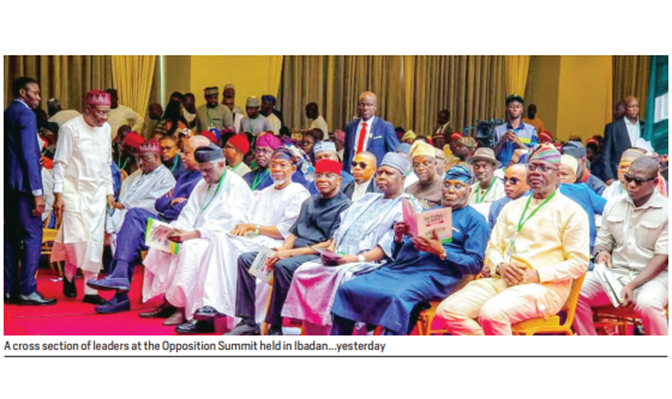
Ahead of the 2027 general elections, leaders of the opposition parties in the country, on yesterday in Ibadan, Oyo State capital, closed ranks, resolved to present a single presidential candidate with the objective of ousting President Bola Tinubu and the ruling All Progressives Congress (APC).
The declaration was part of the 8-point communiqué issued at the end of the opposition parties’ summit held at the Banquet Hall of the Agodi Government House, Oyo State, hosted by Governor Seyi Makinde. According to the stalwarts and heavyweights of the opposition parties, the decision was reached to, “rescue the nation” from what they termed the excesses of the ruling APC.
Political parties that participated in the summit included the Peoples Democratic Party (PDP), African Democratic Congress (ADC), Labour Party, New Nigeria People’s Party (NNPP), Peoples Redemption Party (PRP), Nigeria Democratic Congress (NDC), Action Peoples Party (APP), Accord Party, the Allied Peoples Movement (APM), the Action Alliance (AA), the Democratic Leadership Alliance (DLA), Youth Party (YP), the Action Democratic Party (ADP) and Zenith Labour Party (ZLP).
In the communiqué jointly signed by chairmen of participating parties, the opposition bloc said it would, “work towards fielding one Presidential Candidate for the 2027 elections,” and that such a candidate would be, “agreed and supported by all participating opposition parties”.
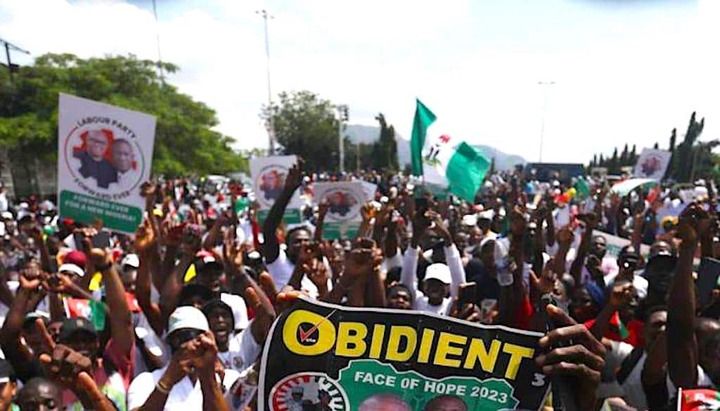
It is noteworthy, however, that the two presidential aspirants in the African Democratic Party (ADC): former Vice President Alhaji Atiku Abubakar, and the former presidential candidate of the Labour Party in the 2023 elections, Mr. Peter Obi, did not talk at all at the summit.
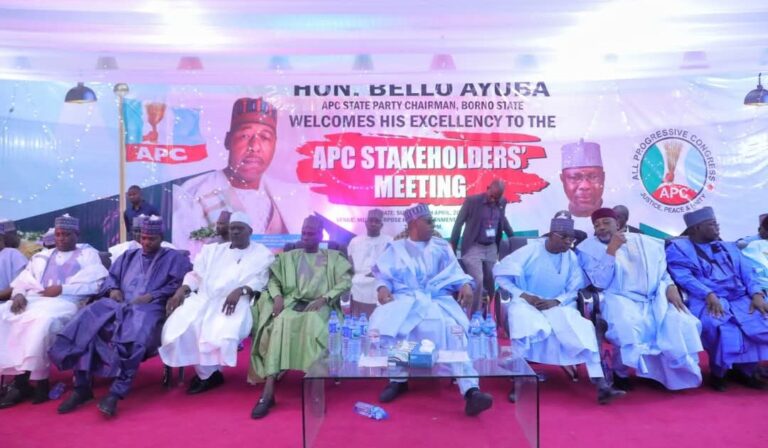
Present at the summit themed: “That we may work together for a united opposition to sustain our democracy” were many politicians including: former Senate President, David Mark; a former Minister of Transportation, Rotimi Amaechi; former Kano State Governor, Rabiu Musa Kwankwaso; Prof. Pat Utomi, Prince Olagunsoye Oyinlola and Rauf Aregbesola (former Osun State Governors); former Governor Liyel Imoke and Prof. Chidi Odinkalu.
Others included: Professor Jerry Gana, factional chairman of the Peoples Democratic Party (PDP) Taminu Turaki (SAN), Dr. Usman Bugaji, Dr. John Oyegun (former Edo State governor), Mike Igini, Dr. Kabir Adam, among many others. The stakeholders frowned on what they described as a creeping attempt by the APC to entrench a one-party state and impose President Bola Tinubu as the sole viable candidate in the next election cycle.
The summit said: “The survival of multi-party democracy in Nigeria is under threat,” while pledging collective resistance against any political manoeuvres capable of undermining democratic plurality. X-raying the electoral governance in the country, the summit demanded immediate reforms to the Electoral Act 2026, urging the National Assembly to expunge provisions they claimed could compromise the integrity of the electoral process.
While calling for the removal of the Chairman of the Independent National Electoral Commission (INEC), Prof. Joash Ojo Amupitan, the opposition group accused him of partisanship and bias in favour of the ruling party. “Nigerians have lost confidence in the INEC leadership, suggesting that his continued stay in office could, “trigger widespread crisis” and undermine the credibility of the 2027 elections.
The parties also rejected recent electoral guidelines issued by Independent National Electoral Commission (INEC), describing them as deliberate obstacles targeted at weakening opposition parties. They demanded an extension of the deadline for party primaries to the end of July 2026.
Alleging that the ruling party was stifling and suppressing the opposition, the summit said that opposition was being harassed while detaining opposition figures on bailable offences. It called for the immediate release of the detained to ensure inclusive political participation.
Among the communiqué resolutions was the claim that democracy could not thrive under conditions where opposition voices are suppressed or intimidated. It nevertheless commended Nigerians for their resilience amid economic and political challenges, expressing confidence in popular support for what they termed a “national rescue mission.”
Many of the keynote speakers condemned the rapacious manner that bandits are killing and maiming innocent persons across the country, while soldiers are also being wasted. The harsh economy with the skyrocketing inflation, in a condition where the ruling politicians keep living life of luxury, was scathingly criticised, asking why borrowing excessively after the oil subsidy had been removed.
The summit extended appreciation to Governor Seyi Makinde and the people of Oyo State for hosting what they described as an “epochal event.” Earlier in his welcome address, Makinde raised fresh concerns over the future of Nigeria’s democracy, warning that the country risked a gradual slide into a one-party state, if opposition politics continued to weaken.
The governor said recent political developments across the country point to a troubling concentration of power that could erode democratic competition. He noted that a growing number of state governments were now aligned under a single political party, alongside what he described as “open efforts” to consolidate legislative dominance.
At the same time, he observed that opposition parties were increasingly mired in internal crises and legal disputes, raising doubts about their effectiveness.
“Taken together, they point to a pattern where the space for real political competition is disappearing,” Makinde said, cautioning that democracy is rarely destroyed abruptly but rather weakened incrementally until citizens lose confidence in it.
While stressing that democracy cannot be defined by the dominance or success of one party, but by the presence of credible alternatives that give citizens meaningful choices, Makinde said: “Once that disappears, what we have may still be called democracy, but it will no longer function as one”.








