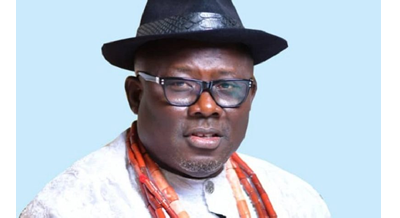

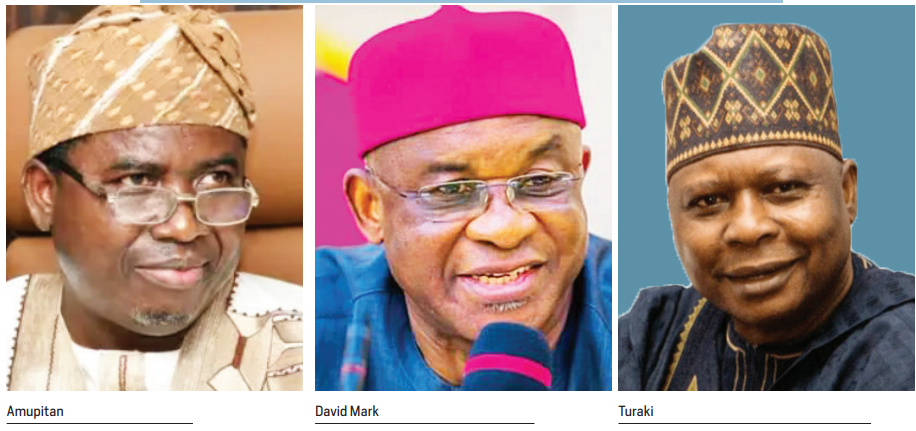
The integrity and credibility of the 2027 general elections are threatened by allegations of bias and partisanship against Chairman of the Independent National Electoral Commission (INEC), Prof. Joash Amupitan, SAN. ONYEKACHI EZE writes
Perhaps, by now Prof. Joash Amupitan, SAN might have seen the difference between a rusty classroom environment and the cozy comfort of an air-conditioned office. While he was lord and master in the former and dictated what happened, he is confronted daily with different challenges in the latter, and his every step is (mis)interpreted.
Since he became Chairman of the Independent National Electoral Commission (INEC) on October 23, 2025, Amputation has been riding roughshod with opposition political parties. He has been accused of meddlesomeness and interference in the affairs of the parties. Last week, on April 20 to be precise, an Abuja Federal High issued a contempt charge against him and threatened to commit him to prison for recognising Senator Samuel Anyanwu as National Secretary of the Peoples Democratic Party (PDP) in contravention of court judgement.
Prof. Amupitan was told by the court to “stop further disobedience” and to “comply forthwith/oby the judgement/order of the High Court of the Federal Capital Territory, Abuja, made on 12th of January, 2026, which dismissed the suit of Senator Samuel N. Anyanwu challenging his expulsion from the Peoples Democratic Party,” or his will be committed to prison.
Senator Anyanwu, National Secretary in the immediate past National Working Committee (NWC) of PDP, was suspended based on the recommendation of the party’s National Disciplinary Committee. He challenged his suspension in court, which on January 12 this year, upheld the action of the party against him.
On March 29, 2026, Anyanwu was reelected to the same position at a national convention organised by Nyesom Wike backed faction of the party, and was immediately accorded recognition by INEC. Wike, a PDP member, is serving in the All Progressives Congress (APC) led Federal Government.
At the moment, PDP is factionalised, with one faction led by Wike and the other, by Oyo State governor, Seyi Makinde. INEC under Amupitan is seen as more disposed to the Wike faction, which is supporting President Bola Tinubu’s reelection in 2027.
The commission not only monitored a national convention conducted by Wike backed faction, but in less than 12 hours, uploaded the names of the elected party executive from the convention on its portal.
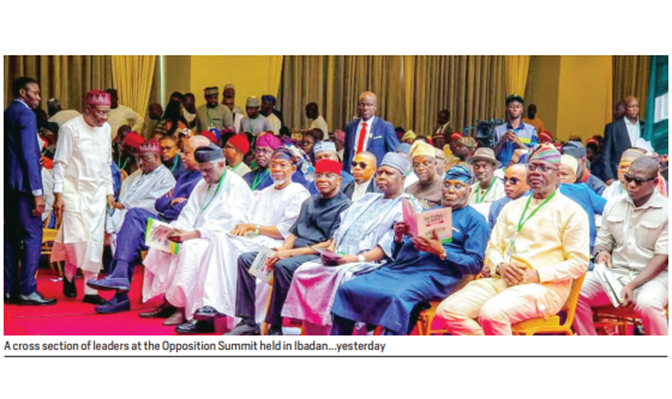
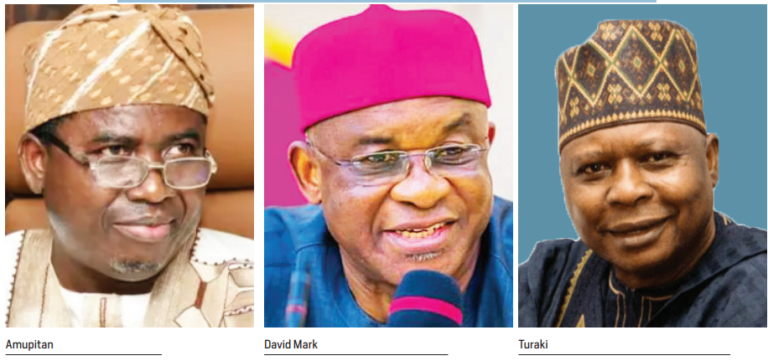
Even before the convention, INEC had been dealing with the faction. On the other hand, INEC refused to monitor the last year’s PDP national convention in Ibadan that produced Kabiru Tanimu Turaki, SAN, as National Chairman, citing court order.
The Makinde faction that produced Turaki as National Chairman, wondered why Prof. Amupitan-led INEC ignores the judgement of courts each time it favours it but could not enforce court judgement against Wike faction.
ADC’s quagmire
The African Democratic Congress (ADC) is also accusing INEC of siding Nafiu Bala Gombe in its leadership tussle. Gombe, a former Deputy National Chairman of the party, is challenging the emergence of Senator David Mark leadership of ADC.
Even though the party at its 99th National Executive Committee (NEC) meeting on July 29, 2025 accepted the resignation of all members of the NWC, including Gombe, which paved the way for David Mark-led NWC, Gombe denied that he resigned along with other NWC members and alleged that his signature was forged.
ADC doubted the neutrality of INEC in the leadership crisis when it delisted Senator David Mark-led NWC from its portal, citing the Court of Appeal judgement that status quo ante bellum in the party should be maintained as at July 2, 2025.
The statement attributed to Femi Gbajabiamila, Chief of Staff to President Bola Tinubu, at the birthday of the wife of Leke Abejide, confirmed the insinuations that the presidency is fueling crisis in the ADC for political. Abejide, a member of House of Representatives, sided with Gombe in fight to wrestle the ADC from the coalition partners who are using the party to challenge Tinubu’s reelection in 2027.
Gbajabiamila was quoted to have told the lawmaker, “I know you to be a committed party man, a fighter who does not like to be cheated. My charge to you is to stay in that same ADC. Fight them. Scatter them. Hold on to your party, ADC. Do not allow them. We like what you are doing. Continue.”
He also added, “Don’t let the former governor say that you should come and join the APC. Stay in the ADC. Win your election in the ADC as you will. Bring (Bala) Gombe. We will support him.
Bring him. Do the right thing. You are a fighter. Do the right thing. “Nobody can come and take your party away from you. A party that you’ve been to for years with your sweat and your money and everything. No. Continue. Good luck in court.”
Amupitan’s partisan post
Prof. Amupitan had come under attack for his interpretation of the Court of Appeal judgement. The ADC accused him of aligning with the ruling APC to destabilise the ADC.
“INEC has caved to pressure and has chosen to side with the government against the Nigerian people,” the party said. Prof. Amupitan’s alleged partisan post in 2023, which surfaced on April 19, further provided the arsenal for those who accused him of bias.
Although the INEC Chairman has consistently denied the post, including changing the X (formerly Twitter) account, @joashamupitan allegedly used in the controversy to a parody account, @Sundayvibe00, but the report of open-source intelligence (OSINT), said a Yahoo email address used in the account, matched with the one listed on Amupitan’s public University of Jos curriculum vitae (CV).
Also, another report by the International Centre for Investigative Reporting (ICIR), equally linked the INEC Chairman to the APC 2023 post. Apart from the political class, Prof. Amupitan is also accused by the Muslim community of bias based on his legal brief published in 2020. The brief titled: ‘Nigeria’s Silent Slaughter: Genocide in Nigeria.
The Implications for the International Community’, Prof. Amupitan reportedly argued that attacks by Boko Haram and Fulani herdsmen constituted a genocide against Christians and minority groups in Nigeria. This is on the heels of the United States’ classification of Nigeria Country of Particular Concern (CPC) over genocide against Christians.
The INEC Chairman is a practicing Christian from Kogi State, North Central Nigeria. The Muslim community is still demanding for his removal from office, because his biased against Muslims in the country. Prof. Amupitan also incurred the ire of Nigeria Muslim faithful, when he fixed the dates for the 2027 general elections.
In line with established election timeframe, February 20, 2027 was fixed for national elections (presidency and National Assembly), while governorship and state Houses of Assembly elections was to hold on March 6 that same year. The timetable elicited reactions from the Muslim community because this period fall within the Muslim holy month of Ramadan.
National Missioner of AnsarUd-Deen Society of Nigeria, Sheikh AbdurRahman Ahmad, described INEC’s decision as insensitive and disrespectful to the Muslim Ummah. “As Muslims, we do not complain when elections do not affect our religious activities. However, we must make our feelings known when actions appear to disregard our religious obligations.
“Millions of Nigerian Muslims are stakeholders in the Nigerian project and should be respected when fixing election dates. “Elections are national exercises that should encourage the broadest participation. Fixing the polls during Ramadan may disenfranchise or discourage the active engagement of many Muslims,” he said.
Election timeframe was fixed several years ago by Prof. Mahmood Yakubu, a Muslim, to hold every third Saturday in February of election year. In 2022, election timetable was however rescheduled to accommodate religious observances, including Lent and Ramadan. These allegations are impinging on the integrity of INEC.
At a time when the commission is facing a trust deficit, allegations of bias and partisanship against its Chairman will further compound it. Unarguably, since independence, successive helmsmen of the election managing body (EMB) have faced allegations of bias, and for pandering to the party in power.
Except probably Prof. Humphrey Nwosu, the man who conducted the 1993 presidential election which was later annulled by the military, no Chairman of Nigeria’s electoral body left the commission with his head high. The worry is that the mistrust in Prof. Amupitan is rather coming too early. The INEC Chairman was just six months in office on Thursday last week, April 23.
The 2027 general elections are already facing many challenges. The amended Electoral Act, 2026, the legal instrument on which the elections will be conducted, contains some provisions considered injurious to free and fair elections. The Inter-Party Advisory Council (IPAC), the umbrella body of political parties in the country, had threatened to boycott the 2027 general elections due to certain provisions in the Electoral Act.
The council has flagged some amendments in the Electoral Act, including Section 84(2) of the Act, which excludes the use of indirect primaries by political parties, as we as the non-inclusion of real-time electronic transmission of election results to INEC Result Viewing (IReV) portal in the Electoral Act.
“The mandatory electronic transmission of election results after announcement at polling units must be restored. Its absence was a major flaw during the 2023 presidential election, and such a lapse must not be allowed to undermine future elections, including the 2027 general elections,” IPAC said after its meeting.
The council also stated that the exclusion of indirect primaries in the Electoral Act is a violation of the constitutional right of political parties to regulate their internal affairs, including determining the method of nominating their candidates for elections. “It is an established principle, affirmed by several judicial pronouncements, that political parties possess certain fundamental rights in the administration of their internal affairs.
However, the new Electoral Act 2026 has curtailed this right through Section 84(2), which excludes indirect primaries,” IPAC stated. Other areas flagged for amendment include the removal of Sections 77(4–7), stronger penalties for vote buying, and the restoration of forged certificates as grounds for election petitions.
The 2027 general elections are less than one year away. The fear that INEC and Amupitan might not be able to restore the confidence of the Nigeria electorate before the general elections.