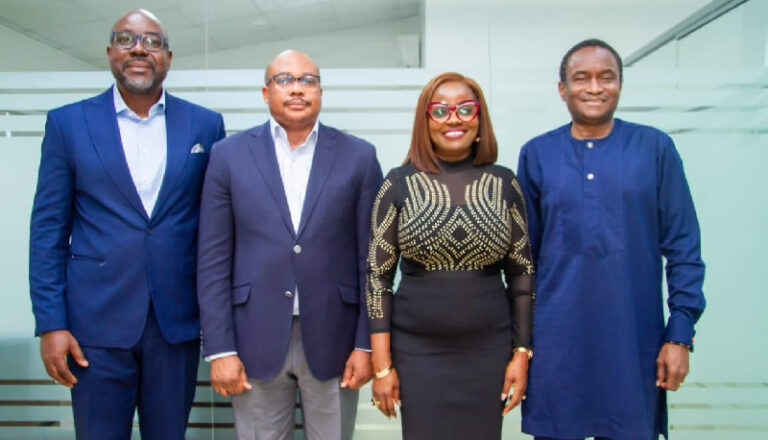
The President of the Association of Automobile, Boatyards, Transport Equipment and Allied Employers of Nigeria, Adekunle Jaiyesimi, has said that the recent foreign exchange reforms and policy adjustments introduced by the Federal Government are beginning to bring stability to Nigeria’s automotive industry despite mounting operational costs.
Jaiyesimi made the remarks during the 46th Annual General Meeting of the association held in Lagos, where industry stakeholders examined the economic realities shaping business operations in 2025 and explored measures to sustain growth amid prevailing challenges.
The association made this public through a statement made available to The PUNCH on Thursday. According to Jaiyesimi, the liberalisation of the foreign exchange market remains one of the most significant policy changes affecting the automotive sector in recent years.
He added that although the reforms have led to sharp increases in the cost of vehicles and equipment, they have also improved access to foreign exchange for operators.
Jaiyesimi stated, “Product pricing across our sector has almost quadrupled due to the floating of exchange rates. However, the removal of FX restrictions has made it easier to source foreign currency through the banking system and the Central Bank of Nigeria, unlike the previous regime, where businesses relied heavily on the parallel market.”
He explained that under the previous foreign exchange framework, businesses struggled with uncertainty, delayed transactions, and strained relationships with foreign partners, many of whom became reluctant to extend credit facilities because of payment bottlenecks.
The President added that operators in the sector can now project costs and pricing more accurately, even as the landing cost of vehicles continues to rise.
“The earlier system created ambiguity and uncertainty. Transactions were delayed, and many foreign suppliers restricted credit lines because payments were difficult to process. The current system may be more expensive, but it allows businesses to plan with greater certainty.
“It is now a case of what you buy is what you sell. We can project costs and pricing with more clarity, even if the landing cost of vehicles has increased significantly,” he noted.
The AABTEAEN president, who also serves as Deputy Managing Director of CFAO Mobility Nigeria Limited, further pointed to improvements in the ease of doing business, especially within the Nigeria Customs Service.
“There is more transparency now compared to the past when import prices were arbitrarily uplifted through unorthodox practices. The process is becoming more predictable for operators,” he said.
Jaiyesimi also praised the growing collaboration between regulators and stakeholders in the automotive sector, particularly the engagement efforts of the National Automotive Design and Development Council.
According to him, the current leadership of the council has shown a deeper understanding of industry realities and has demonstrated the willingness to incorporate stakeholders’ views into policy formulation.
“The Director-General is a practitioner who understands the industry. He listens and works to reflect stakeholders’ input in policy decisions, even though government processes can sometimes be slow,” he added.
On the issue of tariffs, Jaiyesimi clarified public misconceptions surrounding import duties on vehicles, insisting that the effective duty rate has remained around 40 per cent in recent years despite reports suggesting reductions.
He observed that the country’s foreign reserves, estimated at about $50bn, currently provide a buffer capable of sustaining import activities for several months, thereby helping businesses maintain operations.
Jaiyesimi, however, urged the Federal Government to sustain ongoing reforms, deepen tax restructuring measures, and ensure consistency in policy implementation to boost investor confidence and long-term industry growth.
“The key is stability and integrity in policy implementation. If these are maintained, the industry will continue to adapt and grow,” he said.