


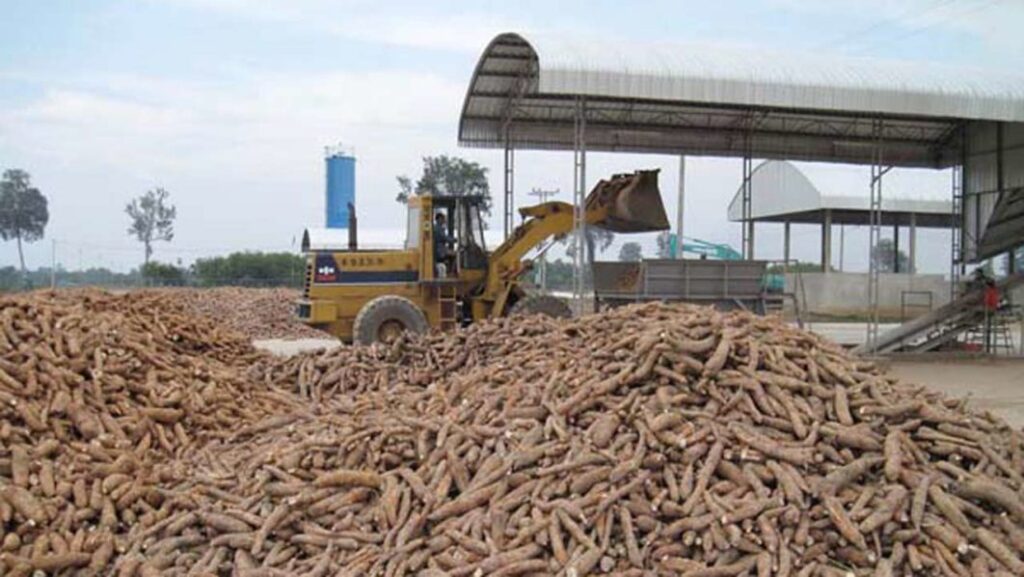
Some experts in agriculture sector yesterday lamented low industrial utilisation of Cassava in Nigeria despite the facts that the country has worn the crown as the world’s largest producer of cassava.
They disclosed this during the 10th anniversary of the Industrial Cassava Stakeholders Association of Nigeria, ICSAN, Annual General Meeting in Lagos.
They said across villages and farmlands stretching from the South-West to the Niger Delta and the Middle Belt, cassava had remained a dependable crop, feeding homes, supporting rural livelihoods and sustaining millions of small holder farmers.
Speaking on a keynote address titled, “A Decade of Growth, A Future of Policy,” Prof Eniola Fabusoro, the Country Director, IDH Nigeria said: “Nigeria does not have a cassava production problem. But what we have is a cassava system problem.
Despite producing over 63 million metric tonnes annually, Nigeria continues to export raw opportunities while importing refined value.” Fabusoro lamented that while Nigeria leads in volume, countries in Southeast Asia have moved far ahead in value addition, exports and industrial processing.
“We are a global leader, but yet not a global leader in value. We export jobs and then import value from a crop that we produce more than any country in the world,” he said.
“The future of cassava must move beyond farming alone. Policy must shift from how we produce more cassava to how we connect cassava to market and value,” he stressed.
He said the next phase of growth requires Nigeria to abandon fragmented interventions and embrace coordinated value-chain development driven by infrastructure, logistics, storage, energy and private-sector leadership.
He warned that without traceability, standardisation and supply-chain reliability, multinational industrial buyers would continue to look elsewhere. “The next decade will not be led by those who produce cassava, but by those who organise the system around it,” he declared.