
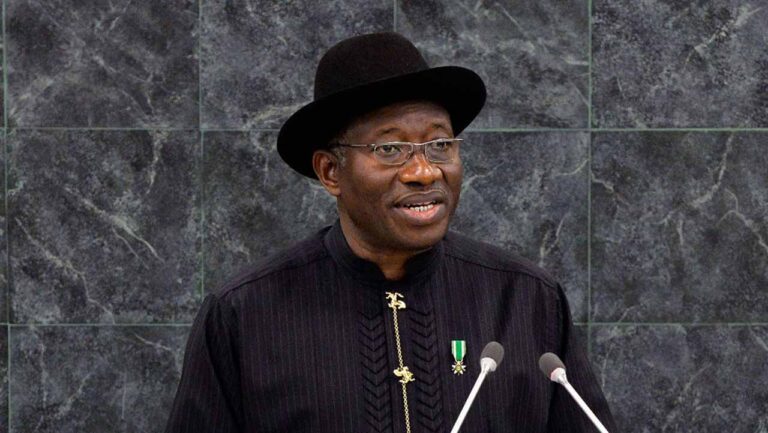
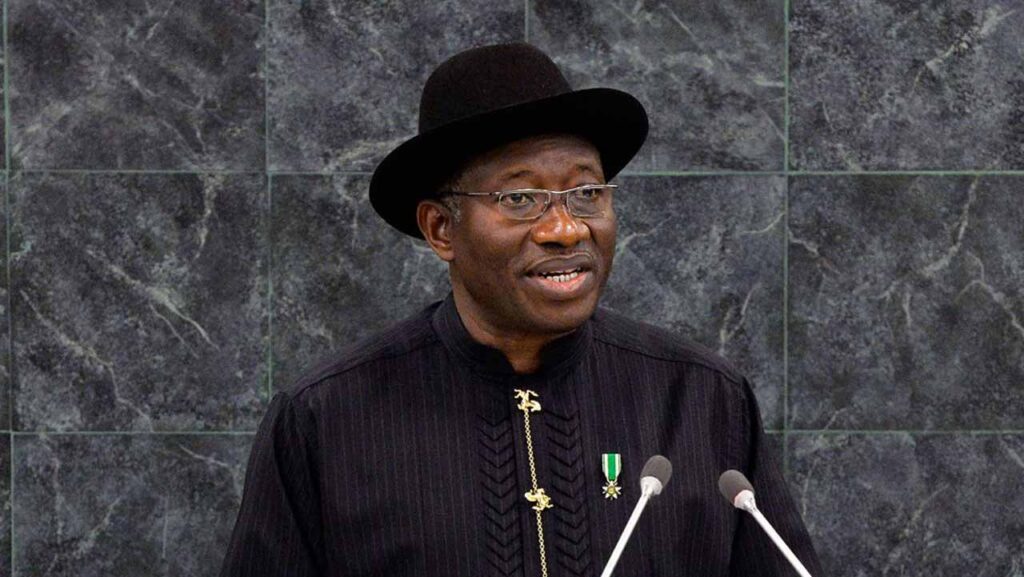
An Abuja Division of the Federal High Court has ruled that former President Goodluck Jonathan is constitutionally eligible to contest the 2027 presidential election.
Delivering judgment on Tuesday, Justice Peter Lifu held that there was no legal barrier stopping the former president from seeking another term in office.
The court dismissed a suit filed by Abuja-based lawyer, Jideobi Johnmary, describing it as frivolous and an abuse of court process.
Justice Lifu also ruled that the plaintiff lacked the legal standing to institute the action.
READ ALSO:
The suit, marked FHC/ABJ/CS/2102/2025, questioned Jonathan’s eligibility to contest again on the grounds that he had already taken the presidential oath twice.
The plaintiff had asked the court to determine: “Whether in view of the combined provisions of the entirety of Sections 1(1), (2) & (3) and 137(3) of the 1999 Constitution of the Federal Republic of Nigeria as amended and their conflated interpretation, is the 1st Defendant eligible, under any circumstances [whatsoever], to contest for the office of the President of the Federal Republic of Nigeria?”
He also sought “an order of perpetual injunction” restraining Jonathan from presenting himself to any political party as a presidential candidate for the 2027 election and future elections.
In addition, the plaintiff requested an order preventing the Independent National Electoral Commission from accepting or publishing Jonathan’s name as a presidential candidate.
However, the court held that the issue surrounding Jonathan’s eligibility had already been settled by the Court of Appeal.
In an affidavit supporting the suit, the plaintiff argued that if Jonathan won the 2027 election and served another four-year term, he would exceed the constitutional limit of eight years in office.
According to the affidavit, “The plaintiff believes that the 1st defendant, having completed the unexpired term of late President Yar’Adua and subsequently served a full term after the 2011 election, has exhausted the constitutional limit of two tenures as president.
“That if the court does not intervene timeously, a political party may present the 1st defendant as its presidential candidate in the 2027 general election, thereby breaching the Constitution.”
The plaintiff further argued that “In the event the 1st defendant is returned as elected and sworn as the President of the Federal Republic of Nigeria in 2027, it will mark the 3rd time the 1st defendant will be taking the oath of office as the President of the Federal Republic of Nigeria.”
Despite the arguments, the court maintained that the case lacked merit and consequently dismissed it.