


The National Judicial Council (NJC) has stated that retired public servants are eligible for appointment as judicial officers, ending years of legal uncertainty surrounding the issue.
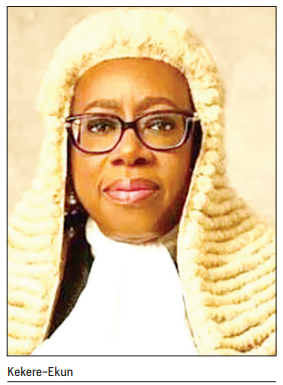
The decision was reached during the Council’s 111th meeting held on May 13, 2026, under the leadership of the Chief Justice of Nigeria, Justice Kudirat Kekere-Ekun.
The new policy established clear conditions for retired public servants seeking appointment to the Bench and is expected to influence judicial recruitment nationwide.
The controversy emerged following a petition challenging the nominations of Ibrahim Abdullahi Yakubu and Bala Salisu Daura as Kadis of the Sharia Court of Appeal in Katsina State.
The petitioner argued that their previous retirement from public service disqualified them from judicial appointment.
After reviewing the matter, the NJC concluded that the Nigerian Constitution does not prohibit retired public servants from serving on the Bench, provided they meet the constitutional qualifications for the position.
The Council also relied on the Court of Appeal judgement in Ayoola v. Baruwa (1999), which held that retired legal practitioners are not barred from judicial appointments.
Under the new framework, retired public servants seeking judicial office must have at least ten years left before reaching the mandatory retirement age for judges.
Candidates must also disclose any criminal convictions, employment history, reasons for leaving previous jobs, existing obligations, and financial status.
The NJC said the policy is aimed at widening the pool of qualified judicial candidates while ensuring transparency and long-term service on the bench. Following the adoption of the policy, the Council approved the appointments of Yakubu and Daura as Kadis of the Katsina State Sharia Court of Appeal alongside other judicial appointments made at the meeting.