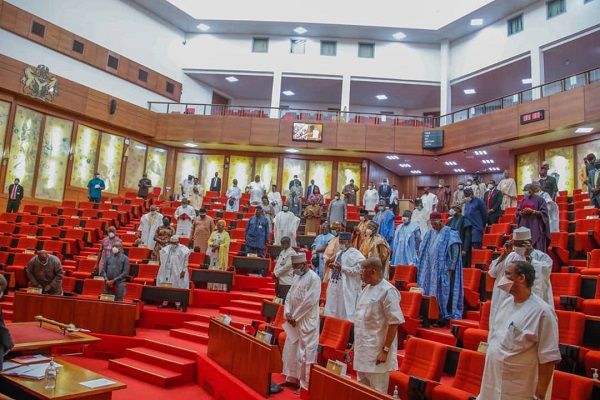

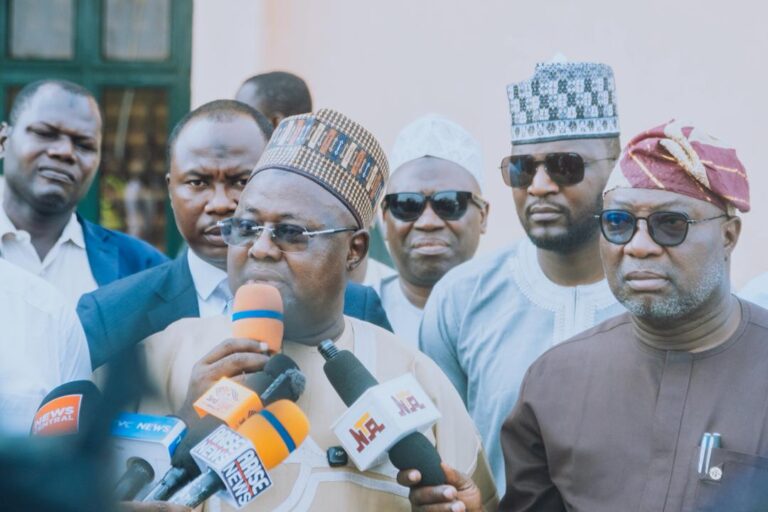

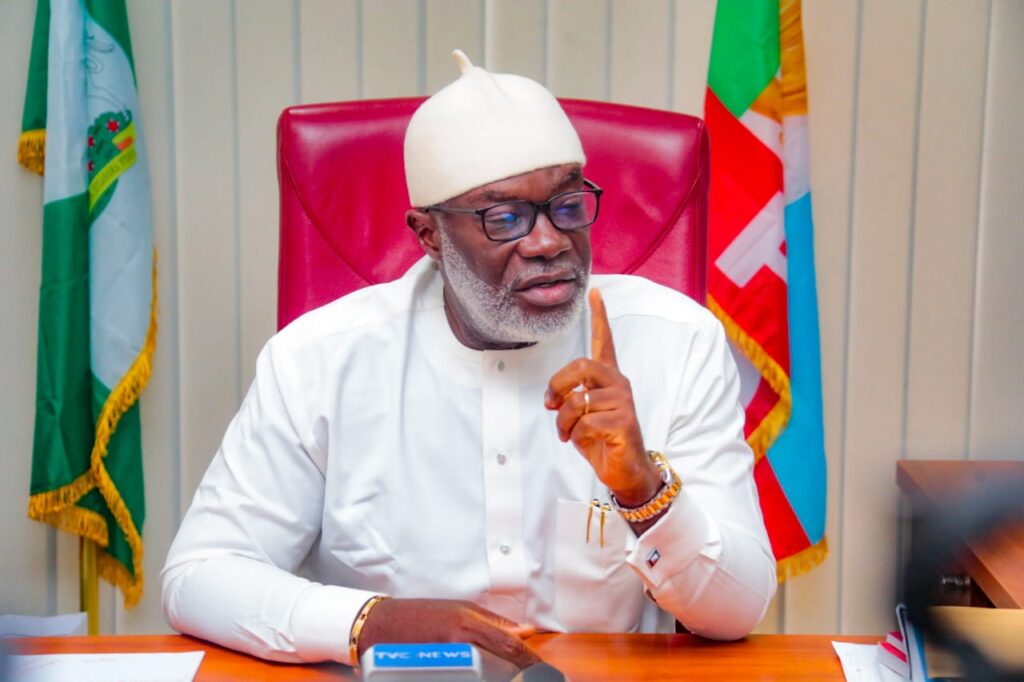
Senator Ezenwa Onyewuchi, representing Imo East Senatorial District, on Thursday, warned Godswill Akpabio-led Senate against initiating a process that would lead to the emergence of predetermined 11th Senate leadership.
Onyewuchi gave this warning against the backdrop of the contentious amendment to the Senate Standing Orders, 2023, (as amended), which restricted new Senators and other categories of ranking Senators from contesting for presiding offices.
The Senator, who addressed journalists before commencement of plenary, vowed to move a motion seeking to rescind the controversial amendment, describing the amendment as “self-serving,” unconstitutional and a dangerous attempt to impose a predetermined leadership structure on the next Assembly.
Onyewuchi said that the decision of the Senate to restrict eligibility for the offices of Senate President, Deputy Senate President and other key positions to only ranking lawmakers returning from the current 10th Senate violated the nation’s constitutional provisions.
He noted that he would formally present a motion immediately after plenary, seeking the reversal of the controversial amendment adopted by the Senate on Tuesday after a prolonged executive session.
Onyewuchi said: “So, I think clearly this issue should be revisited. I am formally going to bring a motion to rescind this decision of the Senate for the common good. Immediately after plenary today, I will bring a formal motion in that respect.”
The amendment, which has caused serious division in the Senate and provoked heated debate in the public, introduced stricter eligibility criteria for the emergence of presiding officers in the 11th Senate expected to be inaugurated in 2027.
Under the revised Standing Orders, only Senators who served in the 9th Assembly and were re-elected from the current 10th Senate would qualify to contest for Senate President and other principal offices.
The amended rules also established a hierarchy for leadership eligibility beginning with former Senate Presidents, former Deputy Senate Presidents, former principal officers, Senators who had completed at least one full term, members transitioning from the House of Representatives and, lastly, first-time senators where no higher-ranking lawmakers emerged.
However, the visibly aggrieved Onyewuchi argued that the Senate exceeded its constitutional authority by introducing qualifications not contemplated by the 1999 Constitution.
“That’s a contentious issue, which is the amendment to the Senate rules. We tried to address it and air our views, but some of those views were diluted by the cacophony of voices because of the contentious nature of the matter,” he stated.
According to him, Section 50 of the Constitution clearly stipulates that presiding officers of the Senate shall be elected by members from among themselves without imposing additional conditions.
“Section 50 of the Nigerian Constitution is clear on it: there shall be a president and deputy president of the Senate who shall be elected by members from among themselves. It did not set further criteria. And any other criteria set outside this, that is in conflict with the Constitution of the Federal Republic of Nigeria, to that extent, is null and void.”
The Senator maintained that although Section 60 of the Constitution empowers the Senate to regulate its internal procedures, such powers could not be stretched to alter constitutional qualifications for elective offices within the chamber.
“The Senate is relying on Section 60 of the Constitution that gives the Senate powers to regulate its internal procedure. But for me, the procedure we are talking about should be for the effective running of the Senate. It should relate to how bills are handled, oversight functions carried out, and how erring members are disciplined, not on fundamental issues that are inconsistent with the Constitution,” he argued.
Citing constitutional supremacy, Onyewuchi further invoked Section 1(3) of the Constitution, which provides that any law inconsistent with the Constitution shall be void to the extent of its inconsistency.
It’s however, interesting to note that shortly after Senator Onyewuchi briefed journalists on his plan, the Senate, during plenary, rescinded the controversial amendment, citing a conflict with the 1999 Constitution of the Federal Republic of Nigeria (as amended).
The apex legislative Assembly effected the reversal following the consideration and approval of a motion sponsored by the Senate Leader, Senator Opeyemi Bamidele, which drew the attention of the Chamber to sessions of the Constitution breached by the amendment.