


The Auditor-General for the Federation (AGF), Mr Shaakaa Chira, has raised concerns over Nigeria’s weak record-keeping culture, warning that poor documentation was fueling tax disputes, inheritance crises, failed businesses and costly legal battles across the country.
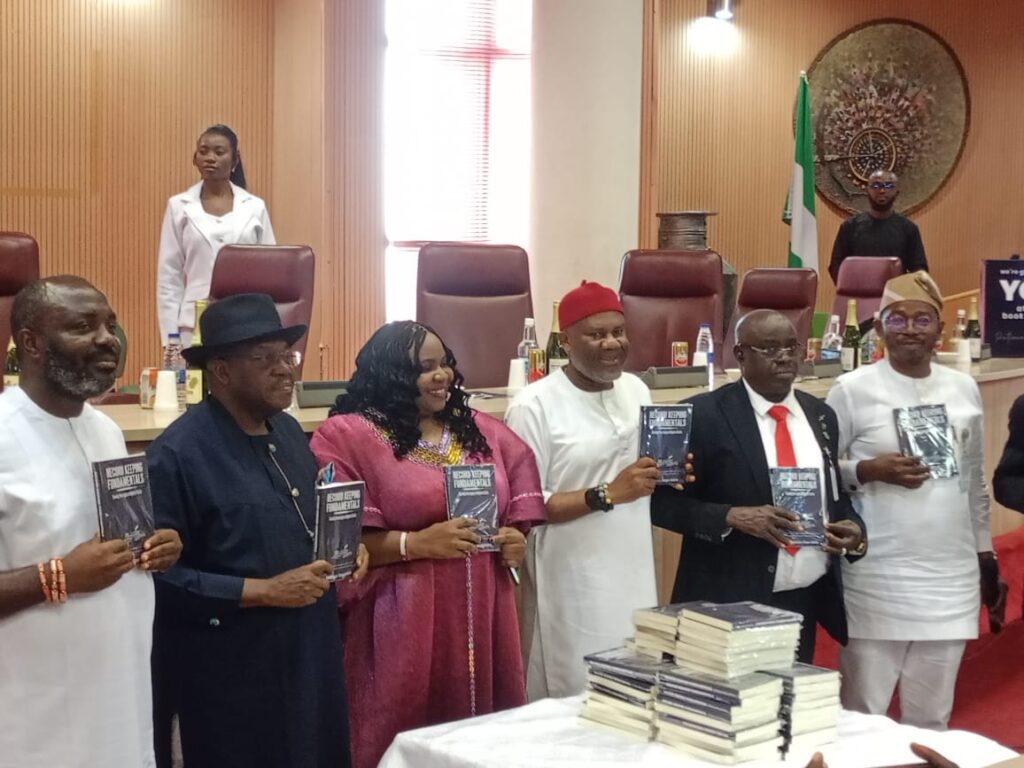
The warning was issued on Thursday in Abuja during the launch of the book, ‘Record Keeping Fundamentals: Securing Your Legacy in Nigeria’s Tax Era,’ authored by Patience Odele, an official of the Office of the Auditor-General for the Federation attached to the Ministry of Foreign Affairs.
Chira, who was represented by the Director of Audit, International Audit Development, Mr Babalola Olanrewaju, described documentation as the backbone of accountability, governance and evidence-based decision making.
He said: “Our only job is to keep the spirits for the benefit of our country. In any way that we can find good things to put pen to paper together for history.”
“To us, record keeping is fundamental to our office. There is an adage we always say that confidence is different from evidence. You could have confidence, but to have evidence is also very important. And evidence comes from documentation.”
The auditor-general stressed that poor documentation could distort personal, institutional and national history, noting that proper bookkeeping was essential not only for government agencies and businesses but also for families and individuals.
“All of us seated here, if our bookkeeping from our date of birth is not well recognised, we might find a lot of distortion in the process of our growth.”
He added that the book would serve as a critical reference material for future generations, households and organisations.
Reviewing the book, Director of Audit in the OAGF, Dr Fawale Ayinla, said Nigeria’s poor record-keeping practices were already causing excessive taxation, inheritance disputes, rejected loan applications and avoidable court losses.
According to him, the book draws from the author’s over 13 years of auditing experience and targets entrepreneurs, family business owners and households.
“Nigeria’s poor record keeping causes costly problems — excessive taxes, inheritance disputes, failed succession, rejected loans, and lost legal cases.”
While explaining that the publication highlights legal obligations under Nigerian tax and corporate laws requiring individuals and businesses to maintain accurate records, he warned that failure to maintain tax documentation often exposes businesses to harsh penalties and inflated tax assessments by revenue authorities.
“Without record, the Nigerian Revenue Service issues a best-of-judgment assessment, often overestimating liabilities, emphasising the importance of proper record keeping.”
Ayinla also cited several court cases where poor documentation either weakened or strengthened legal claims, as he stressed the importance of maintaining permanent records such as birth certificates, marriage certificates, wills, property deeds and powers of attorney indefinitely.
The author, Patience Odele, said the inspiration to write the book came during one of her official assignments reviewing records of ministries, departments and agencies.
Odele insisted that record keeping should not be seen as an accounting function alone, describing it instead as a social responsibility affecting every aspect of life.
She warned that poor documentation often leads to family disputes, business losses and legal complications.
“If you don’t have a proper record, you’re deceiving yourself. You’ll have problems tomorrow. But if you have proper records, even in your businesses, when you transact with someone, the invoices are there to prove the evidence of what you’re talking about,” she said.
The author lamented that Nigerians largely rely on verbal culture rather than documentation.
“The truth of the matter is that, honestly speaking, we Nigerians don’t have a record-keeping culture. We have an oral record-keeping culture.”
She, however, expressed hope that the book would help educate younger generations on the importance of preserving personal, financial and institutional records.