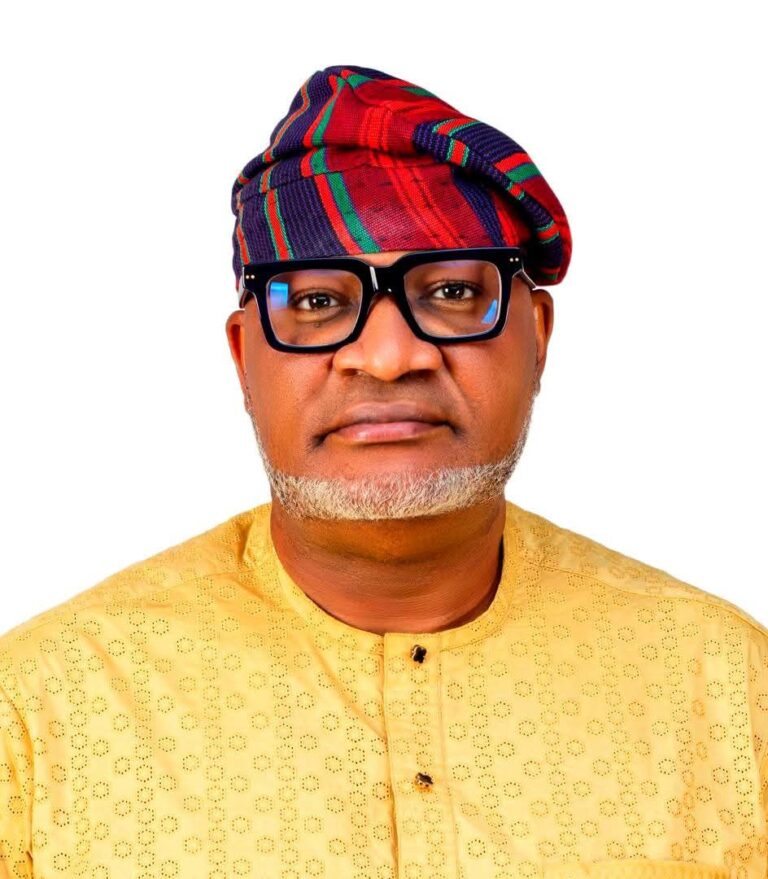
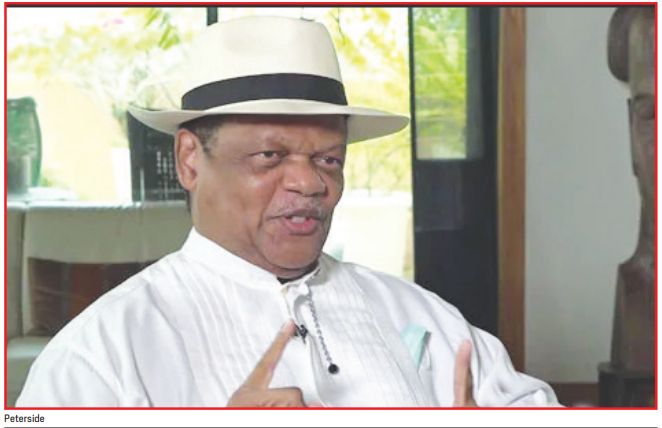
Atedo Peterside is the President of ANAP Foundation and founder of Stanbic IBTC. In this interview monitored on Arise Television, he speaks on the ruling of the Supreme Court on the Peoples Democratic Party (PDP) and the African Democratic Congress (ADC) leadership crises, among other issues, ANAYO EZUGWU reports
You’ve said that democracy rests on credible elections and a trusted judiciary. Based on what we’ve seen from the Supreme Court, are those pillars being strengthened or strained?
I heard about the Supreme Court ruling, but with all due respect, I don’t trust our judiciary. I’m not a lawyer but if I understand what the Supreme Court ruled in the interim, David Mark can continue but the substantive suit goes back to the High Court or wherever and who knows what’s going to happen down the road?
All I can tell you is that only some Nigerians get prompt hearing from our judiciary. The rest of us, including you and I, if we brought a similar case as the fellow from ADC that came to court, you’d be lucky to get a hearing in even six months. My father had a case in the judiciary.
It took 23 years to be resolved from the High Court to the Supreme Court. The only people that go around courts getting quick hearing and getting all kinds of attention, are people who generally are either gaming the system. I’ve heard, and please, I rely on what judges say.
I’ve heard judges like ex-Supreme Court justice, like Amina Ogi, tell you about how registrars and all those people decide who get their case to be heard and all that. Ordinary Nigerians cannot go to court and get a quick hearing on a matter like this. Only people who are highly privileged or sponsored by the powers that be get all this attention and quick response. So, let’s put that matter aside.
ADC appears to have got a second wind, looking ahead, who do you realistically see emerging as its presidential candidate from the primaries or consensus or whatever they decide?
I think one thing that INEC has done for the ADC is that Nigerians historically have a bit of a David and Goliath mentality. When they see an INEC or a federal government agency appearing to bully one of the opposition parties, it increases their sympathy for that opposition party.
The worst thing that the All Progressives Congress (APC) or INEC could have done to ADC was to ignore them. Then they would have been struggling to tell the nation that they are the most credible opposition party. But by going after them in this way, you make everybody believe that there’s something about the ADC that warrants all this attention.
If this government and INEC make the mistake of going into a general election with only one major party, I won’t predict what will happen to the nation, but all bets are off in terms of stability
I have friends in America in public relations; they say any kind of PR is good PR. If every day, the headline stories are about ADC in the courts, it creates an impression that there’s something about ADC. If they’d ignored them, Nigerians would be debating about the most credible opposition party.
But by focusing so much on the ADC, they’re indirectly telling us that there’s something about the party that we need to watch out for. So, perhaps there’s something about the ADC that worries INEC or worries the federal government or worries APC, I don’t know. But they are the ones drawing attention to ADC every day, and I think it’s a mistake on their part.
Turning to the other main opposition party, the Peoples Democratic Party (PDP), do you see the party stabilising or sliding further into uncertainty after the ruling?
With Atiku having left the party and many others like David Mark leaving the party, forget about what any court says, PDP is no longer the PDP of the past. Whatever PDP had, has probably transmuted into ADC. That’s my own estimation.
Looking at the opposition as a whole, including the Labour Party (LP) and Social Democratic Party (SDP), who in your assessment, is in the running with a good shot in the 2027 presidential election?
I think I gave a hint already. If I’m a betting man, I would say it’s a two horse race between APC and ADC. That is, if INEC and the courts would allow ADC to run. But even if they don’t allow them to run, then we have a major crisis on our hands. But I think everybody knows that the major opposition party is the ADC.
And by the way, that’s partly why I left SDP. I was in SDP trying to make SDP a major political party but as soon as negotiations fell apart and it became clear that SDP was not going to be the major opposition party, I had no business there any longer. So, ADC is the party that people who believe in opposition have decided to coalesce into.
Based on everything you’re seeing, Nigeria is drifting towards a de facto one party state, or is that an exaggeration based on your own assessment? I think if this government and INEC make the mistake of going into a general election with only one major party, I won’t predict what will happen to the nation, but all bets are off in terms of stability.
That’s my assessment. So, I would advise whoever has ears to listen. People keep on asking why I am always quoting John F. Kennedy. If you want stability in a political system, you have to make people believe that some change is possible, that you’re willing to allow some contest, a meaningful contest.
Once you make it clear that for whatever reason or through whatever manipulation of the system, you won’t allow that, then all bets are off. We’ve seen it before. We saw when General Sani Abacha created an environment where he was heading to be the sole candidate. Those things can’t endure, they won’t endure. So, I hope whoever has ears is listening.
In 2023, your ANAP foundation-backed polling that correctly anticipated a three horse race well before the ballots took place. What does your current reading suggest?
I think this time round, if INEC would allow an opposition party to take part in the elections, you would probably have a two horse race between APC and ADC.
In any case, I’m not saying anything profound. The three candidates that came second third and fourth last time for presidency are all in ADC. In fact, what APC has done for them and INEC is to help them to coalesce and come together, because when you attack a new group, you force them to unify.
If you leave them alone, they’ll probably start dividing themselves sooner or later. Also, if you look at the numbers, I think go and check ADC registration, many more people rushed to register to join ADC after INEC began to harass them. I got this figure from the ADC the last time I checked their registrations.
The number one state in terms of registration was Kaduna State. That’s probably the Nasir El-Rufai influence. Again, another mistake, when you lock up people unjustly for so long, refuse to grant them bail, they get sympathy and their supporters get mobilized and start registering and getting interested. So, the last figures I saw had Kaduna, Kano, Adamawa at the top.
An interesting thing is that the states in the North-West and the North-East are those with the largest number of people who have registered. Lagos, I think, was all the way down to number 20 or something like that and so if you look at that trend, it’s like the people in the North-West and NorthEast are the most politically active in the opposition so far.
Of course, all this can change and that is a bit of a surprise. It’s a bit of a surprise because ADC actually allows online registration. And online registration is very easy for those who are literate.
So, you would have thought that the people who are highly literate would register online from their homes or from their phones. But it’s not happening that way. Instead, it is the states that are not so sophisticated in terms of technology and all that, that are registering the most. So it’s like people are being mobilized and are coming out to register.
Based on the registration details that we’re seeing, people like Atiku is influencing registration in Adamawa and Kwankwaso in Kano, but we’re not seeing the influence of Obi in the South. Why is it so?
Yes, I don’t see the influence of Obi. That’s one of those things in Nigeria that people say, I said you can register online. The Obidients are educated and sophisticated, but they’re not taking part. They’re not registering in ADC. I don’t know whether Obi has reached out to them to register or whether they’re waiting for the last minute.
But people who are educated sometimes get so clever; they want to wait for the very last minute. They want to hear what the Supreme Court has said. But, so far, it’s not showing. So, if I was a betting man and these numbers remain the way they are. It looks as if the ADC has a very strong northern influence and not so strong in the south so far.
What does the crisis in the Middle East mean in real terms for Nigeria’s economy and is Nigeria positioned to benefit from higher oil prices or exposed to the downside risks?
I don’t think that Nigeria is going to enjoy a phenomenal windfall from higher oil prices, because I keep on hearing that a good chunk of our oil was sold forward in all kinds of arrangements involving the Nigerian National Petroleum Corporation (NNPC). So, it is the party that bought the oil forward who benefits from the upside? Of course, if the high prices stay for a very long period, then we get the benefits.
And even if it stays for a short period, we get the benefit from the portion of the oil that is sold spot and that was not contracted forward. But sadly, the biggest shock we got immediately, of course, was increasing domestic fuel prices. I think the most dramatic or the most alarming was aviation fuel. In the US, if you go and check it out, petrol prices went up, let’s say 40- 45 per cent.
In Nigeria, we’re talking about an increase of over 150 per cent in aviation fuel prices. I know people are always surprised that aviation fuel is so special. It’s because of a very simple reason. Aviation fuel is almost a natural monopoly or an oligopoly. You have to buy fuel from the people that have the facilities at the airport and they are always very few. So, they can take advantage.
Also, the person supplying them can take advantage of the situation. And when they tell you 100 per cent, 150 percent, what do you do? You cannot carry your plane to the market to go and buy fuel somewhere else. You have to buy from them. Also, we don’t have a regulator or it looks as if we didn’t have a regulator in the system. So, that’s why the price shock for the aviation sector has been phenomenal. That’s one negative.
The other thing, of course, is that even diesel and petrol prices have gone up and so many companies are going to witness rising costs. So, in the very short term, I don’t see any benefits to Nigeria from this war in Iran. If anything, it’s rising costs for various businesses on account of the war.
What’s your reaction to the removal of the Finance Minister, Wale Edun, which the President has insisted is a resignation, but others said was a sack?
Well, it was the same authorities that told us he was sacked that later told us that he resigned. I think probably it’s a bit of both, because usually ministers don’t resign until the boss agrees to let them go.
So, one thing is sure, he has gone. But I think more importantly, the decision to say it was a resignation is a good one for the government, because the Coordinating Minister of the Economy is a very important position.
You cannot in one breath say everything is going fine with the economy and then you are sacking the coordinating minister. Then people start saying, but if everything is going fine, why are you sacking the coordinating minister? So I think somewhere down the line, somebody decided that let’s accept the resignation letter and let’s move on.
But in any case, the problem with the economy is that it’s a severe fiscal imbalance. We don’t have the revenues that we have been projecting so far. And that’s the reason why the capital expenditure for the budget is seriously underfunded.
If you stay in Lagos or in Abuja, you may get a false sense that things are not that bad. If you want poverty to hit you in the face, go and visit other states
In the meantime, we were racing ahead with massive projects like the Lagos-Calabar Coastal road that was never properly debated or discussed by anybody. So, there’s a revenue shortage. And if you insist on spending the way this Federal Government has been spending and you don’t have the revenue, there are only three things you can do.
One, you either go and raise the revenue somehow, which they failed to do so far. Two, you borrow money or three, you print money. There’s no fourth way. I think after the experience of the last government, when the governor of the Central Bank, Godwin Emefiele, under President Muhammadu Buhari, was printing Naira like a drunken sailor, I think everybody decided that printing money is not something we want to do just yet.
So, Yemi Cardoso is not going down that route. So, that puts the burden of the adjustment into other areas. You have to raise the revenue from taxation or you borrow money. And I think the reason why the capital expenditure was underfunded from several ministries, we had the Health minister cry out that in 2025, they only got N36 million, is because they just didn’t raise the revenue. It’s a serious crisis.
Apart from government not having the revenue and therefore witnessing a fiscal imbalance or fiscal crisis, the bigger thing is the number of people being thrown into poverty is increasing all the time. And we also have an income distribution problem. So, it’s not even true that the pain is felt evenly across Nigeria.
Do you think the Tinubu administration’s economic reforms are still on track or are there in your assessment signals that suggest that they are not and if so, where does your concern lie?
I think I’ve already mentioned the fiscal imbalance. If you’re not careful, this current year, barring the miracle, we will finish up with a thirty five trillion Naira deficit or something like that.
So, the government from the first day was going ahead as if because they removed the fuel subsidy, because they had allowed the Naira to adopt a realistic exchange rate, they could spend all the money.
But that’s not really true. They didn’t have the money. And it shows that if they had the money, they would be able to fund all the capital expenditure. What people forget is that the way President Buhari’s government funded the fuel subsidy was largely by borrowing.
So, we didn’t have the revenue then, we don’t have the revenue now. Then combination of state capture and corruption has made us prioritize funding projects. That’s why health will suffer and defence, military spending, they won’t get what they need because people are prioritizing what seems to be their own pet projects through this state capture and corruption.
And then finally, the impact we see is the distorted income distribution. And please, the income distribution I’m talking about, if you look at the breakdown across the states, you may understand why people who are based in Abuja and who only travel to the southwest may think that things are not so bad. Because the states that have poverty above 60%, there’s no southwest state in there.
You’ve got to go to those other parts of the country where poverty is ravaging millions of people to feel the pain. And that’s why some people don’t like traveling, because if you stay in Lagos or you stay in Abuja, you may get a false sense that things are not that bad. If you want poverty to hit you in the face, go and visit other states.
I think you have a chart out there showing you the top states in terms of poverty. You will see that there’s no state in the South-West up there in terms of extreme poverty. It’s from around number 24 downwards, or the bottom 20 states in Nigeria, that poverty is really gripping.
If you had to send one message to policymakers, what would it be, given the intersection of political uncertainty and economic pressure?
I would beg them and plead with them that let those at the top live by example. Let them begin the bell tightening right from Aso Rock, right from Abuja and right from the villa. Let them show that they understand what 130 million Nigerians are going through. They should not exempt themselves from the pain.
They should lead by example and stop all this wastage and recklessness. We see people going to the airport and 100 cars in a convoy or 50 and all that. Who’s paying for all that fuel?
Why are we sending those kinds of signals at a time when 130 million Nigerians are dead poor? They should tighten their own belt and take it seriously and lead by example.