


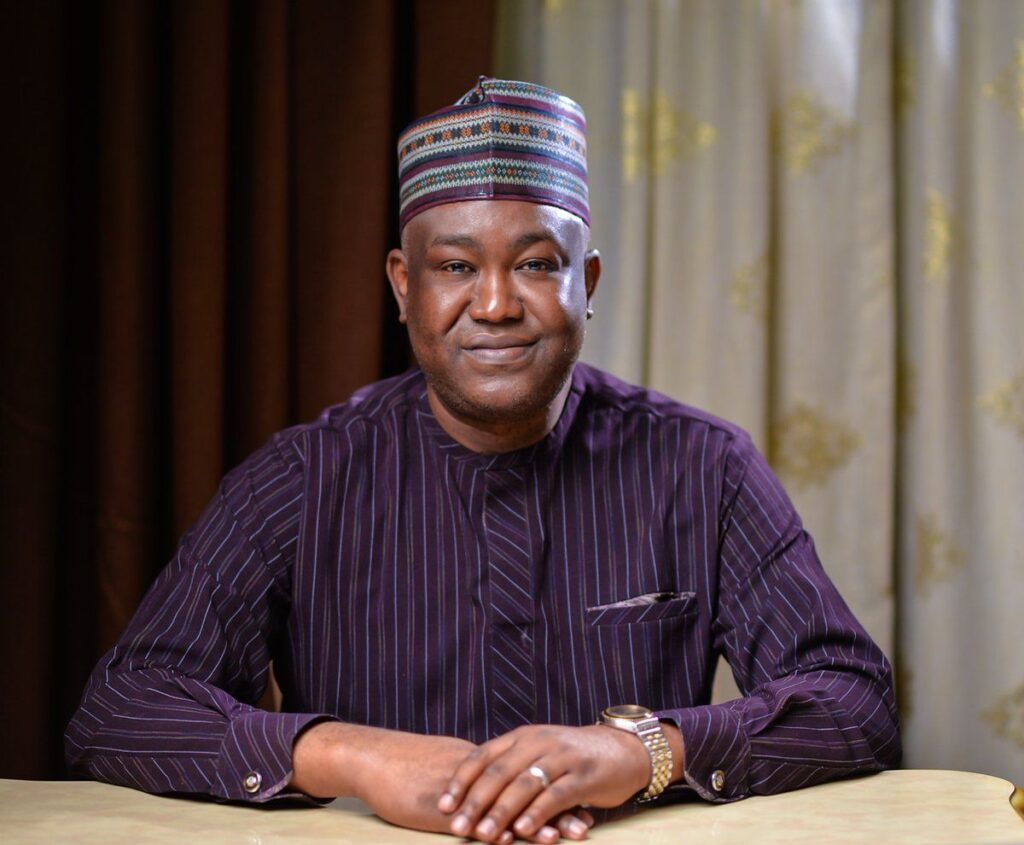
A former presidential candidate, Gbenga Hashim, has drawn fresh attention to the sacrifices that birthed Nigeria’s democracy; warning that current political developments in the country demand renewed vigilance from citizens and leaders alike.
In a reflective statement titled: “Reminiscence: The Price of Our Democracy,” Hashim recalled his detention during the late 1980s and the global solidarity that followed, noting that Nigeria’s democratic freedoms were earned through “incarceration, tears, blood, and, for many, the ultimate price.”
His remarks come at a time of heightened national debate over governance, democratic accountability, and the direction of political leadership under President Bola Tinubu’s administration.
Hashim revealed that two historical artifacts recently resurfaced, offering a vivid reminder of that era. The first, a December 1989 publication by the International Union of Students, documented an international campaign calling for his release alongside South Korean student activist, Rim Suyong. In the absence of an official photograph, the publication used an illustrative image to represent him.
The second, he said, was a handmade protest poster demanding the release of himself and his colleague, Gbenga Komolafe, who later joined him in detention, highlighting the grassroots and international dimensions of the prodemocracy movement. Reflecting on the present, Hashim cautioned that while Nigeria has made significant progress since the return to civil rule, the ideals that fueled the struggle, freedom, justice and accountable governance, must not be taken for granted.
“Our generation stood at the forefront of a global pro-democracy movement that swept across Africa, Eastern Europe, and Asia,” he stated, adding that the responsibility to protect and deepen democracy now rests with all Nigerians.
In another development, Hashim condemned the brutal attack on worshippers at Christ Apostolic Church (CAC) in Eda Oniyo, Ilejemeje Local Government Area of Ekiti State, describing the incident as shocking and deeply disturbing.
He expressed profound sorrow over the loss of life and the abduction of innocent worshippers, while extending condolences to the family of the slain pastor, the church, and the people of Eda Oniyo and surrounding communities. “My thoughts and prayers are with those abducted, and I stand in solidarity with their families at this painful time,” he said. Hashim, however, raised concerns over the reported delay in security response despite distress calls made during the attack, noting that timely intervention could have significantly reduced the scale of the tragedy.
While acknowledging the deployment of security personnel currently combing nearby bushes in search of the abductors and victims, he stressed the need for a more proactive, intelligence-driven security architecture. “Our communities cannot continue to live at the mercy of criminal elements. Places of worship must remain sanctuaries of peace, not theatres of violence,” he stated.
He called on security agencies to intensify efforts to secure the immediate release of the abducted victims and ensure the perpetrators are swiftly apprehended and prosecuted. He further urged governments at all levels to strengthen local security frameworks, improve rapid response capabilities, and restore public confidence in the safety of lives and property