


CHUKWU DAVID reports on how the Senate defended the upward review of the 2026 Budget and the Red Chamber’s explanation on why it considered and approved President Bola Tinubu’s request to increase the year’s budget by N9.09 trillion
The Senate has defended its March 31 decision to raise the 2026 Appropriation Bill by N9.09 trillion, insisting that the increase was necessary to address funding gaps, inherited obligations and critical infrastructure needs ahead of the 2027 general election. The Red Chamber expeditiously passed a revised N68.323 trillion budget, up from President Bola Tinubu’s initial proposal of N58.472 trillion submitted to the National Assembly on December 19, 2025.
President Tinubu had tagged the original proposal the “Budget of Consolidation, Renewed Resilience and Shared Prosperity,” with priority allocations to security and capital projects. However, he later transmitted a formal request for an upward review. The letter was read on the floor during plenary on March 31, by the President of the Senate, Godswill Akpabio. The Senate’s swift consideration and passage of the request drew immediate criticism from sections of the public.
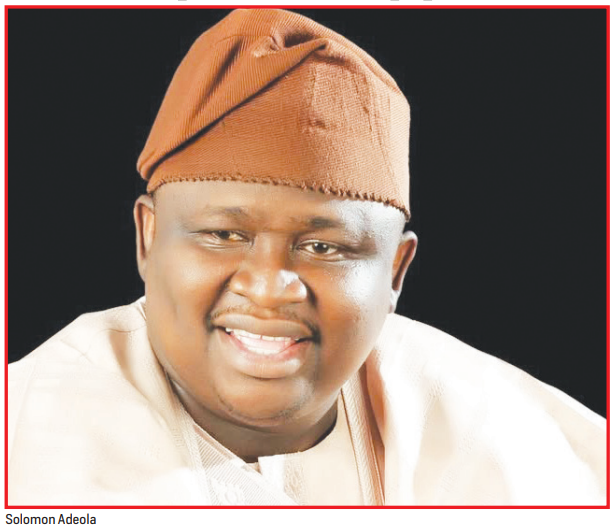
But critics accused the lawmakers of bypassing rigorous legislative scrutiny before approving the adjustment. Responding to the backlash, the Senate leadership said the process was transparent and followed due legislative procedure. It stressed that every addition was backed by formal executive correspondence and vetted by both chambers. Chairman of the Senate Committee on Appropriations, Senator Solomon Adeola, presented the committee’s report on the floor.
He said the adjustment was to “regularise outstanding commitments from previous fiscal years, align the budget with current economic realities, and maintain macroeconomic stability.” Adeola explained that the President’s supplementary request was designed to capture “emerging national priorities” and plug financing gaps in critical sectors that were omitted in the initial proposal.
A breakdown of the revised N68.323 trillion budget shows N32.287 trillion for capital expenditure, N15.809 trillion for debt servicing, N15.427 trillion for recurrent non-debt expenditure and N4.799 trillion for statutory transfers. The capital component, which represents the largest share, reflects what Adeola described as a “strong commitment to infrastructure development and economic expansion.”
Of the N9.09 trillion increase, approximately N7.7 trillion is earmarked for outstanding capital commitments and “legacy projects” spanning 2023–2025. The Senate said this will prevent stalled projects and ensure value for money amid current economic pressures. An additional N5.71 trillion was provided to sustain ongoing projects and avoid disruptions as the 2025 budget cycle winds down.
Adeola noted that implementation delays had created a funding gap that risked a lapse in government activities. Another N2 trillion was allocated to cover legacy infrastructure projects inherited from previous administrations. He said the provision would ensure critical projects remain uninterrupted and are completed as planned. Beyond infrastructure, the revised budget accommodates new obligations in key sectors.
These include N482 billion as counterpart funding for international health agreements, which Adeola said is required for Nigeria to meet multi-year financial commitments to global health stakeholders.
The judiciary received about N403 billion to address rising caseloads and personnel shortages, particularly at the Court of Appeal. Adeola argued the funding was necessary to enhance efficiency and reduce delays in the justice system. A N456 billion provision was also made for a strategic infrastructure initiative designed to promote equitable development across regions.
Another N8.69 billion was set aside for feasibility studies, including preparatory work on the proposed super highway project. Adeola tied the revised fiscal plan to President Tinubu’s Renewed Hope Agenda, calling it a “Budget of Consoldation” aimed at sustaining reforms and strengthening economic recovery. On financing, the committee chairman said the N9.09 trillion increase would be covered through a mix of higher revenue benchmarks, independent revenue, and borrowing.
The oil benchmark was raised from $65 to $75 per barrel, projected to generate an additional N2.5 trillion. He also cited expected contributions from the telecommunications sector, including revenue from the Nigerian Communications Commission (NCC) and major operators through taxes and investment inflows.
Adeola acknowledged that borrowing remains part of the strategy but maintained that it is standard practice globally for financing development. He said the focus should be on utilization, pointing to ongoing road construction and other visible projects as evidence of impact.
Responding to concerns over Nigeria’s debt profile, he stated that the government is servicing obligations as they fall due, much of which was accumulated by previous administrations. Consistent repayment, he added, is crucial for maintaining Nigeria’s global financial reputation and access to credit markets. The senator expressed optimism about the economy, noting that recent reforms are yielding results. He cited improving macroeconomic indicators and renewed investor confidence as signs of stabilization.
He referenced recent international engagements where commitments worth billions were secured to support infrastructure and other priority sectors, saying these would complement budgetary allocations. Adeola urged Nigerians and the media to assess the budget not just by its size or borrowing component, but by delivery and measurable outcomes in infrastructure, healthcare, justice and job creation.
He affirmed that the National Assembly will collaborate closely with the executive to ensure effective implementation of the 2026 budget, stressing that synergy between both arms is vital for achieving development goals. With prudent resource management and sustained reforms, Adeola expressed confidence that Nigeria would remain on a growth trajectory and gradually reclaim its position as a leading economy in Africa








