
The Presidential candidate of the Zenith Labour Party (ZLP), for the 2027 general election, Barrister Dan Nwanyanwu, has unveiled an ambitious governance agenda centred on national unity, security reform, anti-corruption measures, economic growth and constitutional restructuring, promising to address what he described as Nigeria’s most pressing challenges if elected.
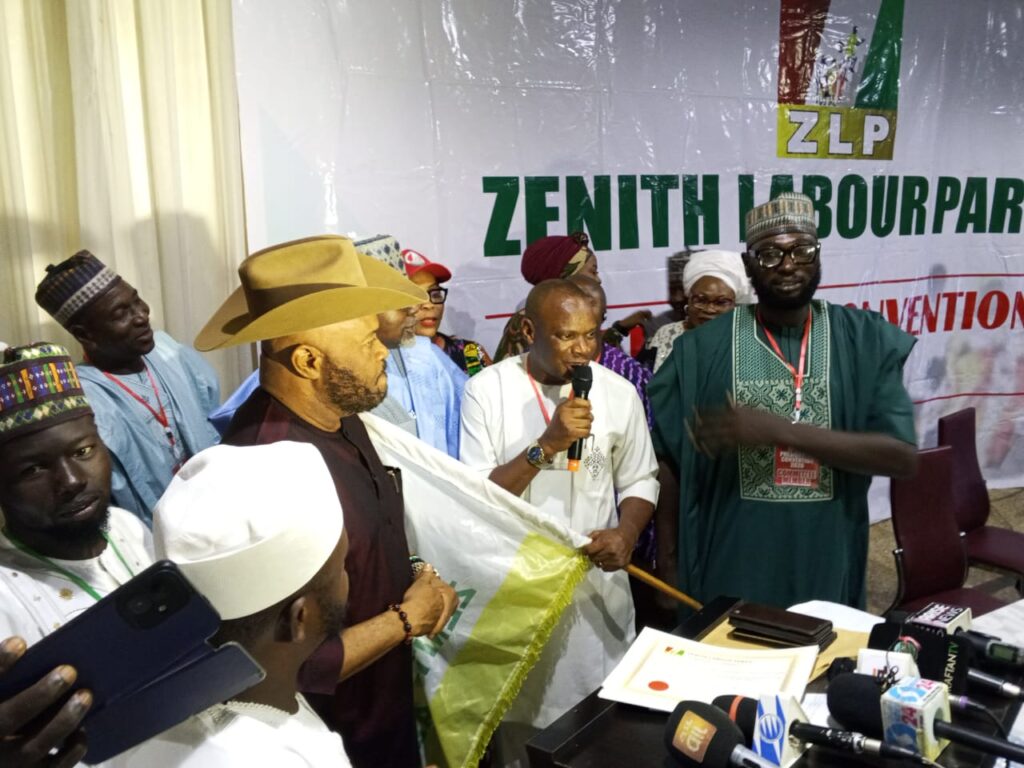
Nwanyanwu made the declaration at the ZLP National Convention held in Abuja, where he emerged as the party’s flagbearer for the next presidential election.
Addressing delegates and party supporters, the ZLP presidential candidate described insecurity as one of the gravest threats facing the nation, warning that continued violence and criminality could further undermine economic growth, national unity and public confidence in government.
In his acceptance speech, he said restoring national unity would be the immediate priority of his administration, arguing that ethnic and religious divisions have weakened public trust and threatened the country’s cohesion.
He lamented that many Nigerians, particularly young people, were losing faith in the nation’s future, stressing that inclusive governance and equal opportunities would be pursued to rebuild confidence in the Nigerian project.
“My administration will treat national unity as a matter of urgent national importance. We will promote inclusive governance, guarantee equal rights and opportunities for all citizens, and build institutions that foster patriotism, mutual trust and national cohesion.”
On security, he pledged a comprehensive overhaul of the country’s security architecture, including the establishment of federal, state and community policing systems through constitutional reforms.
According to him, security agencies would be better equipped and empowered to combat terrorism, banditry, kidnapping and other violent crimes, while individuals and groups involved in criminal activities would face swift prosecution.
He also vowed to target financiers, sponsors and collaborators of criminal networks, saying insecurity had become a major obstacle to national development and investment.
“It is impractical for a nation as large and diverse as Nigeria to rely solely on a highly centralized policing system,” he stated.
The candidate further promised to improve the welfare of security personnel while ensuring accountability and sanctions for misconduct among security operatives.
On corruption, he pledged a zero-tolerance approach, promising to strengthen anti-graft agencies through legislative reforms and place greater emphasis on preventive measures.
He said his administration would undertake comprehensive audits of government institutions and agencies to identify financial leakages, recover diverted public funds and improve transparency.
Recovered resources, he noted, would be channelled into critical sectors such as healthcare, education, infrastructure and social development.
Addressing Nigeria’s chronic electricity challenges, the presidential candidate outlined plans for far-reaching reforms in the power sector, including greater private-sector participation, investments in renewable energy and increased involvement of state governments in electricity generation and distribution.
He said Nigeria’s abundant energy resources, including gas, hydro, coal and solar, would be harnessed to boost electricity supply and drive industrialisation.
On economic development, he promised policies aimed at improving the ease of doing business, attracting investment and supporting entrepreneurship, particularly among young Nigerians.
The candidate pledged to simplify procedures for land acquisition, business registration, permits and licensing, while expanding access to finance for small and medium-scale enterprises.
“Our goal is to stimulate entrepreneurship, create jobs and increase productivity across various sectors of the economy. Young Nigerians must be empowered to become creators of opportunities rather than passive seekers of employment,” he said.
He also identified education as a key pillar of his proposed administration, promising reforms to improve literacy levels, raise educational standards and expand access to quality education.