



A new national study has revealed a profound mismatch between female enterprise ownership and access to institutional finance in Nigeria, disclosing that while women own nearly 40 per cent of businesses across the country, they continue to receive a disproportionately small share of formal credit.
The Gender Equity and Social Inclusion Baseline Report, launched by the Impact Investors Foundation on Thursday in Lagos, laid bare a stark systemic capital mobilisation gap, noting that a mere 23 per cent of Nigerian women currently hold formal bank accounts compared to 77 per cent of their male counterparts.
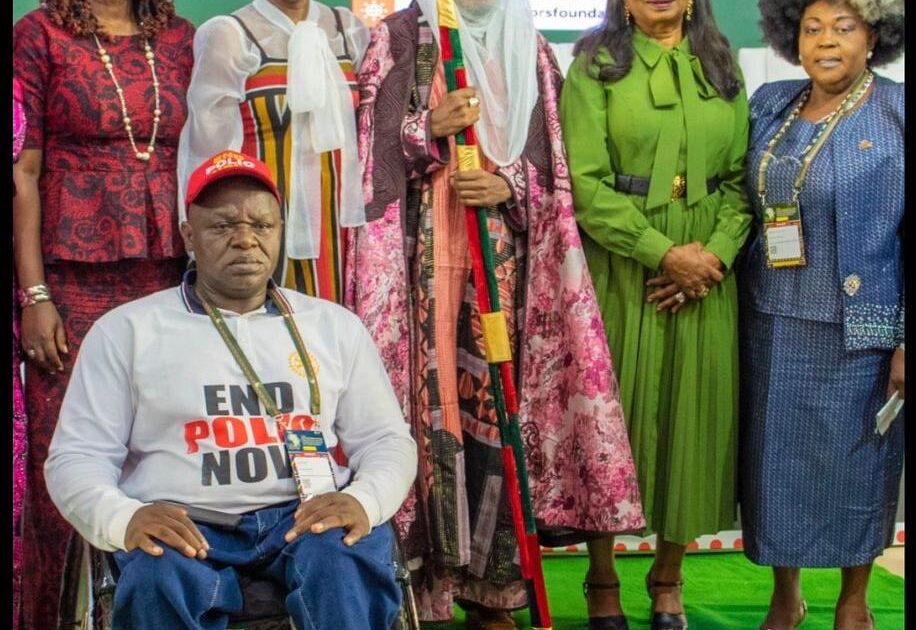
The event, themed ‘From Commitment to Action: Strengthening Inclusive Gender Lens Investment for Nigeria’s Growth’, served as the launchpad for the historic Gender Equity and Social Inclusion Baseline Report.
Speaking at the event, the Chief Executive Officer of the Impact Investors Foundation, Etemore Glover, delivered the core finding behind the study.
Glover said, “The GESI Baseline Report is more than a document; it is the data-driven foundation required to fix structural barriers in our financial system. While women own nearly 40 per cent of Nigerian businesses, they receive a disproportionately small share of formal credit.
“This report empowers stakeholders to identify acute gaps and benchmark progress as we move toward a truly inclusive economy.”
The economic urgency of the report’s findings was further underscored by critical banking data highlighted at the summit.
The baseline survey revealed a severe mobilisation gap in inclusive capital, showing that only 23 per cent of Nigerian women currently own bank accounts, standing in sharp contrast to the 77 per cent recorded for their male counterparts.
Furthermore, while the impact investment community has set an ambitious target to deploy $8bn in inclusive capital by 2035, data as of May 2026 shows that only $1.25bn has been mobilised to date, leaving a massive $6.75bn deficit.
Beyond bank account ownership, the GESI report found that only 22 per cent of women hold leadership positions in the organisations surveyed, and representation for Persons Living with Disabilities remains critically low at just five per cent.
Key speakers at the summit emphasised that gender inclusion is no longer a social welfare issue but a core prerequisite for national prosperity.
The Chair of GSG Nigeria Partner, Ibukun Awosika, noted that the conversation must shift away from standard philanthropy towards deliberate economic strategy.
Awosika remarked, “This is not a girl-child conversation; it’s a national development issue. It’s about how we strategically make the right decisions that affect 50 per cent of our population in a way that we can achieve scalable growth that impacts our economies.”
The keynote address, titled Turning Gender Equity into Economic Advantage, was delivered by the Emir of Kano, Khalifa Sanusi II.
The former CBN Governor focused heavily on the lack of political and institutional will to institutionalise gender equity, pointing out that, despite political cycles, the “woman issue” is often sidelined for tokenism.
Sanusi said, “Since 1999, I have never seen a political cycle where, as part of the campaign, there was a discussion of our women. No presidential candidate, no governorship candidate, has ever said, ‘I am going to do this for women,’ apart from giving poor women N50,000 empowerment or bags of rice.”
He further challenged the current leadership in the private sector to ensure that progress is not halted at the top, specifically referencing the 10 female bank CEOs currently leading in Nigeria.
“We do not want ‘Queen Bees.’ We do not want women who get to the top and forget other women,” Sanusi added.
“I would like to know how many of them have put in place gender inclusion and equality policies, because they are beneficiaries of these policies,” he noted.
The summit concluded with a strong push for institutional accountability, attempting to pivot from high-level corporate pledges to measurable outcomes.
To bridge these capital gaps immediately, the IIF introduced enhanced physical and virtual “Deal Rooms” to connect institutional investors directly with ready-to-scale, women-led enterprises.
The initiative has already resulted in initial soft commitments of approximately $250,000 from investors.
The foundation, alongside participating financial institutions, development finance institutions, and policymakers, is now urging both the private and public sectors to embed GESI diagnostic tools into their operations to ensure the remaining $6.75bn funding gap is aggressively closed over the next decade.