
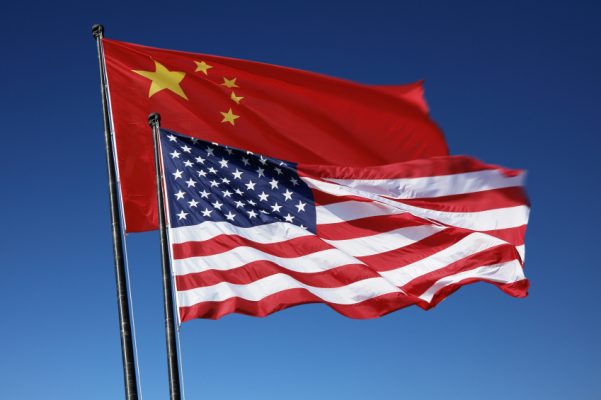
The United States and China are locked in a fresh confrontation over sanctions targeting Chinese oil refineries accused of processing Iranian crude, escalating tensions between the world’s two largest economies.
According to Oilprice.com, China’s Ministry of Commerce has issued a prohibition order directing companies operating within its jurisdiction to disregard US sanctions imposed on five Chinese refineries.
The move marks Beijing’s first use of its 2021 Blocking Rules, a legal instrument designed to counter foreign measures deemed to have extraterritorial reach.
The development follows sanctions announced in April by the US Treasury Department against the affected refineries, which Washington accuses of generating billions of dollars in revenue for Iran by refining its crude oil in defiance of existing restrictions.
The Chinese government, however, rejected the US action, arguing that the sanctions violate international law and constitute interference in China’s internal affairs.
Citing its Anti-Foreign Sanctions Law and the Blocking Rules, Beijing has instructed domestic firms to continue business dealings with the targeted refineries.
The order effectively places multinational companies and financial institutions in a difficult position. Firms that comply with US sanctions risk breaching Chinese law and facing penalties such as fines, lawsuits, or operational restrictions within China.
Conversely, those that adhere to Beijing’s directive could be exposed to secondary sanctions from Washington, including the possibility of losing access to the US dollar financial system.
Among the refineries covered by China’s protection order is Hengli Petrochemical’s Dalian facility, one of the country’s most advanced private refining complexes.
The list also includes four independent “teapot” refineries—Shandong Jincheng Petrochemical, Hebei Xinhai Chemical, Shouguang Luqing Petrochemical, and Shandong Shengxing Chemical—which play a significant role in China’s refining sector.
These smaller, independent processors, it was learnt, have been key buyers of discounted Iranian crude, providing an important outlet for Tehran amid sustained U.S. efforts to curb its oil exports under the “maximum pressure” policy.
Beijing’s latest action introduces a direct legal conflict between the two jurisdictions, raising uncertainty for global energy markets and financial flows tied to the oil trade.
Analysts warn that any expansion of US sanctions to include Chinese banks could further disrupt payment channels used to settle transactions involving Iranian crude.
The escalation comes weeks ahead of a planned meeting between US President Donald Trump and Chinese President Xi Jinping, adding a new layer of complexity to already strained bilateral relations.
With both sides holding firm, the standoff underscores the growing fragmentation of the global sanctions regime and the increasing risks faced by companies caught between competing legal systems.