


The Minister of Education, Dr Tunji Alausa, has said President Bola Tinubu was pushing a major reform of the Nigeria Police through education, with plans to upgrade the Police Academy and transform training institutions nationwide.
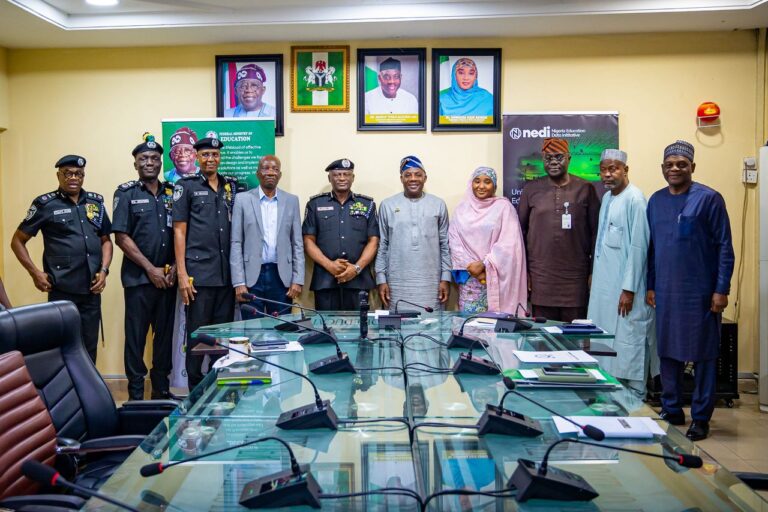
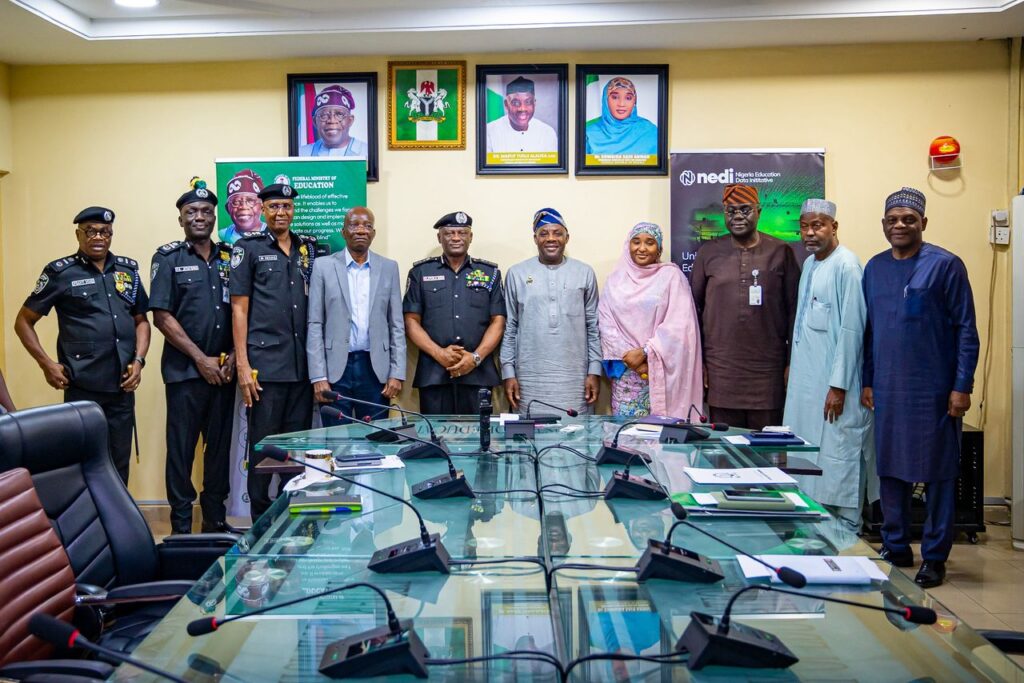
Alausa disclosed this on Monday in Abuja when the Inspector-General of Police, Tunji Disu, led a delegation of senior police officers, including former IGP Kayode Egbetokun, to the ministry for talks on establishing a southern campus of the Nigeria Police Academy in Abeokuta, Ogun State.
According to the minister, the initiative forms part of Tinubu’s broader security agenda aimed at strengthening policing capacity through structured academic and professional training.
He said: “This engagement is in continuation of President Bola Tinubu’s agenda to reposition the police to deliver effectively on its core mandate and improve security across the country.”
The minister, in a statement signed by his Special Adviser, Media and Communications, Ikharo Attah, added that the President remained committed to leveraging education as a tool for institutional reform within the police.
“The police are doing a lot for the country, and they must be supported to perform optimally. One key way to achieve this is through a strong educational framework that builds capacity and professionalism.”
The meeting, he said, focused on fast-tracking the take-off of the proposed southern campus in Erije, Abeokuta, including its infrastructure design and academic planning.
Alausa directed the National Universities Commission to immediately commence resource verification for the new campus, stressing that the Federal Government was targeting its launch within the year.
“The directive is clear — the President wants this institution to take off quickly and admit its first set of students between September and November 2026.”
The minister also revealed plans to restructure over 42 police colleges across the country into monotechnics to enhance specialised training.
“There is already a presidential waiver allowing this transition, so we are not breaching the seven-year moratorium. The goal is to accredit five to six of these institutions in industry-relevant courses that directly address the needs of the police.*
To drive the reforms, Alausa announced the constitution of three committees covering resource verification, capacity building, and infrastructure development.
“The resource verification committee will be chaired by the Executive Secretary of the NUC, while another committee on improving capacity in police colleges will be led by DIG Isyaku Mohammed alongside NBTE leadership.
“The infrastructure and physical development committee for the southern campus will be chaired by the Executive Secretary of TETFund, in collaboration with the police
”
In her remarks, the Minister of State for Education, Prof Suwaiba Ahmed, commended the initiative, assuring the police authorities of the ministry’s full backing.
“This is a commendable step that aligns with national development goals. The ministry will provide the necessary support to ensure its success.”
Also speaking, the Inspector-General of Police, Tunji Disu, underscored the importance of education in modern policing, noting that the Force was committed to strengthening its training architecture.
“Education remains central to solving problems across all sectors, including policing. We are determined to introduce courses that will directly impact our personnel and enhance national security,” he said..