


From the medieval times to modern civilisation, societies have defended their survival countering threats to their existence through various security arrangements. However, as the threats continue to evolve, security arrangement becomes dynamic.
These are now what have developed as national security architecture of nation states. Modern national security systems rely on central coordination hub that brings together all security and other relevant institutions to ensure unified strategy and decision-making.
In the United States, the official title is Assistant to the President for National Security Affairs, commonly called the National Security Advisor. Unlike in Nigeria, this position is not statutorily required but was created to support the National Security Council (NSC), established by the National Security Act of 1947.
The United States National Security Affairs advises the President on national security policy ( This involves acting as an “honest broker,” ensuring that the President receives a full range of policy options and that the views of different departments (like State and Defence) are fairly represented) He also coordinates intelligence and defence agencies and oversees strategic planning across government institutions.
In specific emergency contexts, the NSA also provides policy direction for the use of national telecommunications resources. However, operational control of the military rests with the President and the Department of Defense, not the National Security Advisor. In the United Kingdom, the NSA is a senior civil servant within the Cabinet Office. The UK National Security Adviser coordinates intelligence agencies, defence policy and national security strategy.
This represents a “conferencetype” model, where decisions are made collectively by the relevant ministers, and implementation is carried out by the respective government departments without a powerful central coordinating figure like an NSA.
This contrasts sharply with Nigeria’s centralized, supervisory NSA. The role in Australia operates at different levels. A senior National Security Advisor provides high-level counsel, similar to the UK model. However, the title is also used for mid-level civil service positions (APS5 & APS6) within the Office of National Intelligence (ONI).
These officers perform crucial secretariat and analytical functions, such as supporting leadership engagement with the national security community, managing governance structures for the National Intelligence Community (NIC), and implementing systems for strategic mission management. This demonstrates a deeply institutionalized approach where the advisory function is supported by a cadre of specialized public servants.
In Israel, the official title is National Security Council, The National Security Council is the Prime Minister’s and the government’s staff forum in the field of national security. The roles of the NSC, as stipulated in the Government Resolution, are as follows: Advises the Prime Minister on national security policy; coordinates intelligence and military planning; provides strategic assessments of regional security threats; facilitates crisis decision-making and coordinates diplomatic security strategy.
Among the council’s functions are: strategic advice to the prime minister, offering security recommendations to the government, joint direction and coordination of the security arms as well as inspection and supervision of decision-making related to the security bodies.
In Canada, the top official is the National Security and Intelligence Adviser (NSIA) to the Prime Minister. The role, as outlined in a recent mandate letter from the Prime Minister, is dynamic and evolving, with a strong emphasis on managing the flow of intelligence to decision-makers and providing actionable options.
The NSIA acts as the secretary to the National Security Council, leads the process to establish Canada’s intelligence priorities, coordinates the federal response to major security incidents, and works to enhance threat awareness among ministers. This makes the role highly operational in terms of crisis coordination and intelligence management. Also in Ghana, the system features a dual-structure for national security coordination at the top.
Alongside the National Security Advisor, who shapes and implements security strategies, there is also a National Security Coordinator. The coordinator’s specific role is to ensure cohesion and the effective implementation of security strategies across all sectors. This model appears to separate the advisory function from the operational coordination function more explicitly than in Nigeria, where both are concentrated in the NSA’s office.
Legal basis of the office in Nigeria
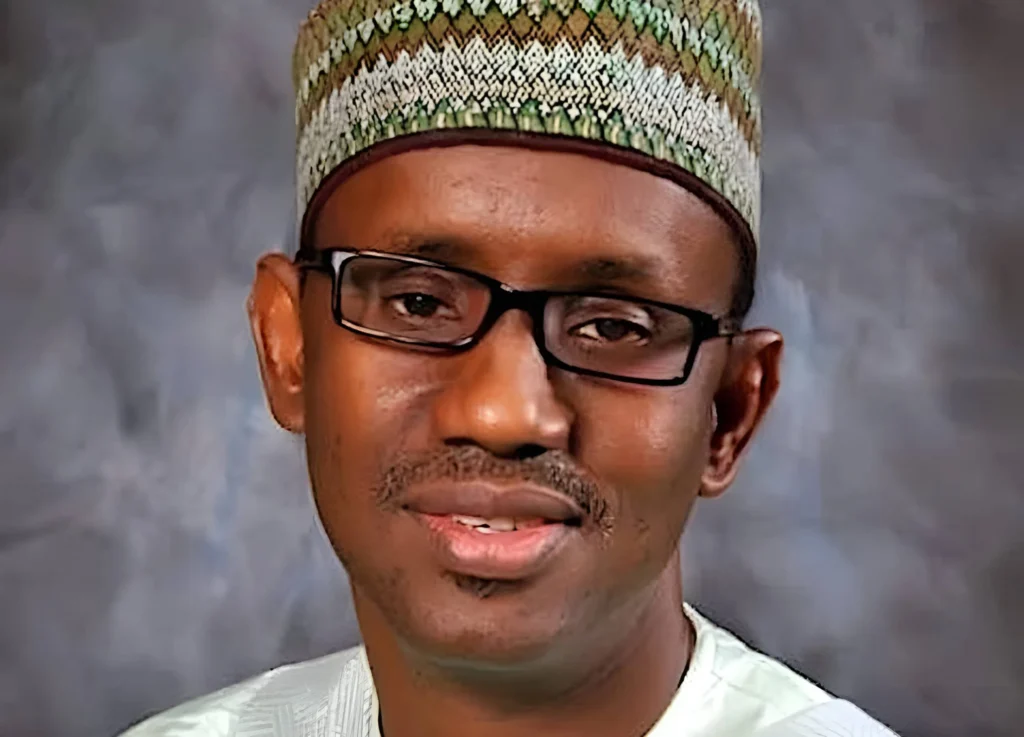
In Nigeria, this coordinating role is performed by the Office of the National Security Adviser (ONSA), currently headed by Mallam Nuhu Ribadu.
The role and structure of the National Security Advisor (NSA) vary significantly across countries, shaped by each nation’s legal framework, political traditions, and security challenges. Nigeria’s national security coordination structure is similar to systems used in other major democracies, where the national security adviser primarily serves as a strategic coordinator rather than a field commander. The NSA is a powerful and central figure in the security architecture.
Considering the numerous security challenges being experienced in Nigeria… there is the need to equip the office with more powers and influence to enable the NSA have a direct influence in the overall security and defence architecture
The office is established under the National Security Act, which designates the officeholder as a “Principal Staff Officer in the Office of the President.” This makes the NSA a key conduit between the President and the security community.
This legislation created and defined the structure of Nigeria’s core intelligence agencies, including, the Department of State Services (DSS), the National Intelligence Agency (NIA) and the Defence Intelligence Agency (DIA). Within this framework, the NSA serves as the principal adviser to the President on matters relating to national security and intelligence coordination.
Core responsibilities of the NSA in Nigeria
A primary duty of the Nigerian NSA is strategizing, supervision and coordination of the various security and intelligence agencies to ensure they work in unison. The office traditionally relies on staff seconded from these agencies (such as the Army, Police, NIA, and DSS), fostering a collaborative approach.
The role of the NSA is primarily strategic and coordinating, rather than operational. Key responsibilities include: Strategic Security Planning: Developing national security policies and strategies for addressing threats such as terrorism, insurgency, cyber threats, and organised crime. Inter-Agency Coordination: Ensuring collaboration among Nigeria’s military, Police,, and other law-enforcement agencies.
Intelligence Integration: Synthesizing intelligence reports from various agencies and presenting assessments to the President and the national security leadership. Policy Advice to the President: Advising the President on national security priorities and recommending appropriate policy responses: Supervision and Oversight of Intelligence Agencies.
Providing strategic guidance and coordination among intelligence institutions created under the National Security Agencies Act. National Security Coordination Platforms: Overseeing structures such as the National Counter Terrorism Centre (NCTC), which coordinates counterterrorism strategy and operations among security agencies. Importantly, the NSA does not command troops or directly run field operations. Operational authority remains with the military, police, and other security services.
Comparative analysis of the NSA in different countries
When compared to Nigeria, several key themes emerge: Legal Foundation vs. Executive Convenience: Nigeria’s NSA has a clear statutory basis in the National Security Act, whereas the roles in the US, UK, and Canada are primarily products of executive action and tradition, not specific legislation. This gives the Nigerian office a distinct legal permanence, though debates about expanding its powers continue.
The NSA is a principal officer with direct oversight of agencies. The NSA’s power comes from process management and proximity, not direct authority over departments.
The NSA is a senior public servant focused on cross governmental strategy, coordination, and secretariat functions. Power is diffused among cabinet members and the chancellery, with no single advisor. Countries like the UK, Australia, and Canada have highly institutionalized systems with deputies and specialized staff. Nigeria’s system, while effective, has traditionally relied on secondments, though there is a push to create a more permanent, independent staff structure for the NSA’s office.
While all NSAs advise and coordinate, Canada’s NSIA has a particularly strong mandate for intelligence management and public communication on threats. Nigeria’s NSA has a robust supervisory role over agencies. The UK’s NSA focuses heavily on strategy delivery across government.
Common responsibilities
Across Nigeria, the United States, the United Kingdom, Australia, Canada, Ghana and Israel, several similarities exist: Advising national leaders on security policy, coordinating intelligence and security agencies, integrating national security strategy across government and managing crisis coordination and strategic planning. These functions are widely recognised as the core responsibilities of national security adviser offices globally.
Key observation
In nearly all countries examined; the National Security Adviser is a strategic coordinator. Field operations remain the responsibility of military and lawenforcement agencies, and evaluating national security outcomes typically requires examining multiple institutions working together rather than attributing responsibility to a single advisory office.
In conclusion, while Nigeria’s NSA holds a statutorily empowered supervisory role, counterparts in other countries often operate with significant influence through proximity to the leader (US), bureaucratic coordination (UK, Australia), or a clearly defined mandate for intelligence and crisis management (Canada), with Germany representing a distinctly different collective model.
Gleaning from the above as it is a practice in these climes and considering the numerous security challenges being experienced in Nigeria, the powers and influences of the NSA is limited.
There is therefore the need to equip the office with more powers and influence to enable the NSA to have a direct influence in the overall security and defence architecture even if temporarily, these though may require legal framework.








