
Americans are feeling the impact of the Middle East crisis as the United States war with Iran triggered a surge in petrol prices that has intensified residents’ cost-of-living pressures.
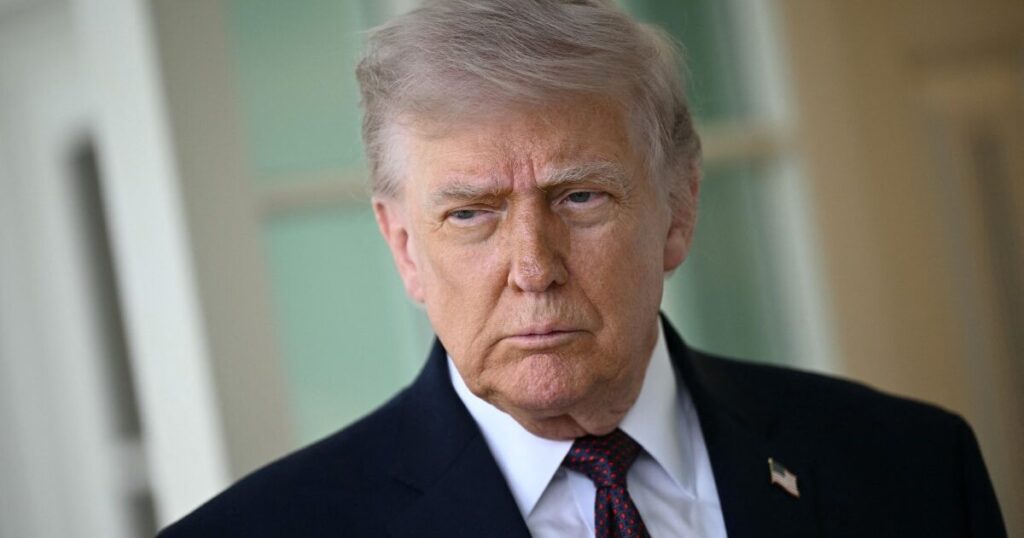
As a result, US President Donald Trump said he was introducing legislation to suspend the gas tax and the 24.4-cent diesel tax for 90 days, according to Reuters.
Oil prices rose to $107 per barrel as both the US and Iran failed to agree on a peace deal on Monday. As petrol prices continue to rise, the Financial Times reports that US inflation jumped to 3.8 per cent in April, its highest level in three years, due to the war in Iran.
Gas prices have risen since the war began on February 28, while Iran has effectively kept the Strait of Hormuz closed, a chokepoint through which 20 per cent of the world’s oil traditionally passes.
Reuters reports that petrol prices in the US averaged $4.52 a gallon as of Monday, the highest since 2022, when the average peaked at $5.01, according to the AAA motor club.
“Yeah, I’m going to reduce,” Trump told reporters when asked whether he would suspend the tax. Asked how long he would suspend the tax, Trump said, “Till it’s appropriate.”
Senate Majority Leader John Thune, on Monday, was reportedly noncommittal about a gas tax freeze, arguing that the best way to get fuel prices to fall is to reopen the Strait of Hormuz, noting that the taxes support road repairs.
In March, some Democrats, including Senator Mark Kelly of Arizona, first proposed suspending the tax, which generates about $2.5bn per month in road funding, until October. Since 2008, more than $275bn, including $118bn from the 2021 infrastructure law, has been shifted from the general fund to pay for road repairs.
Trump told CBS earlier that a bailout plan for airlines, which are struggling with surging jet fuel costs, had not “really been presented” and that “the airlines are not doing badly”.
Low-cost carriers have asked for a $2.5bn bailout, and Spirit Airlines ceased operations on May 2, blaming high jet fuel prices for making its restructuring plan impossible. US states also tax gasoline, with Indiana, Kentucky, and Georgia moving to make cuts to give consumers some relief at the pump.
The US Bureau of Labour Statistics’ consumer price index has risen sharply since the conflict broke out. It had already increased from 2.4 per cent in February to 3.3 per cent in March year-on-year.
Tuesday’s figure was above Wall Street expectations and marks the first time in three years that inflation has outstripped wage growth.
According to the Financial Times, the last time prices rose this quickly was in 2023 as the country reeled from the energy shock triggered by Russia’s full-scale invasion of Ukraine.
The report is the latest indicator of how the Iran conflict is reverberating across the world’s biggest economy, with higher fuel costs increasingly spilling into other sectors. It will pile pressure on Trump, whose popularity is near record lows as the war exerts a heavy toll on American households.
Trump said on Monday that a ceasefire with Iran was “on life support” after he rejected Tehran’s response to a US peace proposal, fuelling concerns of a resumption of hostilities in the 10-week-old conflict that has killed thousands and disrupted vital energy flows following heightened tensions around the Strait of Hormuz.
According to Reuters, days after the US floated a proposal aimed at reopening negotiations, Iran on Sunday released a response focused on ending the war on all fronts, including Lebanon, where US ally Israel is fighting Iran-backed Hezbollah militants. The response was swiftly rejected by Trump.
Asked where the ceasefire stands, Trump told reporters on Monday, “I would call it the weakest right now, after reading that piece of garbage they sent us. I didn’t even finish reading it,” he said.
In its response, Iran was said to have also demanded compensation for war damage, emphasised its sovereignty over the Strait of Hormuz, and called on the US to end its naval blockade, guarantee no further attacks, lift sanctions, and remove a ban on Iranian oil sales.
The US had proposed an end to fighting before starting talks on more contentious issues, including Iran’s nuclear programme.
Defending the stance, Iran’s Foreign Ministry spokesperson, Esmaeil Baghaei, said: “Our demand is legitimate: demanding an end to the war, lifting the (US) blockade and piracy, and releasing Iranian assets that have been unjustly frozen in banks due to US pressure; safe passage through the Strait of Hormuz and establishing security in the region and Lebanon were other demands of Iran, which are considered a generous and responsible offer.”