

- ‘My Senate scorecard will guarantee my re-election’
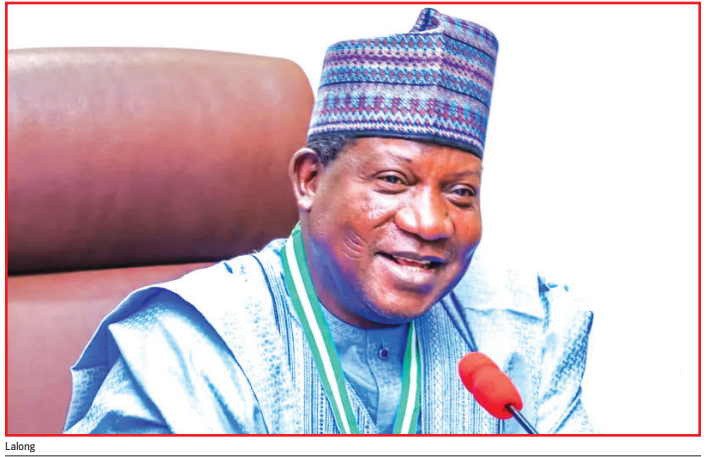
Simon Lalong is the senator representing Plateau South Senatorial District at the National Assembly. In this interview with MUSA PAM, the former governor and ex-Minister of Labour, speaks on his bid to return to the Senate, insecurity in Plateau State and why he believes that President Bola Tinubu is the most credible candidate ahead of 2027 elections
How do you feel now that those who once opposed you in APC have reunited with you, with Plateau now under the APC?
I feel honoured and dignified. Before I left office; a lot happened, some people didn’t even want to hear my name. During the presidential campaign, I served as director-general under very difficult circumstances, especially in a largely Christian environment. You saw the circumstances of that election. I was the director-general of the campaign that people called a Muslim-Muslim ticket in a largely Christian environment. It was not easy for me, for my party, or even for my family.
But we went ahead. I wasn’t certain of the outcome, but I was hopeful we would deliver and we did. Once the President was elected, I knew many people would begin to return. So, I asked myself: What next? Gradually, people started coming back year one, year two, year three, and so on. Eventually, people began asking: What about the governor? I said I was sure the governor was interested in returning, perhaps, just looking for the right opportunity.
When the party chairman emerged, I said to myself, if he doesn’t return now, I don’t know when he will have that opportunity again. Eventually, the governor indicated interest in coming back, and unlike what happened in some other states, we accepted him without resistance. For me, APC is home. I helped build it on the Plateau. So, when people return, we welcome them.
That is the Plateau spirit. APC gave me a platform, and I became governor. So I will never forget that. That is why, when you ask how I feel, I say I am honoured that I am still regarded as a founding figure of APC on the Plateau, and that people left their parties to come and meet me in what I consider my political home. In the Plateau spirit, when you receive a guest, especially one who comes with good intentions you welcome them. That is what we have done. Today, we are working very closely with the governor.
How did you feel handing over the party’s leadership to Governor Caleb Mutfwang?
I am not a desperate person. Leadership, for me, is not about struggle. I have held many positions – speaker, governor, minister, campaign DG, chairman of Northern Governors’ Forum. These are rare privileges. So, when the governor returned, I deliberately handed over leadership to him. It was important for stability and unity. He even told Simon Lalong is the senator representing Plateau South Senatorial District at the National Assembly.
In this interview with MUSA PAM, the former governor and ex-Minister of Labour, speaks on his bid to return to the Senate, insecurity in Plateau State and why he believes that President Bola Tinubu is the most credible candidate ahead of 2027 elections me, you cannot run away we will lead together. Since then, we’ve worked in harmony.
That’s why Plateau APC remains stable. If you know my character, you will understand that I am not a desperate person. I believe in being a gentleman. My upbringing, especially my Catholic background, shaped me deeply. From a young age, I was taught by reverend sisters and priests.
At one point, people even thought I would become a priest. That training instilled in me certain values. Life is not about greed or selfishness; it is about generosity, fairness and accommodation. So, when I see leadership, I don’t struggle for it unnecessarily. By the grace of God, I have held many positions; some of them quite rare. It is uncommon for someone to serve as speaker of a House of Assembly, return, and become speaker again.
But I was one of the few in Nigeria who achieved that. From there, I rose further. I became governor twice. After that, I served as a minister. I was the director-general of a presidential campaign. As speaker, I chaired the Conference of Speakers twice. As governor, I became chairman of the Northern Governors’ Forum. That forum is highly influential. Out of 36 governors in Nigeria, 19 are from the North. Major decisions often begin from there before broader consensus is reached.
Political movements are part of democracy, especially during election periods. People move based on interests. Some leave, others join. But I don’t see instability, APC remains strong
Despite the religious composition, where only a few of us were Christians, I was unanimously elected chairman and I led for four years with full cooperation. Within that structure, we produced a vice president. Many members have gone on to become ministers and heads of major institutions. Even today, that respect remains.
When we meet, there is mutual regard. That, to me, is a privilege. So, when you talk about party leadership what is that, compared to all these experiences. To me, it is not something to struggle over. I have led the party before. Everyone knows I was instrumental in bringing APC to Plateau State.
I am proud to say that someone I mentored rose to become national chairman. So, when we came back home and the governor joined us, we followed our usual tradition. What I began to notice, however, was a potential area of conflict. By tradition, every sitting governor is regarded as the leader of the party in the state. At the same time, we had a national chairman, who is the leader of the party at the national level. Naturally, the National Chairman would not come down to the state to assume that role.
So, at that time, I was the leader here. Immediately the governor came, one of the first things I said in welcoming him was ‘I have surrendered the leadership to you.’ I did that deliberately so that he would feel comfortable, knowing that everything in the house he was coming into had been handed over to him to lead effectively. And you may recall his response. He said: ‘Your Excellency, sir, I’m surprised that you have surrendered leadership so easily. I hope you are not trying to run away from me you cannot run away.
We will run this party together.’ That was very complimentary, and since then, we have maintained that understanding. I have given him maximum cooperation. You also saw my role during the consensus process. I ensured that Plateau would not be disappointed. In fact, the consensus arrangement in Plateau was rated as one of the best at the national level. That is why things are moving smoothly.
What are your major achievements at the Senate, and why do you seek re-election?
It’s not easy for a first-time senator to handle sensitive committees, but my experience helped. When I got to the Senate, I was already experienced as a former speaker and governor. So, I was familiar with legislative processes and procedures. That helped me settle in quickly.
I saw my role not just as representing my senatorial district, but the entire Plateau State. In fact, I was made the leader of the National Assembly caucus from Plateau, so most issues affecting the state come to me. On security, we raised several motions and contributed to debates, constantly urging the Federal Government to address insecurity in Plateau, especially in the southern zone. We constructed primary schools across all six local government areas. We provided water through multiple boreholes in different communities. We installed solar-powered facilities in several locations.
In healthcare, I influenced the establishment of a 100-bed Mother and Child Hospital in Kwandé. Today, that hospital is completed, and we are working towards its commissioning soon. On infrastructure, when the main bridge in Shendam collapsed due to flooding, it cut off access. Fortunately, I had earlier facilitated a temporary bypass bridge. Later, from the Senate, I ensured that the main bridge was reconstructed within a short time.
Today, it is fully accessible. I played a role in the conversion of a College of Education into a university and ensuring its take-off. I facilitated the establishment of a Federal Polytechnic in Plateau State. Today, the institution is operational and already graduating students. As chairman on Agriculture, I contributed to the establishment of about 10 new agricultural universities nationwide. I also sponsored a bill to establish a University of Agriculture in Plateau State by upgrading an existing institution.
The bill is still in progress. Additionally, we facilitated the establishment of a University of Mining in Plateau State. That bill has been passed and is awaiting presidential assent. On gender inclusion, I have been very active. The proposal for special seats for women in the legislature is something I strongly supported and helped advance.
As chairman of the INEC Committee and a member of the Constitution Review Committee, I have continued to push for it. It is still ongoing, and I believe it will succeed. On traditional institutions, even before I left office as governor, I consistently emphasized that you cannot achieve lasting security without involving traditional rulers. That position remains the same.
But the challenge is that the constitution does not give traditional rulers enough power. It does not provide them with the authority they need to effectively carry out their roles, especially in addressing insecurity. The traditional rulers themselves have consistently raised this concern with me.
So, I initiated and sponsored a bill to strengthen their role. That bill is still ongoing as part of the constitutional amendment process. We are hopeful that once the amendment is concluded, states will also adopt it and give traditional rulers clearly defined constitutional responsibilities.
That way, they can contribute meaningfully to tackling insecurity across the country. On electoral reform, the current INEC amendment you are seeing today, I sponsored it. The INEC Act amendment for 2026, I am the sponsor. Alongside that, I have contributed to numerous motions in the Senate. If you follow proceedings, you will see that my voice has consistently been present on key national issues.
Beyond legislation, there are constituency responsibilities. People often assume senators receive huge sums of money, but what we actually get what we call our ‘meagre resources’ goes into many commitments, including staff salaries and other obligations. Despite that, I have supported education through scholarships across my constituency.
Of course, our primary responsibility is lawmaking, and that is something I am very familiar with. I dare say that most major laws passed in the Senate have had my input in one way or another. Even when bills come from the executive, especially from the President, I play a key role.
As former director-general of the campaign, my colleagues often ask for my perspective, whether a proposed law aligns with the vision we presented to Nigerians. I help guide those discussions and ensure that sound legislations are passed.
People from the southern zone have told me clearly: ‘If not you, then who?’ I am not saying I am the best, but based on what they have seen in a short time, they believe continuity is important. They don’t want to lose that momentum. That is why they have come forward and asked me to go back.
As a key APC stakeholder, how do you assess the state of the party amid internal challenges?
What we are seeing is not new. It happened in the Peoples Democratic Party (PDP) before. Political movements are part of democracy, especially during election periods. People move based on interests. Some leave, others join. But I don’t see instability, APC remains strong. And Nigeria is not becoming a one-party state; other parties still exist and are active.
My political journey began in PDP. When President Olusegun Obasanjo was in office, we were all in PDP. I served as speaker and chairman of the Conference of Speakers under that platform, working closely with the president at the time. In advising the president on issues like this, we must remember this is not the first time such a situation has occurred.
There was a time when many governors were running to the PDP, and people said that will be the end of PDP. Yes, it got to a stage where it created momentum that brought about a new party; that party became the APC. Again, a lot of people left the PDP and came to the APC. But that did not kill the PDP. The PDP was still there and still very influential.
Now, we are in a similar period again, where many governors are moving from different political parties back to the APC. Don’t forget, this is an election period. You know politicians when it comes to elections; they are not thinking so much about party loyalty, they are thinking about their ambitions and how to realize those ambitions. So, I won’t be surprised if many of them run back to the APC. At the same time, if you have this kind of movement in politics, you cannot just go to sleep and think everything is fine.
You must prepare strategies because the more people you bring in, the more interests and the more conflicts of interest you create. It depends on how well you manage it. We are managing it for now, and I will say I share part of that responsibility because the national chairman is from my state. People say he has no experience, but in politics, experience depends on how quickly you can learn. If you are willing to learn, you can learn very fast. I must commend him.
Within a very short time despite never having been elected as a governor, and despite that position traditionally being reserved for former governors he has done his best in managing the affairs of the party. He was only a minister for a short time before being propelled to national office, yet he has performed creditably. Some people say others will leave within a short time. Yes, people have the right to decide where to pursue their ambitions. But how many have actually left? This is an election period, so some may leave now and even return later.
Although the Electoral Act is now very strict we received a lot of criticism for tightening it was done to curb the constant movement from one party to another. If you want to contest an election, stay in one political party. If you lose, you can try again later. Instead of jumping from one party to another, the law now requires you to commit. Before you contest, make up your mind about where you will run.
Once you register and contest under a party, you must stick with it for that election cycle. If you don’t succeed, you wait for the next election season. So, from where I sit in the APC, I don’t think there is any cause for alarm. Yes, you may hear that one or two people have left the APC, but the following week, you will hear that five or seven people have joined it. So, we cannot say we are losing
On the allegation that Nigeria is drifting towards a one-party state, we’ve heard that before. People said the same thing when others were moving to the PDP. There was even criticism from the international community during Olusegun Obasanjo’s time, claiming he was trying to create a one-party state. But Nigerians know what they are doing. I have always said that I do not believe the President wants a one-party state. I know him well enough. In his budget speeches; both last year and this year, he emphasized that he is a democrat.
Democracy gives people the freedom to join any political party but it does not require me, as a member of one party, to fix problems in another party. You are responsible for managing your party; I am responsible for mine. However, if people in another party face turbulence and ask for help, if they want to move to a more stable environment, I can provide that opportunity.
That is what is happening. No one is forcing anyone to leave their party. Even governors are not being forced. Everyone has the right to decide. Some simply see their colleagues moving and decide to follow. Even today, someone left one party for another, while others are forming new parties. So, how can anyone say we are running a one-party state? There is still the PDP. There are other parties. I am APC, so I won’t speak for them, but they exist. Some say one faction is the ‘original’ PDP; that’s for them to decide.
Take the African Democratic Congress (ADC) for example, people once said it had no future, but recently the Supreme Court restored its leadership, and now people are returning to it. The same is happening with newer parties like the Nigeria Democratic Congress (NDC) just emerging from nowhere and even Allied Peoples Movement (APM), which is now attracting members.
How then can anyone claim we are heading towards a one-party state? Nigerians know what they want. In previous elections, smaller parties like the Social Democratic Party (SDP) and Young Progressives Party (YPP) emerged from nowhere and still produced members of the National Assembly. So, I do not agree with the claim of a oneparty state simply because people are moving to the APC. The APC does not promote a single-party system. In fact, I am glad to see new options emerging; different parties offering alternatives across the political space.
There are concerns about electoral reform, especially transmission of results. What is your position?
We spent two years consulting across Nigeria civil society, judiciary, security agencies and political parties. The issue of ‘transmission’ versus ‘real-time transmission’ created confusion. Let me be clear: Nigeria does not yet have full electronic voting capacity.
What we have is a hybrid system. Results are finalized and signed, then transmitted as backup ‘real-time’ means different things to different people. Without clarity, it creates legal ambiguity. So, we opted for a practical system that balances transparency and infrastructure realities.
How do you assess President Tinubu’s administration and his chances in 2027?
From my experience as governor, I can tell you governance was extremely difficult before. States were receiving about N5 billion, with wage bills almost equal to that. But under this administration, allocations have increased significantly sometimes tripled. That is a major reform. Now, the President cannot control how states spend their funds.
So, we must also ask: What are states doing with these increased resources? Yes, challenges like insecurity remain. But no country is completely free from insecurity. The important thing is response and efforts are ongoing. There are also social interventions like student loans and other economic programmes.
So, for me, President Tinubu remains the best candidate because he understands governance, structure and long-term reform. Let me speak from experience. When I was governor, it was extremely difficult to even pay salaries. My state was receiving about N5 billion in allocation, while the wage bill alone was over N4 billion. You can imagine how we managed. Then came the new administration. In the very first month, allocations to states increased significantly; about three times what we were previously receiving.
If a state was getting N5 billion before, it suddenly received about N15 billion. For the President, governance is not just about federal development; it must extend to states and local governments. Since then, allocations have not dropped back to previous levels. In fact, some say they have even increased further. Now, in a federal system, the President cannot interfere directly in how states and local governments use their funds, they are independent.
So, if significant resources are being distributed, we should also see corresponding development at those levels. That is why I say: when assessing the President, we must also ask what states and local governments have done with the increased funds they received. If those resources were fully utilized, many of the complaints we hear today might not exist. That said, there are still challenges, like insecurity.
No one is denying that. But insecurity exists in every country. The key issue is the level of response and commitment, and I believe efforts are being made to address it. There are also social interventions. Take, for example, the student loan initiative—many young people have benefited from it. When such beneficiaries go to vote, their experiences will influence their choices.
There are also other interventions across different sectors. If people feel the impact positively, they will support the administration. As for me, I don’t want to start campaigning now. I was the director-general of the campaign, but that role ended after the election. When the time comes, those responsible will present reasons why people should vote for the President again.
What is your take on incessant insecurity in Plateau State?
Security is not just about military presence it’s about people. When I was governor, we introduced dialogue, inter-religious councils and a peace building agency backed by law. Early warning systems supported by international partners.
These structures worked and violence reduced significantly. Unfortunately, many of these frameworks are no longer functional. Once you remove systems that work, crises return. The solution is simple; go back to those structures fairness, inclusion and dialogue.