
…not all are cut out for this work.
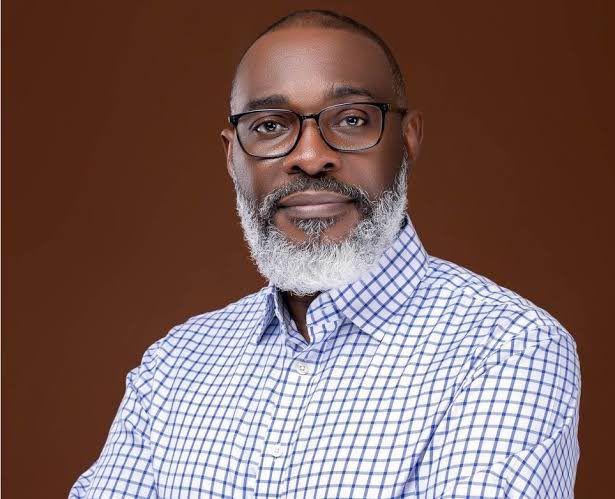
Chinny Nzekwu is a senior-level risk management leader and subject matter expert for a United States (US) Federal Government agency.
Dedicated to advocacy, Nzekwu has committed much of her career to supporting vulnerable populations.
She holds a Master’s Degree in Public Administration and Management. She co-owns two private businesses, one designed to support adults with developmental disabilities and provide specialised services for adults and adolescents with mental health diagnoses. She lives with her husband and two adult sons.
Nzekwu was cornered on an occasion in Lagos while on vacation, and she says, “As an only girl growing among four brothers, her gender was not an excuse; instead, success is not a destination; it is the unapologetic ambition that drives one every day.”
Now, supporting adults with developmental disabilities is a bit tough. How do you cope with this?
Supporting adults with intellectual and developmental disabilities (IDD) is very challenging, and not everyone is cut out for this work. You must have a passion for advocacy, love for people and the desire to help/support people.
The initial necessity gave me the skill, but the passion for making a difference is what drives me now.
What has been your high point in rendering this service in the US?
We often mistake compliance for quality. But a true high point is when we achieve genuine independence through an expanded Circle of Support. For too long, the ‘system’ has forced people with IDD into silos. My high point has been dismantling those storage towers by advocating Person-Centered thinking.
This means ensuring that the support circle includes not just paid professionals, but friends, mentors, and community members. When leverage key policies are successful, waivers and partnerships to give clients financial and social autonomy, it changes their life trajectory.
The trophy is not the policy win; it is the lived reality of an individual who no longer views their disability as a barrier to a ‘life well-lived’.”
Based on your academics, were you cut out for advocacy or was the system forcing you into it? Most people forfeit their various backgrounds to take up new roles in the United States of America.
Honestly, it is a bit of both. I think it started with the system pushing me into it, but I stayed because I was cut out for it. I studied Public Administration and Health Management in Graduate school.
“I was forced to add the health management piece because that was the only condition my employer at that time would pay 100% for the graduate program.
“I was working for a health insurance company at the time. I chose to write my thesis on Group Homes in the State with a concentration on people with developmental disabilities.
Although I immediately knew I was interested in the structure, it was only when I saw how many people were underserved by that structure that I realised my true purpose was advocacy.
Is there any low point?
Women all over are struggling to raise teenagers in an internet age. How is it in the US?
It is often about access and safety. In the US, the struggle is about over-saturation and identity in the US. Nigerian parents often describe raising teenagers as a “culture clash on steroids”, while mothers in Nigeria grapple with data costs and “street” influences. Nigerian mothers in the US face a system where digital access is a requirement for social and academic survival, yet also a primary source of mental health strain. US platforms like TikTok and Instagram are designed for compulsive use. Statistics from 2025 show that over 50% of US parents fear that their child is addicted to screens. For Nigerian parents, this often conflicts with traditional values of discipline and academic focus.
Unlike the “village” support system in Nigeria, US teenagers often find their identity through curated virtual experiences. A 2025 report found that over 45% of US teens believe social media has a mostly negative effect on people their age, primarily due to “drama” and unrealistic beauty standards. In the US, there is a “digital divide” within the home.
Nearly half of teens say their parents are distracted by their own phones during conversations, which erodes the traditional respect-based hierarchy common in Nigerian households. A common scenario in the US is that a Nigerian mother may try to implement a “no-phone” rule after 8:00 pm to ensure her son studies.
The teenager argues that he must be online to coordinate a group project. The parent is then forced to choose between being the “disciplinarian” (the Nigerian model) and being the “facilitator” (the US model). If she pulls the phone, she risks her child’s academic standing; if she leaves it, she risks his mental health
A low point in this field is the recurring threat of budget cuts and the industry-wide staffing crisis. When funding is tied to the state, the stability of our service can feel fragile. Yet, this is precisely why loving the work of advocacy is a prerequisite for this role. We have a moral obligation to maintain a ‘gold standard’ of care regardless of the balance sheet.
For us, the measure of success is not the bottom line; it is the uninterrupted dignity and support of the people we serve, even when the system makes it difficult. In developed countries like the United States of America, the primary challenge in supporting people with IDD stems from a “system in peril”. While the philosophy of care has shifted toward community inclusion, the infrastructure is strained by severe workforce shortages and unpredictable funding, as mentioned above.
The most immediate challenges are the shortage of Direct Support Professionals (DSPs) who have a high turnover & vacancies. The turnover rate for DSPs is approximately 37% annually. Despite their essential roles, the median hourly wage for DSPs is around $18.39, which many find inadequate given the high emotional and physical demands of the job.
These shortages have forced close to 62% of providers to turn away new referrals and 29% to discontinue certain programs. Medicaid is the primary funder for IDD services, but it remains a volatile and often insufficient resource.
There are lengthy waitlists; the average wait time for services is nearly 45 months. Unlike standard medical care, community-based programs for the IDD population are “optional” Medicaid services, meaning states can cap enrollment or cut funding during budget deficits.
Most marriages in the US hit the rocks fast, but yours has succeeded with two adult sons. What was the magic that kept you both?
There is no secret spell for a lasting marriage. Instead, there is a shared mission. In a culture where it is easy for couples to drift into ‘co-existing’ rather than ‘co-building,’ my husband and I have spent over 34 years intentionally constructing our life together. Our ‘magic’ was viewing our marriage as a partnership in advocacy, specifically for our sons.
We did not stay together simply for the children; we stayed because we were undeniably more effective as a team than as individuals. We treated our family as our most significant ‘client,’ applying the same patience and resilience to our home life as we did to our professional services.
We were disciplined about our marriage infrastructure, recognising that a partnership cannot survive on autopilot, especially amidst high-stress careers.
We prioritised ‘scheduled connections,’ those non-negotiable windows where work and parenting talk were strictly off-limits. We also abandoned the myth of a perfect 50/50 split. Some weeks, I carried 70% of the weight because he was drained; other weeks, he did the same for me.
This grace kept our foundation from cracking. By fostering mutual respect and autonomy, we encouraged each other to pursue separate passions.
We grew parallel to each other rather than just toward each other, avoiding the ‘smothering’ that sinks so many relationships. Now, as our sons stand as independent adults, it is clear. We succeeded because we were partners first, which in the end is what made us better parents.
There were a lot of President Donald Trump’s threats to Nigerians, especially, many felt jittery, and do you think the threats will happen?
Recent rhetoric regarding Nigeria has already transitioned into significant policy actions and unprecedented military strikes. For Nigerians both at home and in the U.S., many of these “threats” are no longer just possibilities; they are currently being implemented. The threat of military action has already materialised.
How do we as mothers adapt?
We are shifting from being Gatekeepers to Guides. Instead of just “taking the phone,” mothers use Parental Control Apps to monitor communication patterns without a total ban. Many US paediatricians recommend the 5 C’s of Media Use, which are Child, Content, Context, Connection, and Community. Nigerian mothers are increasingly using these to explain why a rule exists, rather than just saying “because I said so.”
The “magic” for successful US-based Nigerian mothers is often blending traditional African values with modern US values
How was growing up?
In a house of five boys, I was the lone daughter; the fourth child navigating the complexities of a traditional Nigerian childhood. Our home operated on an unspoken code where ‘no’ was a final answer and unquestioning obedience was the only currency. In that environment, the hierarchy was clear. Our parents commanded, and we, the children, complied.
There were no sit-downs to explain the “why” behind a rule; you simply moved when told, knowing that challenging a decision was not an option.
Now, as a parent, I have intentionally flipped that script. I have traded the old-world silence for a household built on active dialogue. My children are being raised in a space where their voices carry weight; they are free to debate, question, and politely challenge issues they do not understand or agree with. While respect remains, the fear has been replaced by mutual understanding.
Looking back, being the only girl among all those ‘dudes’ was my first masterclass in resilience. There was no special treatment or “soft” landing because of my gender. No. The household did not pause for me, so I had to accelerate to keep up.
This lack of pampering forged a fierce sense of assertiveness. To survive and thrive, I became a tomboy, trading dolls for soccer balls and holding every rough-and-tumble game my brothers devised.
That childhood did not just shape my past; it gave me the grit to be the empowered woman I am and the intentional mother I have become.
What advice would you give to young girls growing rather than advise them, I would prefer sharing a message of empowerment and guidance.
Consider this a map for the road ahead. Instead of just being told to ‘work hard,’ focus on building a life that belongs entirely to you. Think of yourself as an architect. In today’s world, there are many pre-built structures of social media trends and ‘safe’ expectations. Do not feel obligated to inhabit them. Instead, start with your personal monopoly. You possess a unique blend of background, skills, and interests that are yours alone.
For example, when you combine passions like Art/Science/Music with technical skills like [Coding/Legal Analysis/Public Speaking], you create a space where your unique combination of talents sets you apart.
As you build, be mindful of your attention capital. Every hour spent passively consuming content is an hour that could be dedicated to developing your own capabilities. Be a creator, not just a consumer. Let the world see what you build.
You will encounter moments where you feel you are not ‘ready’ or ‘perfect’ enough to pursue an opportunity. Often, individuals who wait until they are 100% qualified miss opportunities, while others with 60% confidence step forward and take the lead. Step forward at 60%. Do not be afraid to make mistakes; setbacks are not dead ends, but simply redirections.
Finally, consider the people in your life. Cultivate a Circle of support that not only offers comfort but also challenges you to grow. Seek out mentors who will advocate for you. And as you progress, keep an eye on your financial freedom. Understanding how money works early provides you with more choices down the line.
Success is not a destination; it is the unapologetic ambition that drives you every day. Your voice is not a ‘disturbance’ to the system; it is often what the system needs. Use your knowledge as a shield, your character as your guide, and never diminish your potential to accommodate others.