
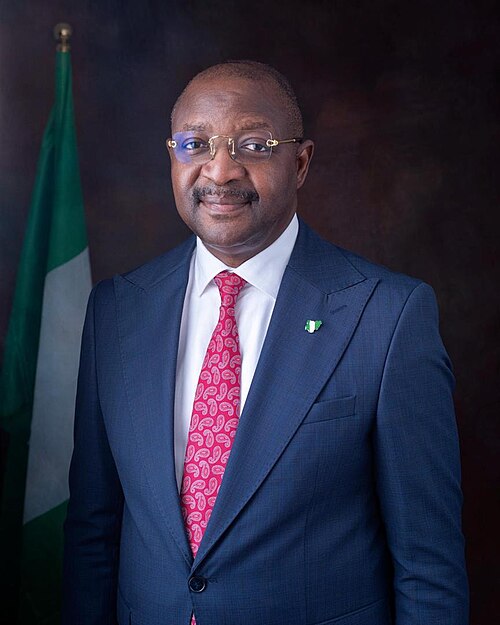
Special Adviser to the President on Media and Public Communications, Sunday Dare, has described President Bola Ahmed Tinubu as a reform-driven leader who deliberately embraced difficult economic and governance decisions previous administrations avoided.
Dare made the remarks in an opinion piece titled, “Reformer-In-Chief: Reflections on Governance, Leadership, and Reform Across One Thousand and Ninety-Five Days of President Bola Tinubu,” released to mark the administration’s third anniversary in office.
According to him, Tinubu’s first 1,095 days in office represented a defining phase in Nigeria’s democratic and economic evolution, driven by structural reforms aimed at correcting long-standing distortions in the economy and governance system.
READ ALSO:
“The easiest thing in governance is to drift with the tide. The hardest is to alter course in the middle of gathering turbulence,” Dare stated.
He said that past administrations recognised the dangers posed by fuel subsidies, multiple exchange rates, fiscal leakages and unsustainable public spending but repeatedly postponed reforms because of political considerations.
“But Tinubu proved unusually willing to confront those deferred realities,” he said.
Dare described Tinubu as the “Reformer-in-Chief,” “Tinkerer-in-Chief,” and “architect of democratic survival and political reinvention,” noting that the President consistently demonstrated a strong instinct for institutional redesign and strategic reform.
The presidential aide said his perspective was shaped by nearly three decades of close political association with Tinubu.
“I have known Asiwaju for twenty-eight years, long before and in between power: in the trenches of opposition politics, through the difficult years of political reorganization and coalition building after office, and still with him now again amid the turbulence of economic reform and national rebirth,” he wrote.
Dare recalled working closely with Tinubu during the years of opposition politics and coalition building, describing him as a patient strategist who built enduring political structures and assembled one of the country’s strongest political coalitions.
According to him, Tinubu approached politics not merely as a contest for power but as a platform for the exchange of ideas, competencies and national aspirations.
“He approached politics not merely as a contest for power, but as a platform for the cross-fertilization of ideas, competencies, regional interests, and national aspirations,” he stated.
The presidential spokesman acknowledged that Nigerians had endured hardship, inflation and economic pressure arising from reforms introduced since 2023 but maintained that national transformation required sacrifice and difficult decisions.
“A country cannot sustainably subsidize inefficiency forever. A nation cannot endlessly postpone fiscal reality without consequences,” Dare said.
He explained that many of Nigeria’s current economic challenges stemmed from years of delayed reforms and policy inconsistencies, insisting that Tinubu chose to confront realities previous leaders avoided.
According to Dare, the reforms have generated intense debate because transitions are naturally difficult, but history would eventually judge the period as the beginning of national correction and recovery.
“History teaches that nations are rarely transformed during seasons of comfort,” he said.
The presidential aide also noted Tinubu’s political resilience, recalling how the President remained politically active after the Alliance for Democracy lost five South-West governorship seats in the 2003 elections, leaving Lagos as the only opposition-controlled state in the region.
He said Tinubu later played a major role in the coalition that produced the All Progressives Congress and defeated the Peoples Democratic Party in the 2015 general election.
“No administration is beyond criticism. No reform process is beyond refinement. Governance remains an imperfect human enterprise,” Dare noted.
He, however, maintained that fairness required acknowledging that many of Nigeria’s present economic and governance problems predated the Tinubu administration and were products of years of postponed reforms.
According to him, Tinubu’s leadership represents an effort to “re-engineer the trajectory of a nation long trapped between immense potential and persistent structural contradiction.”
“This, ultimately, may prove to be President Tinubu’s enduring legacy, for this generation and those yet unborn,” Dare added.