
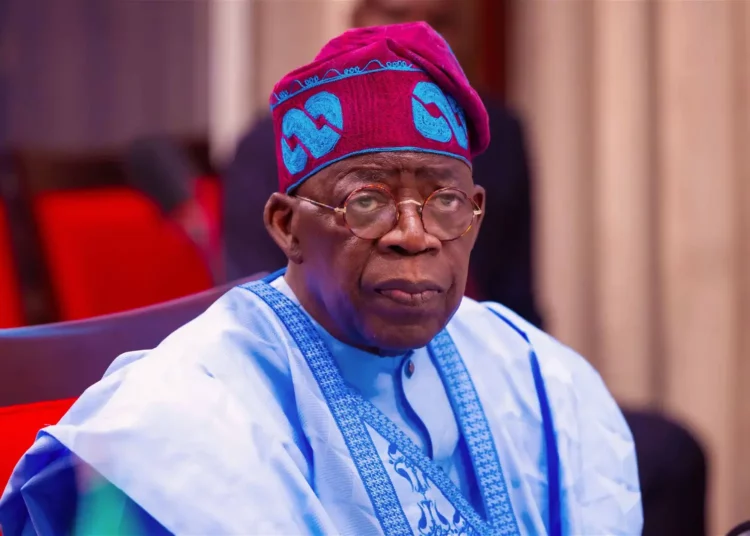
“It isn’t enough to talk about peace. One must believe in it. And it isn’t enough to believe in it. One must work at it.” – Eleanor Roosevelt. A stable and peaceful environment remains essential for national prosperity. Since assuming office, President Bola Tinubu has pursued bold reforms aimed at repositioning Nigeria’s economy and strengthening national cohesion.
From the removal of fuel subsidy and harmonisation of foreign exchange rates to the introduction of NELFUND, the CNG initiative, improved workers’ welfare and infrastructure expansion, the administration has demonstrated readiness to take difficult decisions and undertake reforms in the national interest.
Beyond these economic reforms, one of the administration’s less celebrated achievements has been its emphasis on peace-building and conflict resolution as tools for development. As President Tinubu marks three years in office, his government has consistently used dialogue, reconciliation and strategic stakeholder engagement to address longstanding disputes threatening national stability and economic growth.
A major example is the Ogoni crisis, which began in the 1990s over environmental concerns and led to decades of unrest and suspension of oil exploration activities in the oil rich area in the Niger Delta region. The Tinubu administration initiated fresh consultations through the Office of the National Security Adviser involving community leaders, NNPCL, traditional institutions and security agencies, and succeeded in rebuilding trust and created a framework for reconciliation.
The submission of the report of the Presidential Committee on Ogoni Consultations, chaired by Professor Don Baridam, on September 25, 2025, paved the way for renewed peace and the resumption of oil exploration in Ogoniland. President Tinubu himself hosted one of these meetings in the State House and also honoured key figures killed during the crisis, including Ken Saro-Wiwa. President Tinubu also resolved the long-running Malabu Oil (OPL 245) dispute, one of Nigeria’s most commercially significant oil assets.
According to the Attorney-General of the Federation and Minister of Justice, Lateef Fagbemi, SAN, the resolution ended years of legal and political uncertainty that had stalled development of the asset. The resolution of the dispute is expected to boost investor confidence and increase Nigeria’s oil production capacity by about 150,000 barrels per day. President Tinubu described the resolution as a major milestone in restoring confidence in Nigeria’s economic reforms and natural resource management.
Similarly, the administration intervened in the over 20-year dispute between the Federal Government and Bi-Courtney Aviation Services Limited, owned by Wale Babalakin, over the concession of Murtala Muhammed Airport Terminal Two (MMA2) in Lagos. On April 30, 2026, the Minister of Aviation and Aerospace Development, Festus Keyamo, SAN, announced the resolution of the dispute.
Through dialogue led by the Ministry and other stakeholders, the disagreement over concession rights and operations was resolved, easing tensions in the aviation sector and reassuring investors about Nigeria’s infrastructure concession environment. In Plateau State, where ethno-religious tensions and land disputes have fuelled years of violence, President Tinubu hosted a 32-member broad spectrum of stakeholders led by the governor of the state, Caleb Mutfwang.
Others at the meeting which held April 29, 2026 at the Presidential Villa in Abuja included all past governors, political and religious leaders, traditional rulers and youth organisations. After over three hours of interventions by participants, and rather than impose solutions, the President urged stakeholders to review previous White Papers and propose workable recommendations for lasting peace.
Across the country, the administration has increasingly relied on negotiation, institutional coordination and diplomacy in handling security, commercial and political disputes. Analysts believe this approach has reduced tensions, strengthened investor confidence and created opportunities for national reconciliation. As President Tinubu enters the fourth year of his administration, the sustainability of these gains will depend on continued dialogue, transparency, implementation of agreements and inclusive governance.