



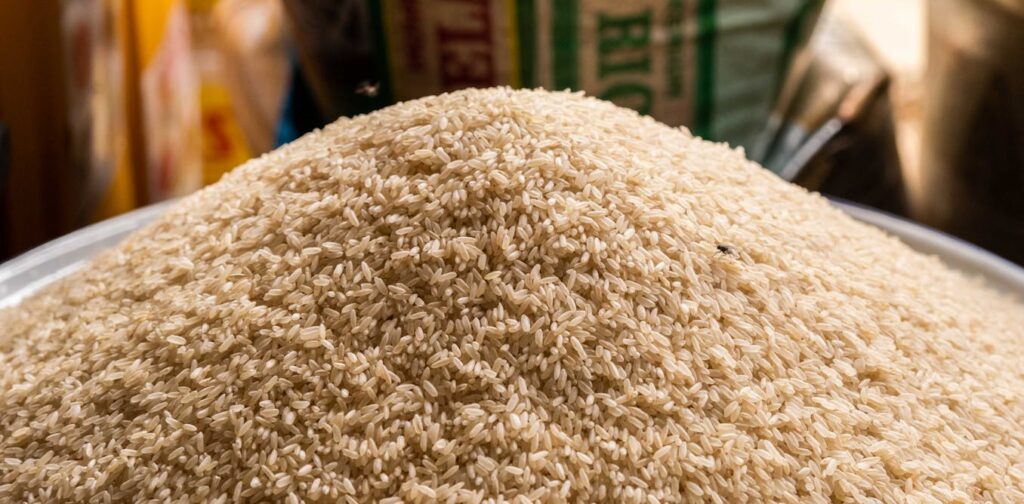
…shipment projected to hit 64m bags
Nigeria is expected to take delivery of 3.3 tonnes of rice worth $1.21 billion (N1.7 trillion) before the end of the year, following slash in import duty by the Federal Government from 70 per cent to 47.5 per cent.
The slash on duty, according to government, is to reduce inflation in the market. Based on a global trade portal data, Index Mundi and United States Department of Agriculture (USDA), Nigeria’s rice import is projected to rise from 2.9 million in 2025 to 3.2 million metric tonnes or 64 million bags of 50 kilogrammes in 2026 marketing year, leading to 300,000 tonnes increase.
The USDA’s data revealed that the new import was driven by favourable international prices and rising local demand, nothing that the country would rely on lower priced parboiled brown and milled rice from India and Thailand. According to the major supplier of the grain to Nigeria, the Thai Rice Exporters Association (TREA), price of Thailand rice is $381/tonnes as at April 2026, leading to N26, 670 or $19.05 per 50-kilogramme bag.
It was learnt that rice consumption in Nigeria is forecast to reach 8.6 million tonnes, while domestic production for 2025/26 is estimated to decrease by 700,000 tonnes or 8.8 per cent to 7.9 million tonnes as All Farmers Association of Nigeria (AFAN) complained that the inflows of foreign rice were undermining domestic production and forcing many out of business.
According to the Acting Chairman of AFAN, Sakin Agbayewa, the situation worsened since the Federal Government introduced and later renewed import duty waivers on rice and other essential commodities in 2024. He lamented that while local bag of rice is between N60,000 and N65,000 to cover production costs, imported rice was being sold for N40,000, making it difficult for local producers to survive.
Recall that the Federal Government backed agribusiness policy committee had advised government to halt current rice import windows, citing falling food inflation and evidence that Nigeria’s rice surplus was being driven largely by high import volumes rather than domestic production capacity.
According to S&P Global Commodity Insights, the scale of Nigeria’s rice imports in 2025 points to a substantial foreign exchange outflow, though the figures are only indicative estimates and not the actual import cost.
The global data showed that Indian five per cent broken white rice was cheaper at about $347 per tonne, making it the lowest-priced option among major Asian exporters at the time. On that basis, it added that the same 2.4 million tonnes would be valued at an estimated $832.8 million, equivalent to about N1.18 trillion at the prevailing exchange rate.