


The Nigeria Revenue Service has stated that it recovered over N80bn from illicit financial flows within a three- to five-year window. It urged private sector operators to strengthen due diligence and help curb capital flight.
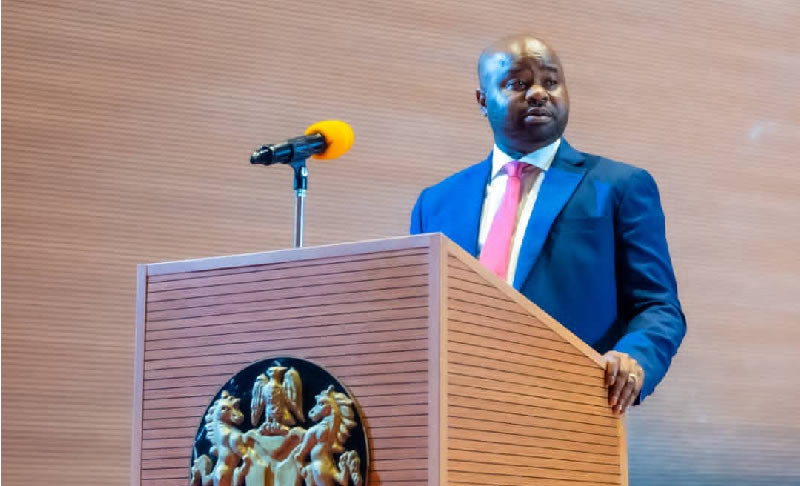
The Head of Anti-Graft and Law Enforcement Liaison at the NRS, Idris Abdullahi, warned of economic losses from illicit financial flows during a sensitisation programme for corporate entities held in Lagos on Wednesday and organised by the Manufacturers Association of Nigeria.
Abdullahi stated that the recoveries were largely achieved through voluntary compliance measures before enforcement actions commenced. “We recovered over N80bn from people who ought to have remitted that money to the government and did it just because they know that after the base programme, we will enforce it on them,” Abdullahi said.
He added that the recovery covered a period of three to five years and was achieved within a single sector. Abdullahi explained that the NRS also introduced the Voluntary Offshore Assets Regularisation Scheme, which provided taxpayers with a window to declare previously undisclosed offshore assets.
“We also opened up what we call VOARS and gave (business owners) a window to declare back the money instead of enforcement, because afterwards, if you have money and you cannot say how you got it, it will be dealt with,” the NRS anti-graft chief said.
The VOARS scheme was established through a presidential executive order in 2018. It allowed defaulting taxpayers to regularise offshore assets by paying a one-time levy, while granting immunity from prosecution and tax audits on declared assets.
Abdullahi warned that illicit financial flows remain a major threat to Nigeria’s economy, noting that the country accounts for a significant share of capital flight from Africa.
He explained, “Nigeria is currently responsible for about 65 per cent of the total illicit financial flows expected to come out of Africa, which is around $88.6bn, and it is quite telling on our economy because it is a monster we must deal with.”
He stressed that companies and professional service providers play a central role in either enabling or curbing illicit flows. “The businesses are the major stakeholders because illicit financial flows can only be perpetrated using vehicles such as companies, while professionals like lawyers and accountants could also be engaged in activities such as transfer pricing and false documentation to move funds out of the country,” Abdullahi added.
He called on the private sector to move beyond passive compliance and take active responsibility in safeguarding the financial system. Abdullahi said, “The private sector must transition from being passive recipients of regulation to active partners in protecting the integrity of our financial systems because the prosperity of our businesses cannot be separated from the integrity of our systems.”
Also speaking, the Director-General of the Manufacturers Association of Nigeria, Segun Ajayi-Kadir, cautioned that illicit financial flows pose significant risks to businesses and the wider economy. Represented by the MAN Director of Membership Services, Joseph Emoleke, Ajayi-Kadir noted that the issue extends beyond regulatory concerns to directly impact industrial growth.
“Illicit financial flows go far beyond legal or technical matters because their consequences directly affect business operations through weaker investment flows, pressure on exchange rates, higher input costs, constrained infrastructure financing, and reduced investor confidence,” Ajayi-Kadir said.
He cited estimates indicating that Africa loses between $80bn and $90bn annually to illicit financial flows, with Nigeria accounting for a substantial share. “These resources could otherwise be deployed to build infrastructure such as roads, ports, power systems, and industrial parks, and for countries like Nigeria seeking rapid industrialisation, this represents a profound loss,” Ajayi-Kadir said.
MAN’s DG noted that the manufacturing sector supports efforts to promote transparency and accountability but called for balanced regulations that do not stifle productivity. “The objective must always be to strengthen accountability without weakening productivity or making manufacturers’ operations more difficult,” Ajayi-Kadir said.