



…As TRCN urges teachers to go digital
Senate Minority Leader, Abba Moro, on Tuesday, warned that Nigeria’s push to equip teachers with 21st-century digital skills will fail unless the government fixes dilapidated classrooms and overhauls the way education funds are spent.
Moro gave this warning at a one-day digital literacy workshop for teachers held at the Senate wing of the National Assembly, organised by the Teachers Registration Council of Nigeria (TRCN) in partnership with National Assembly members.
The event brought together educators from across the country to discuss how teachers could adopt digital tools and learner-centred methods. However, the discussion turned to the gap between policy rhetoric and the reality in many public schools.
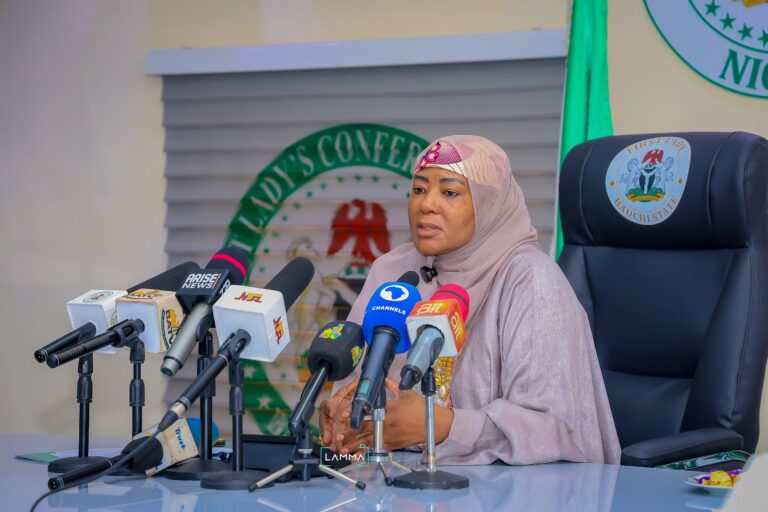
TRCN Registrar and Chief Executive Dr Ronke Soyombo opened the workshop by challenging teachers to embrace technology, saying: “This workshop, themed ‘21st Century Teachers: The Digital Platform,’ is very apt for the ongoing digital literacy drive for Nigerians, particularly teachers, to adopt more innovative ways of teaching and learning.
Soyombo said modern education is driven by digital tools and that Nigerian teachers must adapt to remain effective, stating: “Digitalised instruction is the language understood by pupils and students in this century, not rote memorisation. Teaching at this age is learner-centred, not teacher-centred”.
She added that digital tools help teachers engage students, simplify complex concepts, and track learning outcomes in real time.
In his goodwill message, Moro welcomed the digital push but said it would achieve little without basic infrastructure.
“If you visit primary schools in many local communities, you will discover that the foundation of education is in a serious state of disrepair,” the Benue South senator said.
“In many rural areas, the learning environment is poor. Can anyone honestly say that more than 70 per cent of schools in rural communities provide conducive environments for teaching and learning?”
The former Minister said investments in teacher development must be matched with improvements to classrooms, furniture, water, electricity, and learning materials.
“We can continue to promote teaching, but without proper facilities and support, teachers cannot perform effectively,” he said.
Moro also took aim at Nigeria’s budgeting system, which he described as outdated and ineffective.
“Even when I served as a minister, I repeatedly asked questions about yearly budget provisions for computers and e-libraries. Every year, funds are budgeted for these items, but where are the computers? How many e-libraries actually exist in the ministry today? You may be surprised that there are no clear answers,” he said.
He called for a shift from the “envelope system” of budgeting to needs-based spending that prioritises critical investments in schools over one-off or non-essential items.
The Senator, who said he was speaking as both a lawmaker and a former teacher, stressed that motivation and equipment are non-negotiable for effective teaching.
“The teacher must be well-equipped and motivated because that is the only way effective teaching can take place. As the saying goes, you cannot give what you do not have,” he said.
Moro noted that Nigerians educated abroad often excel because they learn in supportive environments.
“Yes, products of the Nigerian education system are excelling abroad, but they succeed because the environment there is supportive. How can students and teachers thrive in dilapidated conditions?” he asked.
The workshop ended with a call for coordinated action between the federal government, state governments, and the National Assembly to upgrade infrastructure while expanding digital training for teachers nationwide.
Both TRCN and lawmakers agreed that aligning teacher capacity with improved learning environments is essential if Nigeria hopes to compete in the digital and AI era.