



Crude producers offered about $5.17bn worth of crude oil in the first quarter of 2026, even as Nigeria’s local refineries were only able to lift 28.5 million barrels within the same period under the Domestic Crude Supply Obligation framework, findings by The PUNCH revealed on Tuesday.
The latest data from the Nigerian Upstream Petroleum Regulatory Commission showed a significant mismatch between crude availability and actual refinery offtake, despite regulatory efforts to deepen domestic refining.
The figures indicate that producers collectively made available 68.7 million barrels of crude between January and March, far above allocated requirements, yet refiners struggled to convert the offers into actual deliveries.
This translates to a weak conversion rate of about 36–46 per cent, underscoring persistent structural and commercial bottlenecks in the domestic crude supply chain.
Figures released by the commission indicated that while 61.9 million barrels were allocated to domestic refiners during the period, oil producers collectively offered 68.7 million barrels.
However, actual deliveries lagged significantly, with refiners lifting just 28.5 million barrels, indicating that crude producers supplied local refineries with less than half of the volumes allocated under the country’s domestic crude supply rules.
The development underscores a persistent gap between crude availability and actual refinery intake, raising fresh concerns over feedstock adequacy for Nigeria’s refining ambitions.
In the press statement issued, the NUPRC Head of Media and Corporate Communications, Eniola Akinkuotu, said the data reflected ongoing efforts to enforce the Domestic Crude Supply Obligation in line with the Petroleum Industry Act.
The statement read, “The Nigerian Upstream Petroleum Regulatory Commission has released the statistics on the enforcement of the Domestic Crude Supply Obligation in accordance with the provisions of the Petroleum Industry Act.
“A summary of the monthly allocation shows that 61.9 million barrels of crude oil were allocated to domestic refineries during the quarter, while producers collectively offered a higher volume of 68.7 million barrels. However, actual supply to local refineries was 28.5 million barrels, translating to a supply conversion rate of 36-46 per cent as of the end of the first quarter (Q1) 2026.”
Akinkuotu noted that although producers have shown willingness to meet and even exceed supply targets, market realities continue to shape final delivery outcomes.
“The commission has continued to enforce the provisions of the Domestic Crude Supply Obligation in accordance with the Petroleum Industry Act. While producers have demonstrated strong compliance by offering volumes above allocated thresholds in several instances, actual supplies to domestic refiners remain constrained by prevailing commercial dynamics,” he said.
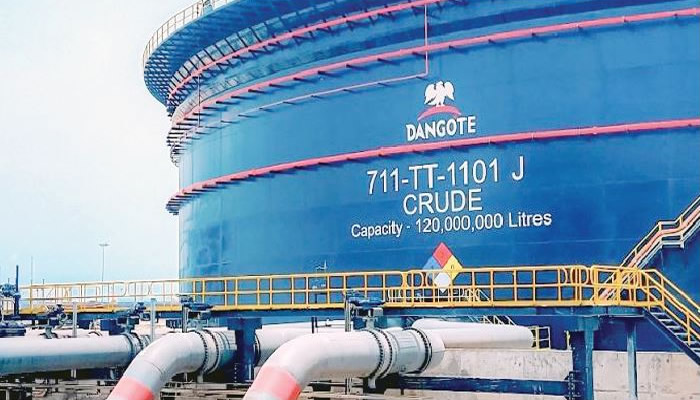
Our correspondent observed that the volume of crude lifted by domestic refiners remains relatively small when compared with the scale of imports by the Dangote Petroleum Refinery, which brought in about 61.7 million barrels of crude oil from the United States between January 2024 and January 2026.
Despite the Federal Government’s naira-for-crude arrangement aimed at ensuring a steady local supply, the refinery has repeatedly complained of insufficient domestic crude allocation. This shortfall has, on several occasions, forced it to source feedstock from the United States and other countries, including Ghana, to sustain operations.
A month-by-month breakdown showed that in January, the commission mandated producers to supply 22.6 million barrels to local refineries following consultations with industry stakeholders.
Producers exceeded the target, offering 25.3 million barrels, an increase of 11.9 per cent or 2.7 million barrels above the requirement. Despite this, only 9.2 million barrels were eventually delivered to refiners.
In February, allocations dropped slightly to 20.5 million barrels, while producers offered 19.8 million barrels, falling short of the target by about 700,000 barrels. Actual supply declined marginally to 9.1 million barrels.
March recorded a modest improvement, with deliveries rising to 10.1 million barrels. During the month, 18.8 million barrels were allocated, while producers significantly exceeded expectations by offering 23.6 million barrels, about 25.5 per cent above the target.
Calculating the value, crude producers offered 22.6 million barrels of crude oil at a conservative average price of $68 per barrel. This translated to a total monthly value of about $1,536.8 million.
In February, the offered volume declined slightly to 19.8 million barrels, with an average price of $70 per barrel, resulting in a total value of approximately $1,386.0 million for the month.
By March, producer offers increased to 23.6 million barrels, priced at a higher average of $95.03 per barrel, pushing the monthly value to about $2,242.708 million.
Altogether, the total value of crude offered in the first quarter of 2026 stood at approximately $5,165.508 million, which is about $5.17bn using conservative estimates.
Explaining the recurring shortfall between volumes offered and actual deliveries, the commission attributed the gap largely to pricing disagreements between producers and domestic refiners. It stressed that transactions under the DCSO framework are guided by a “willing buyer, willing seller” principle, which ultimately determines whether offered crude is lifted.
“The current framework allows for market-driven negotiations between producers and refiners. As such, pricing differentials have continued to influence the pace and volume of crude deliveries,” Akinkuotu stated.
Despite the supply gaps, the commission reaffirmed its commitment to improving crude availability for local refining as part of the Federal Government’s energy security drive.
“Leveraging the framework of the Petroleum Industry Act, 2021, the Commission remains focused on sustaining recent gains in crude oil production while refining the DCSO methodology to enhance transparency and efficiency. Our objective is to ensure that domestic refineries are adequately supplied in line with national energy sufficiency goals,” it added.
The DCSO was introduced under the PIA to prioritise crude supply to domestic refineries and reduce Nigeria’s reliance on imported petroleum products. However, the latest figures highlight ongoing structural and commercial challenges that continue to limit the full realisation of the policy’s objectives.
Meanwhile, local refiners in Nigeria continue to face supply constraints as crude allocation and pricing dynamics tilt more towards international sourcing, according to industry stakeholders.
The Crude Oil Refiners Association of Nigeria has attributed the growing reliance of the Dangote Petroleum Refinery on imported crude to commercial pricing structures and crude grade differentials in the domestic market.
Speaking in an interview with our correspondent, CORAN Publicity Secretary, Eche Idoko, said the refinery’s preference for imported crude is largely driven by economics and product compatibility rather than lack of demand for local supply.
He explained that Nigerian producers predominantly sell Brent-linked crude at a premium, while the refinery often imports West Texas Intermediate crude, which better aligns with its operational configuration.
Idoko said, “So one of the major issues we are having with Dangote buying more crude from the U.S is because of the type of products offered and the pricing. It is based on commercials. So producers sell more Brent crude at a premium, but the import from other countries is WTI, another grade that is utilised by the refinery.”
He argued that the current pricing framework places domestic refiners at a disadvantage compared to international sourcing options, particularly in terms of competitiveness and risk exposure. According to him, a more tailored pricing mechanism is needed to reflect Nigeria’s local refining realities and reduce reliance on external markets.
Idoko said, “All we have said is that for local refineries, in Nigeria, as they do in other climes, why can’t we have a pricing index that reflects our peculiarity, and we don’t have to face the international insurance risk. Dangote goes out to buy more crude from other countries because of the Brent and premium pricing template by local producers.”
He stressed that aligning crude pricing to domestic refining needs could help strengthen local supply chains and reduce the growing dependence on imported feedstock.
Reacting to recent data from the Nigerian Upstream Petroleum Regulatory Commission on crude allocation and offtake under the Domestic Crude Supply Obligation, Idoko said the association is still reviewing the figures.
He added, “On the figures released by the NUPRC, we are doing a compilation of the demand and volumes they all got so that we can respond robustly.”
The comments come amid ongoing debate over Nigeria’s crude allocation framework, as refiners continue to call for improved pricing transparency and more stable access to domestic feedstock under the Petroleum Industry Act regime.