


The African Development Bank Group has projected that Nigeria’s economic growth will slow to 3.7 per cent in 2027 as easing global oil prices reduce external revenue inflows, despite a modest improvement expected in 2026.
The projection was contained in the bank’s recently published African Economic Outlook 2026 report, which noted that Nigeria’s growth would rise marginally from an estimated 4.0 per cent in 2025 to 4.1 per cent in 2026.
According to the report, the anticipated growth in 2026 will be driven by increasing oil prices and production, expansion in the services sector, and increased public investments in electricity, transport, and logistics.
The AfDB stated, “Growth in Nigeria, the region’s largest economy, is projected to increase marginally from an estimated 4.0 per cent in 2025 to 4.1 per cent in 2026, supported by increasing oil prices and production, growth in the services sector, and increased public investment in electricity, transport, and logistics. In 2027, growth is projected to decelerate to 3.7 per cent on account of the anticipated easing of global oil prices and thus reduced external revenue inflows.”
The bank warned that Africa’s medium-term outlook remains vulnerable to supply chain disruptions, inflationary pressures, exchange rate depreciation, and tightening global financial conditions.
According to the report, higher fuel and fertiliser prices could weaken agricultural output, increase food insecurity, and worsen inflation across the continent.
The institution stated that elevated inflation could force African central banks to tighten monetary policy further, thereby weakening growth through reduced lending to the private sector.
It added that prolonged global shocks could heighten debt vulnerabilities, increase borrowing costs, weaken fiscal balances, and constrain public investments and social spending across African economies.
The AfDB urged African countries to adopt coordinated fiscal, monetary, and structural reforms to cushion the impact of recurring global shocks.
The report stated, “Addressing the adverse impacts of successive waves of shocks and increasing geopolitical fragmentation on African countries requires a holistic approach, comprehensive policy, and financing. African central banks need to implement prudent monetary and exchange rate policies tailored to anchoring long-term inflation expectations.”
The bank also called on African countries to improve domestic resource mobilisation, broaden tax bases, digitise tax administration, and strengthen transparency and accountability in the use of public resources.
According to the report, African economies also need to strengthen their capacity to attract and retain external financial flows, especially in emerging sectors such as renewable energy and data centres.
The AfDB stated that preserving macroeconomic stability and deepening domestic financial markets would be critical to sustaining investor confidence and avoiding capital reversals.
The institution further advised African countries to deploy proactive crisis response measures, including contingency financing arrangements, diversified sourcing of fuel and fertiliser, and temporary liquidity support for distressed businesses.
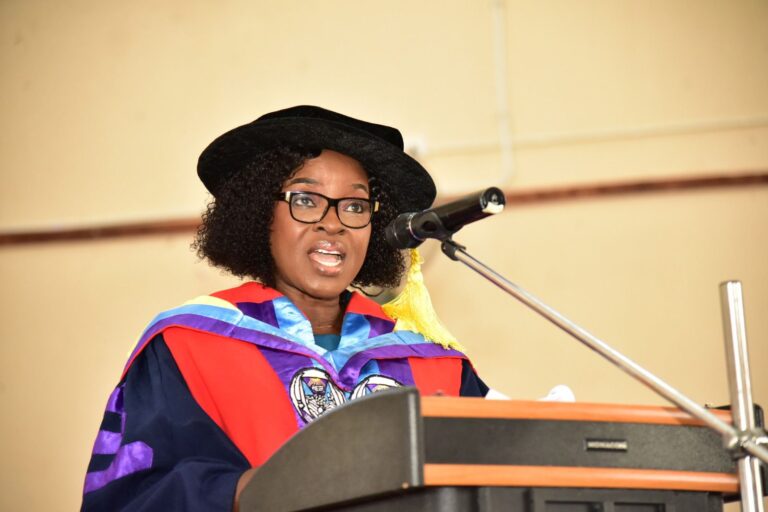
In the report’s foreword, President of the AfDB Group, Dr Sidi Tah, said Africa remained resilient despite mounting global and regional challenges.
Tah said, “Africa stands at a critical juncture in its development journey. Its economies continue to demonstrate remarkable resilience despite numerous concurrent challenges, such as escalating trade tensions, the intensifying effects of climate change, the effect of the COVID-19 pandemic, declining international aid and foreign direct investment, increased global and regional conflicts, and ongoing geopolitical fragmentation.”
He added that Africa’s economies expanded in 2025, with average real GDP growth strengthening to 4.4 per cent, placing the continent among the world’s fastest-growing regions. The bank’s president noted that the 2026 outlook report calls for a fundamental rethinking of Africa’s development financing and policy management.
Tah stated, “Achieving sustained and inclusive growth will require a substantial increase in investment. Africa must raise annual growth to 7 per cent or higher, sustained over decades, to enable large-scale job creation and accelerated poverty reduction.”
The report noted that Africa could unlock up to $1.43tn in additional annual financing by addressing inefficiencies in resource mobilisation and utilisation. The AfDB added that nearly $469bn remained untapped due to weaknesses in tax compliance, administration, and policy design, while more than 40 per cent of public investment was currently lost to inefficiencies.
The report also projected that growth in West Africa would stabilise at 4.7 per cent in 2026 and 4.5 per cent in 2027, compared to an estimated 4.8 per cent in 2025. It noted that 10 of the region’s 15 countries were expected to record growth of at least five per cent in 2026, ranking among the fastest-growing economies in Africa.