



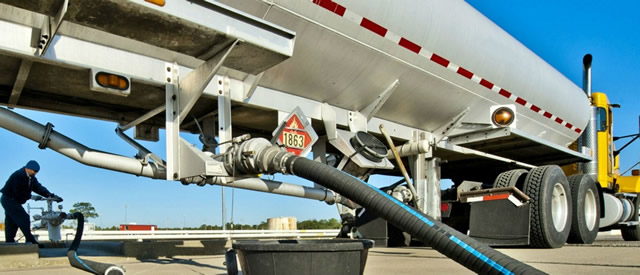
The Major Energies Marketers Association of Nigeria has disputed claims that aviation fuel is selling for as high as N3,300 per litre, urging airline operators to seek alternative suppliers while attributing current price pressures to global supply disruptions and logistics costs.
The Airline Operators of Nigeria had earlier warned that domestic airlines may suspend operations nationwide from April 20 if the rising cost of aviation fuel is not urgently addressed.
In a letter issued to journalists on Wednesday, dated April 14, 2026, and addressed to the Executive Secretary of the Major Energies Marketers Association of Nigeria, Clement Isong, the President of AON, Abdulmunaf Sarina, said the surge in the price of Jet A1 had become unbearable for operators.
Responding in a letter dated April 16, the association said it empathised with AON over the difficulties faced by airlines but insisted that the price being quoted by some operators was significantly above prevailing market levels.
The Executive Secretary of MEMAN, Clement Isong, who signed the letter, said, “I write on behalf of the members of the Major Energies Marketers Association of Nigeria. Thank you for your letter dated April 14, 2026, and for bringing the concerns of the Airline Operators of Nigeria to our attention.
“We empathise with the very difficult situation currently faced by the Nigerian aviation sector. The sharp increase in Jet A1 prices has placed significant pressure on airline operations, and we fully understand the serious implications this has on the sustainability of the aviation sector and the broader economy.”
The association attributed the rising cost of aviation turbine kerosene to global factors, particularly disruptions linked to geopolitical tensions in the Middle East.
“The challenge is that the ongoing geopolitical tensions in the Middle East have severely disrupted global supply chains and significantly affected the pricing and availability of middle distillate products such as diesel and Jet A1. Transport costs within the country have therefore gone up by an average of 50 per cent,” it stated.
MEMAN also stressed that aviation fuel distribution involves stricter handling requirements compared to other petroleum products, which increases operational costs.
“It is also important to note that the transportation and distribution of ATK are governed by specific protocols for quality assurance and safety reasons, which are more stringent than those applicable to most other petroleum products.
“Dedicated equipment, specialised handling procedures, and rigorous quality checks at every stage of the supply chain are non-negotiable requirements. These necessary safeguards inherently make the logistics and distribution of ATK a more cost-intensive undertaking compared to other petroleum products,” it stated.
However, the association expressed surprise at the N3,300 per litre price referenced by airline operators, stating that its internal survey showed significantly lower prices. The marketers said they would not be able to disclose a particular price, but N3,300 is over N1,000 above the normal price.
“In light of the above, we must express our surprise at the price of N3,300 per litre stated in your letter as the price being charged to some airline operators. MEMAN members do not discuss pricing as this will be against competition law; however, the price of N3,300 is over N1,000 higher than our average market survey price of Jet A1 carried out for this exercise, after receipt of your letter,” MEMAN explained.
It, therefore, advised operators to explore alternative suppliers offering more competitive rates. “We would therefore strongly encourage any operators currently being charged at those levels to exercise their commercial right to seek alternative suppliers.
“Our market survey confirms that more competitively priced options are available, and MEMAN members remain committed to providing ATK at fair, market-reflective prices. We have also received indications of falling costs, which should begin to reflect in market prices in the coming weeks,” the letter added.
The association further recommended that airlines move away from spot purchases to long-term supply agreements to reduce price volatility. MEMAN said it had also engaged regulators on the matter and submitted recommendations to ease the burden on the aviation sector.
“Finally, we strongly encourage AON members to adopt a more sustainable pricing approach by moving away from spot pricing and entering into longer-term contractual arrangements with their suppliers. This would provide greater price predictability, help stabilise cash flow, and reduce exposure to daily market swings.
“Please be assured that MEMAN has been actively engaged with the relevant regulatory authorities on this matter. Following due consultations, we have formally communicated several practical suggestions and recommendations aimed at mitigating the impact on the aviation sector and the wider economy. We continue to engage constructively with the NMDPRA and other key stakeholders to find balanced and sustainable solutions.”
The response comes amid growing concerns from airline operators over escalating Jet A1 prices, which they say threaten the sustainability of domestic flight operations and could lead to higher airfares.
MEMAN, however, maintained that competitive options exist in the market and reiterated its commitment to working with stakeholders to stabilise supply and pricing, saying, “We remain committed to working collaboratively with all stakeholders, including the Airline Operators of Nigeria, to ensure the long-term stability and growth of the downstream petroleum sector while supporting critical national services such as aviation.”
The PUNCH reports that AON had in its letter said, “Permit us to further bring to your notice that the price of Jet A1 as sold by marketers has risen significantly from the initial N900/litre as at February 28, 2026, to N3,300/litre as of today.
“This represents an increase of over 300 per cent. This astronomical and artificial increase is not commensurate with the rise in crude oil prices and is well above international market benchmarks, which reflect approximately a 30 per cent increase in crude oil cost. For the past four weeks, airlines have endured this burden and continued operations out of patriotism and in the spirit of service to the nation. However, the situation has now become unbearable and clearly unsustainable,” the letter stated.
It urged MEMAN to prevail on its members to proportionately adjust jet fuel prices in line with international market realities, “as airlines can no longer sustain purchases at the current exorbitant rates.”
The operators warned that airlines may be forced to halt operations if the situation persists. “Accordingly, we hereby give notice that if this trend persists, all airlines in Nigeria will be compelled to suspend operations effective Monday, April 20, 2026. This serves as our final appeal,” it said.