


Although the recent leadership change at the Power Ministry may bring positive momentum to the sector, industrialists insist that a functional value chain, not just a new minister, is key to addressing persistent instability, writes ARINZE NWAFOR
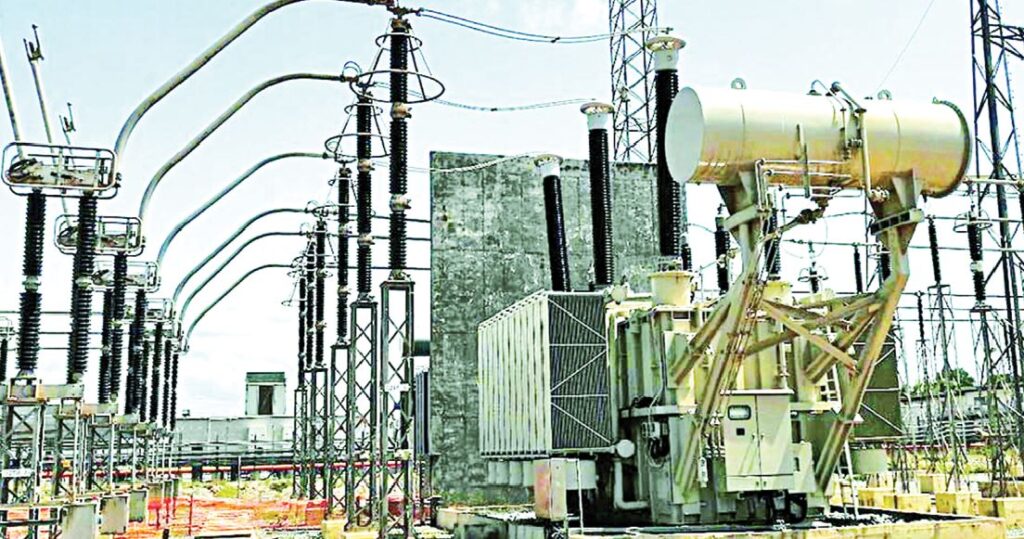
The recent leadership change at the Federal Ministry of Power has sparked cautious optimism among manufacturers and small business operators, who have long struggled with chronic electricity instability in the country. Industry stakeholders told The PUNCH that the appointment of a new minister presents an opportunity to reform the troubled sector, improve generation and stabilise supply. They explained that competence, institutional coordination and policy consistency would matter more than the personality occupying the office.
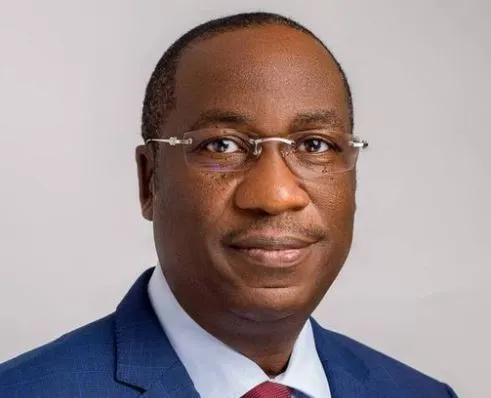
President Bola Tinubu nominated Joseph Tegbe as Minister of Power on 30 April 2026, following the resignation of former minister Adebayo Adelabu on 22 April 2026. The Senate confirmed Tegbe’s appointment on 6 May 2026.
During his screening, Tegbe promised that Nigerians would witness “visible improvement” in the sector, adding that efforts to stabilise the national grid would begin within his first 100 days in office, while broader reforms could take about one year.
The Federal Government said his appointment will strengthen ongoing efforts to reform the power sector, improve grid stability and attract sustainable investments under the Renewed Hope Agenda.
The leadership transition comes at a period when manufacturers continue to struggle under the weight of poor electricity supply, rising energy costs, and recurring national grid collapses.
The Manufacturers Association of Nigeria stated in its Manufacturing State of Affairs Report for October 2025 that alternative energy costs consumed N676.6bn in the first half of 2025, despite a decline from N708.1bn in the second half of 2024.
According to the report presented by the Director of Research and Economic Policy Division of MAN, Dr Oluwasegun Osidipe, manufacturers also spent N1.72tn on raw material imports during the same period, while 18,935 jobs were lost.
The report identified inadequate power supply and the high cost of electricity and alternative energy among the biggest constraints confronting manufacturers in the third quarter of 2025.
Manufacturers and small business operators living under these circumstances affirm that the new leadership’s success lies beyond rhetoric and only in delivering practical reforms capable of transforming the electricity value chain.
Performance concerns
A council member of the Manufacturers Association of Nigeria, John Aluya, said manufacturers had yet to learn the new minister’s strategy but insisted that the sector remained trapped in severe electricity shortages.
Aluya said, “We have not yet felt the pulse of the new minister. We don’t know what he is really up to. But as far as power generally is concerned in Nigeria, the manufacturing sector is still facing an epidemic of power supply.”
He added that the electricity supply had failed to improve despite repeated government assurances, stating, “It has not improved one bit. Rather, you can see now, even in your home, that most times they shut down. They will not give you supplies.”
Aluya, a former MAN Vice President, noted that unreliable grid electricity still forces manufacturers to depend heavily on diesel-powered generators, thereby driving up production costs and prices of finished goods.
Aluya noted, “Power supply is a challenge, particularly in the manufacturing sector, where we run most of our plants with diesel. And now the cost of diesel has risen to about N1,800 to N2,000 per litre. So, it is a big challenge for manufacturers.”
The industrialist warned that rising energy costs would eventually be passed on to consumers through higher prices, questioning the effectiveness of the current electricity tariff structure, especially the Band A to E classification system introduced under the sector reforms.
He said, “Band A was estimated to get a 20-hour power supply. How many hours do they get today? Nothing. But they have created it just to rip off the consumers because either they supply you six or eight hours per day, they will still bill you on Band A.”
The manufacturer argued that the electricity crisis could not be solved by one minister alone because deep-rooted institutional failures existed across the value chain, stressing, “Reforming the energy sector requires a holistic approach, not based on one single person. The holistic approach has to turn around everybody who is not making any contribution.”
Competence debate
The appointment of Tegbe, a fiscal and economic reform expert, has also reignited debate over whether the power ministry requires financial experts or technical professionals with engineering backgrounds.
Both Tegbe and his predecessor, Adelabu, built careers in finance before leading the ministry.
Deputy President of the National Association of Small-Scale Industrialists, Segun Kuti-George, said manufacturers cared more about performance than professional background.
“To be honest, who is occupying what position is really not a major concern for us. It is the quality of the performance that is important for us,” Kuti-George said.
He added that the major concern remained whether the government could significantly improve generation and distribution.
“Are we able to get power? Are we able to increase power generation to the extent that manufacturers can get power to run their businesses? Those are the critical questions,” the NASSI leader remarked.
He acknowledged arguments supporting the appointment of engineers into technical ministries but maintained that effective leadership required coordination and results.
Kuti-George said, “One would have thought that people in the engineering sector would be given such a position under the assumption that they know what to do. But the important thing is, are we able to get power?”
He explained that Nigeria’s electricity situation remains dire despite repeated tariff increases imposed on businesses and households: “The power situation in the country is still very much dire. We still find ourselves running generators over and over despite the crazy tariff increases.”
He lamented that Nigeria still generated roughly 4,000 to 5,000 megawatts despite needing far more capacity to support industrial growth, saying, “A nation that needs about 30,000 megawatts is still generating the same 4,000 or 5,000 megawatts, and that is how it has been for many years.”
Kuti-George blamed weak implementation, flawed privatisation processes and inefficiencies within the distribution companies for worsening the sector’s challenges, adding that persistent power shortages continued to fuel inflation and weaken profitability across industries.
He warned that “lack of power drives up costs when you have to generate your own power.” It drives inflation, slows profitability and slows growth. The general economy is frustrated.”
Holistic reforms
Stakeholders also stressed that solving the electricity crisis would require collaboration among federal agencies, state governments and private investors rather than overreliance on a minister.
Aluya welcomed the decentralisation of electricity regulation, which now allows states to generate and distribute power independently, but warned that implementation remained slow.
He cited the long gestation period of the Geometric Power project in Abia State as evidence that state-led electricity reforms would require patience and commitment.
Aluya said, “Devolving power control from the exclusive list is good, but it will not automatically bring power because it is going to take time. For example, it took Geometric 20 years to get to where it is in Abia State.”
He criticised many states for failing to aggressively pursue electricity investments despite having abundant gas resources, advising that South-South and South-East states should leverage gas reserves to generate electricity instead of allowing gas flaring to continue.
Aluya said, “The state governments, particularly states from the South-South and South-East that have abundant gas, should be able to key into this energy sector, generate enough power and even supply other states.”
He argued that alternative energy already accounted for almost half of manufacturers’ electricity consumption because of persistent grid instability, noting, “Most of our energy, about 48 per cent of our energy supply, is being generated privately.”
The President of the Association of Small Business Owners of Nigeria, Dr Femi Egbesola, described Tegbe’s appointment as a positive step and expressed hope that the government would finally address the electricity crisis.
Egbesola said, “I think it is a good decision in the right direction. The last Minister of Power did not do anything remarkable to improve energy. Rather, it worsened.”
He noted that businesses and investors had expected significant improvements in electricity supply under the current administration but had instead witnessed deterioration.
Egbesola said, “One of the major business enablers is energy. Former power minister Adelabu failed. We are hopeful that the new minister will be able to revive the sector even within the short period of time he has.”
He urged the minister to unveil a clear blueprint detailing how the government intended to improve supply, strengthen infrastructure and support businesses, adding, “We are looking forward to him releasing his blueprint on what he wants to do and how he wants to do it.”
Earlier in the year, industry stakeholders also pointed to ongoing initiatives by the Industrial Revolution Working Group as evidence that manufacturers were actively seeking long-term solutions.
Speaking to the press in January, the President of MAN, Francis Meshioye, recently disclosed that the public-private sector platform had prioritised energy reforms because of their importance to industrial competitiveness and cost stability.
Meshioye said repeated national grid collapses had erased earlier hopes of improvement in electricity supply, stating, “The Industrial Revolution Working Group is creating a model. We are currently working on energy. Importantly.”
For manufacturers, the consensus remains clear. Nigeria’s electricity crisis demands more than a leadership reshuffle. Stakeholders said only coordinated reforms, competent execution, infrastructure investment and accountability across the entire value chain would deliver the stable electricity supply needed to revive industrial productivity and economic growth.