
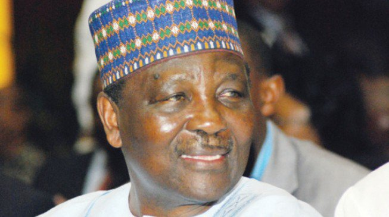
There is something profoundly insulting about a man waiting nearly sixty years to rewrite history and expecting the world to salute him for it. That is precisely what former Nigerian Head of State, General Yakubu Gowon, has attempted with his newly released memoir, “My Life of Duty and Allegiance.”
In it, Gowon disputes the account of the Aburi Accord as narrated for decades by the late General Chukwuemeka Odumegwu Ojukwu. In essence, Gowon now wants Nigerians to believe that Ojukwu lied about what transpired in Aburi, Ghana, between January 4 and 5, 1967. But the real question is not whether Gowon disagrees with Ojukwu.
The real question is this: Why should anybody take Gowon seriously now? The timeline alone destroys the credibility of this sudden revisionism. The Aburi Accord was negotiated in January 1967. Ojukwu returned from the meeting and immediately gave detailed public accounts of what had been agreed. He consistently maintained that the Nigerian government, under Gowon, reneged on the agreement. According to Ojukwu, it was the federal government’s refusal to implement Aburi that made the Nigerian Civil War inevitable.
Then came “Because I Am Involved,” published in 1989 – a monumental insider account written by a principal actor in the tragedy. Ojukwu did not write from the fog of extreme old age. He wrote at 56 years old, with his faculties intact, his memory sharp, and his recollections still relatively close to the events. And let us not forget that Ojukwu had spent 12 years in exile between 1970 and 1982. One can reasonably argue that Ojukwu would have written much earlier. Now, compare that to Gowon. Gowon was born on October 9, 1934.
He is now 91 years old. That means his memoir is appearing almost six decades after Aburi and 37 years after Ojukwu published his own account. This is not merely suspicious. It is intellectually embarrassing. If Gowon was serious about correcting the record, why did he wait almost four decades after “Because I Am Involved? Why did he not publish his own counter-account in 1990?” He would have been approximately the same age Ojukwu was when he wrote his own memoir.
But Gowon did not speak then. He remained silent. He remained silent while Ojukwu was alive. He remained silent while the principal witness to the events could still challenge him publicly. That silence matters because what Gowon has now published is not courageous truth-telling. It is the safest form of revisionism imaginable; rewriting history after the opposing voice is dead and buried. Ojukwu died in 2011. Gowon waited another 15 years after Ojukwu’s death before suddenly discovering the urgency to “clarify” history. That is not bravery.
That is cowardice. And it perfectly fits a historical pattern. The tragedy of Nigeria has always been that men who lacked the courage to do the right thing in decisive moments, later attempt to rehabilitate themselves through carefully curated memoirs. Gowon had the opportunity in 1967 to prevent catastrophe by faithfully implementing Aburi. Instead, Nigeria descended into one of the bloodiest conflicts in African history.
Millions suffered. Millions starved. Millions died. And now, 60 years later, one of the principal architects of that disaster wants the world to believe that his memory at 91 is more reliable than the detailed account written by another principal actor at 56. It would be laughable if the stakes were not so tragic. No serious historian approaches late-life political memoirs uncritically – especially memoirs written decades after the fact by men with reputations to salvage.
Memoirs are often exercises in self-preservation disguised as historical clarification. They are not sacred texts. They are legal defenses written for the court of public memory. And Gowon’s timing exposes the game. He did not confront Ojukwu when Ojukwu could answer him. He did not challenge Because I Am Involved when it was first published.
He did not produce a rival historical account while the debate could still occur honestly and directly. Instead, he waited until the only surviving voice left was his own. That is not the conduct of a statesman confident in truth. It is the conduct of a man terrified of contradiction. There is another uncomfortable reality here: History is not merely about who speaks last. It is about who had the courage to speak when it mattered. Ojukwu spoke.
Gowon delayed for 37 years. That delay alone permanently weakens the credibility of this memoir. Indeed, one of the greatest ironies of Gowon’s latest publication is that it unintentionally confirms what many Nigerians have believed for decades: that the Nigerian Civil War was not merely a tragedy of politics, but a tragedy of failed leadership, and at the centre of that failure stood Yakubu Gowon.
Had Gowon demonstrated seriousness, discipline and statesmanship in 1967, there might have been no war. Had he demonstrated intellectual seriousness in 1989, there might have been a meaningful historical debate.
Instead, Nigerians are now being handed a memoir written by a 91-year-old former ruler attempting to relitigate events from 60 years ago against an opponent who has been dead for 15 years. That is not history. That is damage control masquerading as scholarship, and no serious-minded reader should mistake it for anything else.