



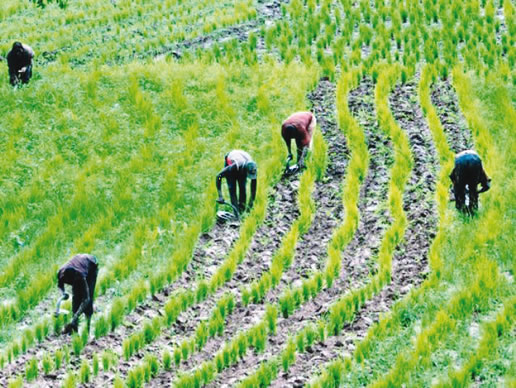
Experts have urged Nigerian youths to explore business opportunities beyond traditional farming and embrace other segments of the agricultural value chain to drive innovation and economic growth.
They gave this advice at “Beyond Farming”, a youth-focused conference themed ‘Exploring Real Opportunities Across the Agricultural Value Chain’, held recently in Lagos.
The stakeholders explained that opportunities existed in agricultural processing, logistics, marketing, technology, trade and finance for young Nigerians willing to innovate and fill existing gaps.
The Convener of the conference, Chy Nwakanma, said agriculture had been narrowly defined over the years, leaving many young people unaware of opportunities across the wider ecosystem.
“Agriculture has been narrowly defined, overlooking the vast ecosystem beyond farming, including processing, logistics, trade, technology, and finance,” Nwakanma said.
She said many young people were interested in agriculture but lacked direction on how to participate meaningfully in the sector.
“Young people are interested; we are curious; we are willing, but many are asking questions like, “Where do I start? What role can I play? How do I move from interest to action?” Nwakanma said.
Nwakanma noted that she created the “Beyond Farming” platform to move discussions beyond inspiration and ideas into practical opportunities and action and provide practical pathways for youths to participate in the agricultural value chain.
In her keynote address, the Lagos State Commissioner for Agriculture and Food Systems, Abisola Olusanya, said agriculture had evolved beyond cultivation and now encompassed technology, logistics, innovation and finance.
“Agriculture in 2026 is no longer about horses, commerce, and cultivation. It’s about technology, logistics, finance, climate resilience, innovation, food enterprise, and economic prosperity,” Olusanya said through Gboyega Idris of the ministry’s veterinary department.
She said the Lagos State Government had already begun initiatives aimed at strengthening food systems and reducing post-harvest losses, citing the Lagos Central Food Systems and Logistics Engagement Effort, describing it as a food logistics and aggregation centre expected to become one of the largest in sub-Saharan Africa.
She said the project would improve food quality and connect producers directly with consumers and processors.
The commissioner added that the state was also driving youth participation in agriculture through the Lagos Agricultural Programme, which provides practical training, enterprise support and internship opportunities.
“We’re nurturing startups, solving real problems across food production, logistics, processing, market systems, and climate-smart agriculture,” Olusanya said.
She stressed the need to equip young Nigerians with skills relevant to emerging opportunities in the sector, saying, “The future farmer may not necessarily carry a hoe. They may design farm equipment software, develop AI-powered production tools, or create digital marketplaces connecting producers to consumers.”
Also speaking, the Minister of Livestock Development, Idi Maiha, said Nigeria’s future depended on decisions made regarding young people, land and the food system.
Represented by the Director and State Coordinator at the Federal Ministry of Livestock Development, Mariat Soleye, Maiha described the conference as a movement to reimagine agriculture and livestock development, with young Nigerians at the centre.
He said the Federal Government’s Renewed Hope Agenda prioritised food security, job creation and economic diversification, adding that agriculture and livestock development remained key to achieving those objectives.
Maiha said the livestock value chain offered vast opportunities for young Nigerians in areas such as animal husbandry, processing and logistics.
The minister also disclosed that the government had introduced policy reforms and partnerships to support youth-led agribusinesses by providing access to land, credit, and markets, adding that technology and data were being deployed to improve livestock productivity and traceability, while value-added processing would help boost exports.
Maiha urged young entrepreneurs and professionals to seize opportunities in the sector to transform Nigeria’s agricultural industry: “The transformation of Nigeria’s agricultural sector will be driven by the youth’s hunger to succeed. Start where you are and use what you have.”
He reiterated the ministry’s commitment to partnering with young Nigerians to strengthen the country’s agricultural and livestock sectors.
Maiha expressed optimism that the conference will inspire ideas, partnerships and innovations capable of transforming communities and positioning agriculture as a major driver of economic growth.
The event brought together stakeholders across agricultural value chains to share insights and address barriers limiting youth participation in the sector.