


- How Airstrike Errors In Military Operations Can Be Tackled, By Lawyers
AKEEM NAFIU writes that lawyers have stressed the need for accurate intelligence in military operations against bandits and insurgents in order to curb the recurring incidents of accidental killing of civilians

Some senior lawyers have expressed serious concerns over the continued spate of civilian killings propelled by military airstrikes across the country. The lawyers bared their minds at the weekend while reacting to the reported killing of over 70 civilians, a fortnight ago, at a domestic animal market in Tumfa village of Zurmi, Zamfara State, during a military airstrike targeting terrorists.
Tumfa is an agrarian economy community, located on the Nigerian border with the Niger Republic, and its market is patronised by people from the neighbouring country, as well as Zamfara and Katsina states, especially from Shinkafi and Jibia.
Speaking on the incident, a former Councillor at Mashema ward, Hon. Ibrahim Mashema, explained that it happened while the weekly market was at its peak around 1:00pm. He added that early comers to the market had on Sunday morning (the incident day) saw two fighter jets flown over and disappeared, just to witnessed appalling sounds of bombs been dropped by the jets in the afternoon which left many young girls and children dead, as a result of multiple explosion.
“Victims of bombing have already been conveyed to hospitals in Gusau, the state capital. And we are now busy burying the dead ones, the exercise may take us up to Tuesday or even Wednesday. “We are calling on the state government to swiftly draw the attention of the federal government with a view to realizing what was done to innocent and law abiding citizens”, Mashema added.
Zamfara govt, defence headquarters’ denial
In a statement issued by the Governor’s spokesperson, Sulaiman Bala-Idris, the Zamfara state government faulted reports on civilian casualties, while applauding the military for the operation. The statement reads: “Governor Dauda Lawal has commended the troops of the Joint Task Force (North West) Operation Fansan Yamma, for achieving significant operational successes against bandits in Zamfara State.
“The troops acted on an intelligence report that confirmed that the terrorists had converged at a concealed location in Tumfa Village, Shinkafi Local Government Area, with the intention to coordinate attacks and criminal activities targeting innocent communities in the state. The Air Component launched a precision airstrike on the identified terrorist hideout that successfully destroyed the structure, which served as the terrorists’ meeting point”.
In a related development, the Nigerian Defence Headquarters, through the Joint Task Force (Fansar Yamma), also expressed its satisfaction with the operation, saying the air strike in Tumfa was a successful outing against terrorists in the sub-region. In a statement, Lt. Col. Aliyu Danja, spokesperson for the Joint Task Force (North West) Operation FANSAN YAMMA, said, a ‘Battle Damage Assessment’ confirmed that several terrorists were killed during the air strike. “Intelligence reports confirmed that the terrorists had converged at a concealed location in Tumfa Village, Shinkafi Local Government Area, Zamfara State.
The meeting point—a building situated on the northern outskirts of the village was hidden within a densely vegetated area, shielded by thick mango trees along a stream channel. The purpose of the gathering was to coordinate attacks and criminal activities targeting innocent communities in the North West region”, the statement added.
AI, NHRC demand probe
In the meantime, a global rights group, Amnesty International, has called for an immediate, independent and transparent probe into the military airstrike that reportedly led to civilian casualties in Zamfara State. The organisation while alleging that at least 100 civilians were killed in the incident, also stressed the need for improved transparency and measures to prevent future civilian casualties.
In a related development, the National Human Rights Commission (NHRC) had equally called on the Nigerian Air Force to provide.detailed explanation on the recurring cases of civilian casualties linked to military airstrikes across the country.
Modern military engagements must prioritize the protection of civilians
In a statement, Executive Secretary of NHRC, Tony Ojukwu, contended that the continued loss of innocent lives was unacceptable and raised grave human rights concerns. Ojukwu queried why civilian casualties linked to airstrikes have continued to recur despite previous public outrage and repeated promises of operational reforms.
“The repeated reports of civilian deaths and injuries, including women, children and other vulnerable persons, arising from aerial bombardments raise serious concerns regarding the protection of the right to life and human dignity. “Nigerians deserve to know why this has become a recurring decimal,” Ojukwu said.
Past incidents of accidental killings Zamfara
In December 2022, a military airstrike claimed scores of civilian lives while soldiers were repelling attacks by non-state actors on some communities in Dansadau District of Maru Local Government Area of Zamfara State. It was the insistence of residents that armed bandits had targeted Malele, Yan Sawayu, Yan Awaki Maigoge, and Ruwan Tofa communities before the attacks were foiled by the air raids which forced the rampaging gunmen to flee into the neighbouring Mutunji community for safety.
Unfortunately, the terrorists were not the only victims of the air raid in Mutunji. Civilians, including women and children, were also killed. According to the community leader of Mutunji, Umar Mutunji, the civilian casualties were over 70. On January 10, 2025, no fewer than 16 residents were reportedly killed after a military air strike tore through Tungar Kara community in Maradun Local Government Area of Zamfara state.
Quoting intelligence sources, Zagazola Makama, a counter-insurgency publication focused on the Lake Chad region, revealed that the victims including members of the Zamfara Community Protection Guard (ZCPG), vigilantes, and residents of the community who were called to respond to the incursion of gunmen. The vigilantes were said to have been mistaken for bandits, shortly after the bandits had fled the scene.
Katsina
In Katsina State, at least six people were reportedly killed by an Air Force jet in the Kunkunna Community of Safana Local Government of the state in July 2022. The victims of Katsina attack were hit by bombs targeted at bandits. Confirming the incident, AbdulJalal Runka, the lawmaker representing Safana Constituency at the Katsina State House of Assembly, revealed that a woman was killed by the bomb, while 14 other people were injured in the attack. “Eight persons were admitted at the Umaru Musa Yar’adua University Teaching Hospital (formerly Federal Medical Centre Katsina)”, the lawmaker said.
Niger
Six children were killed when a Nigerian Air Force jet bombed their residence in Kurebe, Shiroro Local Government of Niger State in April 2022. Sadly, the parents of two of the six children who were killed in the airstrike were killed by bandits in 2020.
Spokesperson of the Coalition of Shiroro Association (COSA), Salis Sabo, revealed that the incident took place in the morning of Wednesday, April 13, 2022 as the children were returning from a motorised borehole in the community where they had gone to fetch water.
“The two other children who lost their lives in the incidents have for long-lost their parents. One of them is a daughter of the late Malam Isah Kurebe and the other is a daughter of the late Malam Adamu Kurebe, who were killed by terrorists”, Sabo said.
Borno
In the case of Borno State, and specifically in January 2017, the Medecins Sans Frontieres (MSF) also known as Doctors Without Borders, confirmed that at least 52 people were killed after a Nigerian fighter jet ‘accidentally’ dropped a bomb on an Internally Displaced Persons (IDP), camp in Rann, headquarters of Kala-Balge local government area, Borno State.
The international humanitarian organisation equally stated based intelligence systems. This system must be institutionalized. Local populations often possess valuable information regarding the movement patterns of insurgents and bandits. However, communities will only cooperate effectively where there is trust, protection, and assurance against reprisals.
“Fourth, independent investigative mechanisms should be established for alleged civilian casualty incidents. Investigations conducted solely within military structures may not always inspire public confidence. Multi-stakeholder panels involving human rights bodies, forensic experts, civil society representatives, and affected communities can improve transparency and legitimacy”.
In his comments, another senior lawyer, Ngozi Igbo, opined that ending or drastically reducing civilian casualties during military operations requires a deliberate combination of professionalism, intelligence-driven operations, accountability, technology, and community engagement.
He further noted that modern military engagements must place the protection of civilian lives at the center of operational planning and execution. “A more proactive intelligencegathering system, combined with effective collaboration between state and non-state actors, will greatly assist in preventing avoidable civilian harm.
“Intelligence remains the foundation of every successful military operation. When intelligence is inaccurate, outdated, politically manipulated, or poorly coordinated, innocent civilians often become victims of mistaken identity, crossfire, or indiscriminate attacks. “Therefore, security agencies must invest in credible human intelligence, surveillance systems, community-based informants, and inter-agency information sharing to ensure that operations are precise, targeted, and lawful.
“There must also be stronger collaboration between government security institutions and non-state actors such as community leaders, civil society organizations, traditional rulers, religious institutions, humanitarian organizations, and local vigilante groups operating within the law. These groups often possess firsthand knowledge of local environments, suspicious movements, and potential threats.
Their involvement can help security agencies distinguish between civilians and criminal elements, thereby minimizing operational errors and unnecessary use of force. “In addition, military personnel must undergo continuous training on international humanitarian law, rules of engagement, and human rights standards. Soldiers must understand that the primary duty of any professional military force is not only to neutralize threats but also to protect innocent lives and preserve human dignity.
Modern warfare requires precision, coordination and accountability
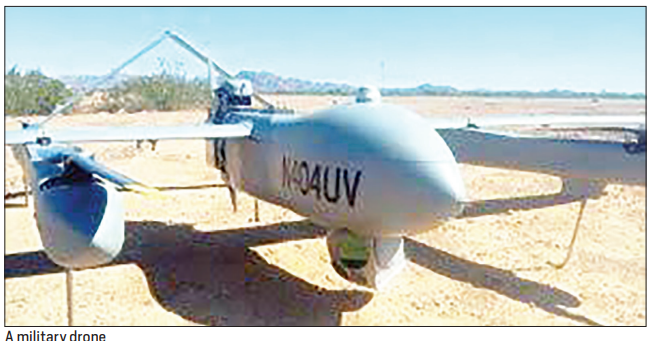
The use of excessive force, indiscriminate bombing, or poorly coordinated raids should never be normalized in democratic societies. “The deployment of modern surveillance technology such as drones, satellite monitoring, body cameras, and precision-targeting systems can also help reduce collateral damage. Military operations driven by technology and accurate intelligence are generally more effective and less destructive than operations based on assumptions or broad force deployment”, Ngozi said.
On his part, a rights activist, Biodun Olugbemide, noted that civilian casualties during military operations have become one of the most disturbing human rights concerns in Nigeria today. “Even though the military has a constitutional duty to defend the territorial integrity of the nation and combat armed groups threatening public safety, that responsibility must always be exercised within the framework of the law.
The right to life remains sacred under the Constitution, and no operational pressure should excuse avoidable loss of innocent lives. “The recurring reports of aerial bombardments hitting villages, markets, places of worship, and other civilian settlements point to the urgent need for improved intelligence gathering before any military strike is carried out.
Modern warfare requires precision, coordination, and accountability. If the military continues to rely on weak or unverified intelligence, innocent Nigerians will continue to pay the price for errors they know nothing about. “One of the most important measures that can reduce civilian casualties is the establishment of a stronger intelligence verification system involving multiple layers of confirmation before attacks are approved.
There should be collaboration between the military, local authorities, community leaders, and credible intelligence units familiar with the terrain. Communities often possess information capable of distinguishing criminals from innocent residents.
“There is also a need for advanced surveillance technology and operational training for military personnel involved in aerial missions. Countries battling insurgency and banditry across the world invest heavily in precision systems because they understand the consequences of mistakes. Nigeria cannot continue to lose innocent lives while claiming to protect the same citizens”, he added.
A senior lawyer, Bright Enado, argued that the Constitution, international humanitarian law, and various human rights treaties to which Nigeria is a signatory impose obligations on the state to protect civilians even during armed conflict or security operations, saying any military strategy that repeatedly results in civilian deaths demands urgent review.
Enado said: “It is not enough for authorities to simply deny involvement whenever allegations arise. The law requires accountability. In every civilized society, allegations involving mass casualties trigger immediate investigations by independent panels capable of determining what actually happened. Nigerians deserve openness, not silence or contradictions.
“One major problem confronting military operations in some conflict-prone regions is the overdependence on faulty intelligence. Intelligence gathering must go beyond rumors, assumptions, or unverified informants. Before airstrikes are approved, there should be comprehensive verification involving surveillance data, ground reports, and cross-checking from multiple sources.
“The government should also institutionalize civilian protection protocols within military operations. There must be clearly defined rules of engagement emphasizing proportionality, distinction, and necessity. Security forces must be able to distinguish between armed groups and ordinary villagers going about legitimate activities.
Markets and residential areas should never become easy targets because of intelligence failures. “In addition, the National Assembly must intensify oversight over military operations. Parliamentary committees responsible for defence and human rights should conduct periodic reviews into incidents involving civilian casualties. Democratic accountability cannot be suspended simply because the country is battling insecurity”.
In his comments, Onesmus Ruya noted that the recurring tragedy of civilians allegedly being caught in military bombardments reflects a deeper institutional problem that requires immediate attention. According to him, every democratic government has a responsibility to combat insecurity, but the methods adopted in doing so must comply with constitutional safeguards and internationally accepted standards.
“One of the central issues here is operational intelligence. In several reported incidents over the years, it has become evident that wrong coordinates, weak field verification, or unreliable informants may have contributed to civilian casualties. That should worry every Nigerian because it suggests that there are gaps within the intelligence architecture supporting military operations.
“To put an end to these occurrences, there must be reforms in the entire chain of operational decision-making. Intelligence supplied before strikes should pass through multiple layers of verification and risk assessment. Military commanders should be trained to prioritize civilian safety above operational haste.
“The military should also deepen engagement with local communities. Residents of affected communities understand their environment more than distant operatives relying solely on technological reports.
Effective collaboration with traditional rulers, local vigilantes, and community stakeholders may significantly reduce the possibility of mistaken attacks”, Ruya said. In his views, a Lagos-based lawyer, Ige Asemudara, called for a thorough investigation of the incidents, saying denial by military authorities is not enough.
He said: “I think we have addressed this issue before. First, we must be very careful not to echoe the narratives of insurgents. So, every allegation that there are civilian casualties after our military operations must be thoroughly investigated. “Secondly, it is very important that our officers and men of the military should be thoroughly screened to ensure that the insurgents, bandits or terrorists have not infiltrated their ranks.
This is because if the allegations are true, it is a pointer to a compromised military rank and file. It is dangerous. “So, government should independently investigate these complaints and verify their occurences. Once confirmed, there must be a rejig, proper trainings must be done, disciplinary measures must be taken and its reoccurence must be nipped in the bud. “Military deployment must be properly channeled to protect civilian populace and not to attack them negligently or recklessly”