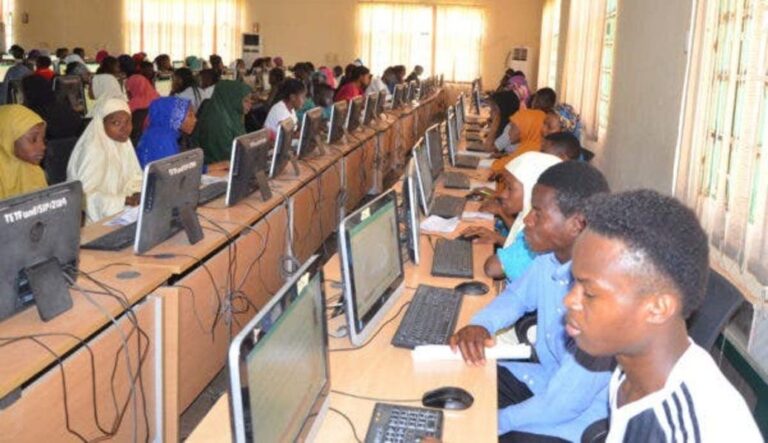




The West African Examinations Council (WAEC) has said that a total of 1,959,636 candidates from 24,207 senior secondary schools across the country enrolled for the ongoing Computer-Based WASSCE for School Candidates.
The examination, which covers a duration of eight months and three weeks, commenced on Tuesday, April 21, and will end on Friday, May 19, 2026.
The candidates comprise 958,564 male candidates, representing 48.92 per cent; and 1,001,072 female candidates, representing 51.08 per cent of the total number for this year’s examination, reflecting an increase in female candidates and a steady decline in male participation compared to last year.
The Head of the Nigeria National Office (HNO) of the West African Examinations Council (WAEC), Dr Amos Josiah Dangut, disclosed this yesterday, while addressing a press conference on the conduct of the ongoing CB-WASSCE for School Candidates, 2026.
Addressing journalists at the briefing held at the Yaba Headquarters, Lagos of the examination body, he stated that the Council introduced its maiden Computer-Based WASSCE for School Candidates 2025.
Dangut, who said the candidates would be examined in 37 subjects, comprising 97 papers, stated that some schools enrolled for the CBT examination mode, while many schools opted for the traditional pen-and-paper mode.
However, only about 450 schools, representing 5.8 per cent of the total schools against 40 schools last year, opted to sit the exam in Computer-Based format, while the remaining schools preferred the traditional pen-and-paper mode, an indication that Nigerians are not ready for a full-CBT examination mode.
“This year, more schools have chosen the CB-WASSCE option due to its seamless nature, alignment with global best practices, and success of last year’s option,” Dangut stated.
While explaining that this is also in line with the recommendation of the Federal Ministry of Education, he noted that some offshore schools, that is, in the neighbouring countries that use the WAEC syllabus, also opted for the CB-WASSCE, 2026.
Also, in its pursuit of leveraging modern Information and Communication Technology (ICT) to improve service delivery, the Council, he noted, has continued the serialisation of examination papers.
“This innovation ensures that no two candidates have the same question sequence, thereby upholding the academic and moral integrity of the National Policy on Education. This year, we have further refined this system to enhance its efficiency,” he added.
HNO, who also told journalists at the briefing that the National Identification Number (NIN) has been included in the candidates’ registration process in compliance with the Federal Government directives, said the results of the examination would be released 45 days after the last paper, while the candidates’ certificates would be issued 90 days after the release of the results.
On security challenges in some parts of the country, the HNO said the Council acknowledges the security challenges in some parts of the country, while conducting examinations under such conditions has been difficult but surmountable.
In view of this, the HNO stated that the Council has continued to partner with the Nigeria Police Force, all security outfits and state governments to provide security for the smooth conduct of the examination.
We remain grateful for their collaborative efforts, especially in combating examination malpractice and by providing and ensuring adequate safety and security of the candidates, examiners and examination materials.
However, he appealed to the politicians to put the children in their consideration during their campaigns, as the Council has recorded incidents where movement of examiners and supervisors with the examination materials was being obstructed by political campaign trains.
He warned rogue website operators that WAEC will not condone their activities, while parents and guardians should desist and avoid patronising them, as doing so jeopardises their children’s future.
WAEC, he noted, in collaboration with the police would track and prosecute offenders, even as he explained that Council is decisively addressing examination malpractice, and penalties would be meted out to erring candidates, supervisors, and schools, as approved by the Nigeria Examinations Committee (NEC).