
Nigeria is positioning its clean cooking programme as a central pillar of its climate strategy, targeting as much as $3bn annually in climate finance over the next decade, as it tightens government oversight of carbon projects to rebuild investor confidence in a market facing credibility concerns.
The push comes amid renewed scrutiny of voluntary carbon markets over weak verification standards, transparency gaps and risks of double counting, following recent setbacks in Africa, including the collapse of a carbon project developer in Kenya.
For investors, attention has shifted towards whether projects are formally approved by host governments, whether emissions reductions can be independently verified, and whether credits are properly accounted for under national climate targets.
Nigeria has responded by building a formal carbon market architecture under its National Carbon Market Activation Policy and related climate regulations.
At the centre of this system is the National Council on Climate Change, which serves as the approving authority for carbon projects and issues Letters of Authorisation.
These approvals allow emissions reductions from projects to be counted within Nigeria’s national climate accounting under Article 6 of the Paris Agreement.
The country introduced the Carbon Market Activation Policy in 2024 to provide a legal and institutional framework for issuing and trading carbon credits.
Clean cooking sits at the heart of this strategy.
“This policy is not just a framework; it is a clarion call for collective action and investment in our future,” the Director of Press, Information and Public Relations at the Ministry of Information and National Orientation, Dr Adebayo Lawrence Thomas, said in a statement. “Our efforts reflect our ambition to create a replicable model for carbon market development across Africa.”
Estimates suggest the framework could mobilise between $2.5bn and $3bn annually for climate-related investments over the next decade, positioning Nigeria among the more structured emerging players in global carbon markets.
In practical terms, Nigeria is signalling that carbon credits generated within its borders will increasingly require government approval before they can be recognised as credible and tradeable assets.
Clean cooking has emerged as the flagship of this approach, reflecting both Nigeria’s emissions profile and its development challenges.
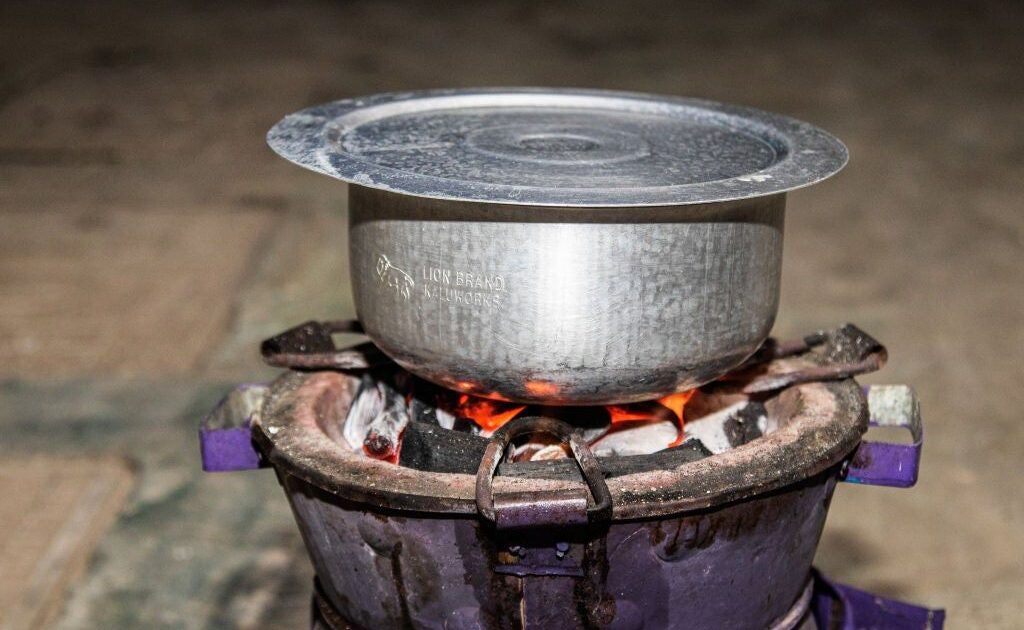
More than 80 per cent of households still rely on biomass fuels such as firewood and charcoal. This contributes to deforestation, indoor air pollution and respiratory illnesses, while also increasing greenhouse gas emissions. Adoption of cleaner cookstoves remains low, largely due to affordability constraints.
Carbon finance is being positioned as the key mechanism to bridge that gap by subsidising the cost of cleaner cooking technologies.
One of the most active players in this space is BURN, a clean cookstove manufacturer and carbon project developer operating across Africa.
The company produces fuel-efficient wood and charcoal stoves and generates revenue by selling verified emissions reductions as carbon credits. Proceeds from these sales are used to subsidise stove costs, reducing prices that can be around 50 to as low as 3 for some low-income households.
A carbon credit represents one tonne of carbon dioxide, or its equivalent, reduced or removed from the atmosphere through projects such as clean cooking, renewable energy or reforestation. Companies purchase these credits to offset emissions, while project developers use the revenue to fund further climate action.
BURN says it has been active in Nigeria for about five years, during which it has sold roughly one million clean cookstoves and reached more than 1.4 million people.
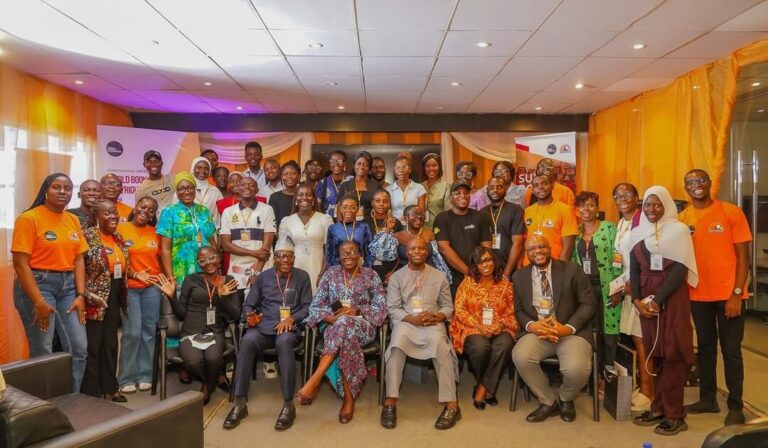
At a roundtable in February, Senior Special Assistant to the President on Climate Technology and Operations and Co-chair of the Clean Cooking Alliance, Olamide Fagbuji, described clean cooking as a “practical transition” capable of delivering both climate and health benefits if key barriers are addressed.
“When technology, strong standards, local manufacturing and affordable financing align, it becomes a fast route to deliver our climate and energy commitments,” he said.
Nigeria’s evolving framework is aimed at resolving a key tension in carbon markets: how to mobilise private capital while maintaining sovereign control over emissions accounting.
Letters of authorisation, once seen as procedural, are now emerging as critical investment signals. Projects integrated into national systems are increasingly viewed as more credible, less exposed to regulatory reversal, and more aligned with international accounting standards.
For governments, the approach offers greater control over how emissions reductions contribute to national climate targets, while also opening a structured pathway for private investment in climate infrastructure.
“The priority now is converting policy momentum into bankable programmes, backed by credible monitoring, clear rules and coordinated action,” Senior Special Assistant to the President on Climate Finance and Stakeholder Engagement, Ibrahim Shelleng, stated.
The Federal Ministry of Industry, Trade and Investment has also backed the initiative, saying regulatory clarity and investment incentives will be key to scaling participation.
“We are committed to facilitating industrial growth, enhancing trade policies and improving market access, thus creating an enabling environment for private sector engagement,” the Permanent Secretary of the Federal Ministry of Industry, Trade and Investment, Ambassador Nura Rimi, stated.
Despite the policy progress, Nigeria still faces a major challenge: ensuring that regulatory credibility translates into large-scale delivery on the ground.
Globally, inefficient cooking is estimated to produce nearly one gigatonne of carbon dioxide-equivalent emissions annually, making it one of the largest untapped mitigation opportunities in developing economies. In Nigeria, it also sits at the intersection of climate policy, public health and household welfare.