



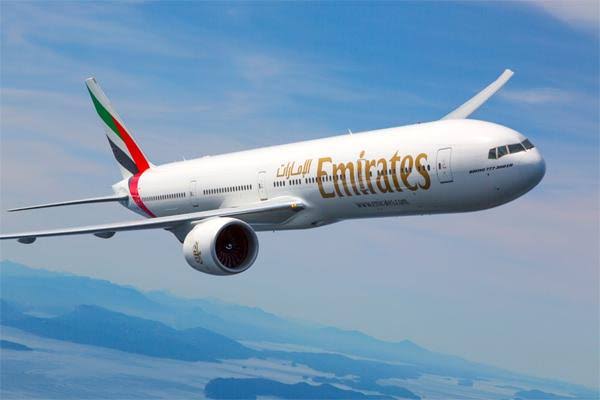
In the wake of disruptions caused by the recent Middle East conflict that led to the grounding of hundreds of aircraft, global airline Emirates has made a strong operational recovery, reinstating 96 per cent of its flight network and pointing to improved stability in international air travel routes.
The airline, which was forced to scale down operations at the height of the disruption, said it has resumed services across key regions, including the Americas, Europe, Africa, West Asia, the Middle East, the Gulf Cooperation Council, the Far East, and Australasia.
In a statement made available to newsmen on Tuesday, Emirates disclosed that it currently operates flights to 137 destinations across 72 countries, with more than 1,300 weekly frequencies, representing about 75 per cent of its pre-disruption capacity.
Highlighting its steady recovery, Emirates stated, “This marks a significant milestone in our recovery journey. We are offering more flights, more seats and more options each day while reaffirming Dubai’s position as a vital hub through which global travel moves.”
For many passengers, the disruption created uncertainty, delays, and route changes. Yet, even at reduced capacity, Emirates managed to transport approximately 4.7m passengers during the period.
At the heart of Emirates’ recovery strategy is not just restoring routes, but maintaining its signature passenger experience, an area where the airline has built a global reputation.
“Wherever Emirates customers choose to fly, they can expect a best-in-class onboard and on-ground experience. This is defined by exceptional comfort, genuine hospitality, and a level of service that has set the standard for long-haul travel,” it added.
The airline said passengers are treated to regionally inspired, multi-course meals crafted by award-winning chefs, alongside a wide selection of premium beverages: “There’s really no such thing as a long flight anymore. Our goal is to make every journey as engaging and comfortable as possible.
“Customers who need to stay connected can do so seamlessly at 40,000 feet. We now have Starlink connectivity live on 28 aircraft, delivering ultra-fast, reliable internet in the air.”
Akinlotan is a journalist at Punch Newspapers with over eight years of experience reporting on politics, social justice, motoring, railways, and aviation. His work focuses on accountability, public interest, and social change, producing stories that inspire reform and amplify underrepresented voices. Akinlotan’s reporting reflects extensive newsroom experience, editorial insight, and a strong commitment to accurate, impact-driven journalism.