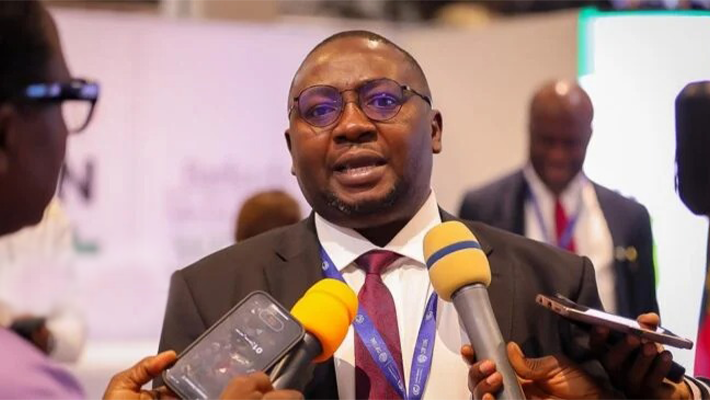

Nigeria is stepping up an ambitious overhaul of its port system in a highstakes bid to secure a dominant position in intra-African trade under the African Continental Free Trade Area (AfCFTA), Managing Director of the Nigerian Ports Authority (NPA), Dr. Abubakar Dantsoho, has said.
Addressing industry stakeholders at the AMJON 2026 Annual Conference on Thursday, Dantsoho described port modernisation as a critical economic imperative that will shape Nigeria’s competitiveness in a rapidly integrating continental market.
With AfCFTA lowering trade barriers across Africa, he warned that countries with faster, more efficient and technology-driven ports will capture a disproportionate share of cargo traffic and investment flows.
“Nigeria’s geographical advantage alone is no longer sufficient,” he said. “Efficiency, speed, innovation and reliability will define leadership in this new era.” At the core of the NPA’s strategy is a broad reform programme targeting long-standing structural bottlenecks that have historically weakened Nigeria’s port competitiveness.
Dantsoho highlighted ongoing infrastructure upgrades at Apapa and Tin Can Island ports, aimed at improving berth productivity, expanding capacity and reducing vessel turnaround time key indicators of port efficiency.
He also underscored the growing role of deep seaports, particularly Lekki Port, in transforming Nigeria’s maritime landscape by accommodating larger vessels and boosting cargo throughput.
Industry observers view these developments as crucial to easing congestion at legacy ports while positioning Nigeria to handle rising trade volumes expected under AfCFTA.
Beyond physical infrastructure, the NPA is accelerating a shift toward digitalisation to tackle inefficiencies associated with manual processes and fragmented systems.
Central to this transition is the Port Community System (PCS), alongside the Federal Government’s National Single Window initiative, both designed to integrate port stakeholders, streamline documentation and enhance transparency.