


Two startups pitching at the Ilorin Innovation Hub Demo Day are attempting to address structural weaknesses in Nigeria’s telecom infrastructure, targeting chronic fibre-optic cable disruptions and heavy reliance on diesel-powered energy systems that underpin mobile and internet connectivity.
The solutions, presented to investors and infrastructure operators on Friday, reflect a broader shift in Nigeria’s startup ecosystem towards industrial-scale problems in energy, connectivity and digital infrastructure rather than purely consumer-facing applications.
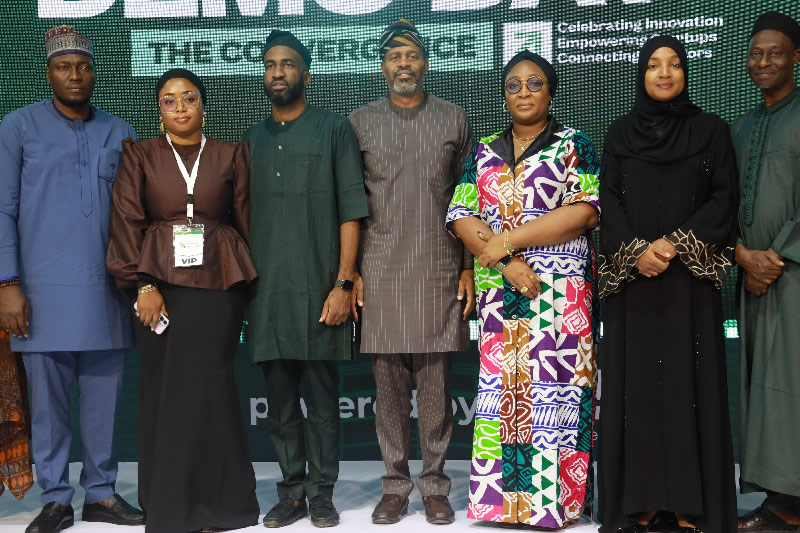
The Ilorin event brought together venture capital firms, corporate investors and telecom infrastructure providers, including IHS Nigeria, as part of a year-long incubation programme designed to convert early-stage ideas into investable businesses.
Among the standout pitches were Flowsoft, which focuses on real-time monitoring of fibre networks, and InsightWorks Limited, which is developing industrial battery systems to reduce diesel consumption at telecom base stations.
For Flowsoft, the core challenge is not only fibre cuts, which remain a persistent cause of network outages across Nigeria, but also the difficulty operators face in locating faults quickly once they occur.
Co-founder of Flowsoft, Nelson Bassi, said the company was building systems to improve visibility across fibre infrastructure, which forms the backbone of internet connectivity for mobile operators, ISPs and enterprises.
“We monitor and protect critical fibre infrastructure. In the age of connectivity, the backbone is fibre. When it gets cut, everyone gets disconnected,” he told The PUNCH.
The startup combines hardware sensors installed along fibre routes with artificial intelligence software that analyses signal disruptions to detect faults in real time.
“The hardware is planted at strategic sites where fibre is plugged in. It sends periodic pings and monitors the fibres in sequence,” Bassi said. “That data is then analysed to predict cuts and degradation.”
He said the problem in current systems is not just the occurrence of fibre cuts but also the time required to locate them.
“When there is a fibre cut across a city like Lagos, operators only know that services are down. They don’t know where the cut happened,” he said. “They send technicians out blindly, and it can take hours or days.”
Flowsoft claims its system reduces that response window significantly. “We can tell you in the same second the cut happens and exactly where it is,” Bassi said. “Instead of hours or days, repairs can happen in minutes.”
The company said it is already working with several internet service providers and is targeting infrastructure operators, including telecom tower companies.
Even where redundancy systems exist, Bassi argued that they are not always sufficient to prevent outages.
“A construction activity can cut multiple redundant routes at once,” he said. “Our solution ensures operators know immediately and can respond faster.”
While Flowsoft focuses on connectivity visibility, InsightWorks Limited is targeting another major cost driver in Nigeria’s telecom sector: diesel consumption at off-grid and semi-urban base stations.
Founder of InsightWorks and a control systems engineer, Dapo Sosanya, said the company is developing industrial-grade battery systems designed specifically for telecom infrastructure.
“Our solution is a sustainable energy system for cell towers. Many remote sites still rely heavily on diesel, and we are helping reduce or eliminate that,” he said.
Unlike residential inverters, Sosanya said the system is designed for industrial applications with higher reliability requirements. “It is not a home inverter. It is built to global engineering standards for telecom operations,” he said.
The system integrates battery storage with solar charging capability and an intelligent energy management system that optimises load switching between generators and batteries.
It is designed to provide up to 12–14 hours of autonomous power support, reducing reliance on diesel generators. “If a generator is running for 24 hours, the system can take over for 10 to 14 hours,” Sosanya said. “That translates into significant fuel savings for operators.”
He said the system automatically switches loads between generator and battery depending on demand, improving efficiency and reducing operational costs.
Beyond cost savings, the system also has environmental implications, given the carbon intensity of diesel-powered telecom infrastructure across Africa.
The pitches took place against the backdrop of increasing collaboration between startups and large infrastructure operators.
IHS Nigeria, one of Africa’s largest telecom infrastructure companies, has been supporting the Ilorin Innovation Hub through training, funding and access to operational environments for product testing.
Sosanya said the support had been critical in moving his startup beyond concept development. “IHS has been very fantastic. They provided training not just in engineering but also on how to take a product from concept to market,” he said.
He added that access to infrastructure for pilot testing was particularly important. “They are also providing opportunities for startups to pilot products within their network. That is enabling real-world validation,” he said.
The focus on fibre monitoring and energy optimisation reflects a broader shift in Nigeria’s startup ecosystem, where founders are increasingly targeting infrastructure inefficiencies rather than consumer applications alone.
Organisers of the Ilorin Innovation Hub said the aim is to build startups that address systemic constraints in connectivity, energy and digital services – areas that continue to limit economic productivity.