


…Warns Nigeria Risks Falling Behind
Former Anambra State governor and African Democratic Party (ADC) presidential hopeful, Peter Obi, has called for urgent reforms in Nigeria’s education sector, warning that continued underinvestment could further weaken the country’s global competitiveness.
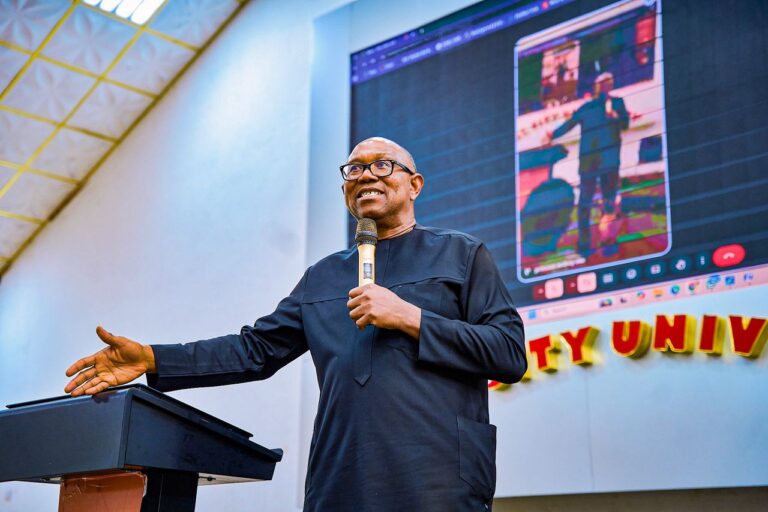
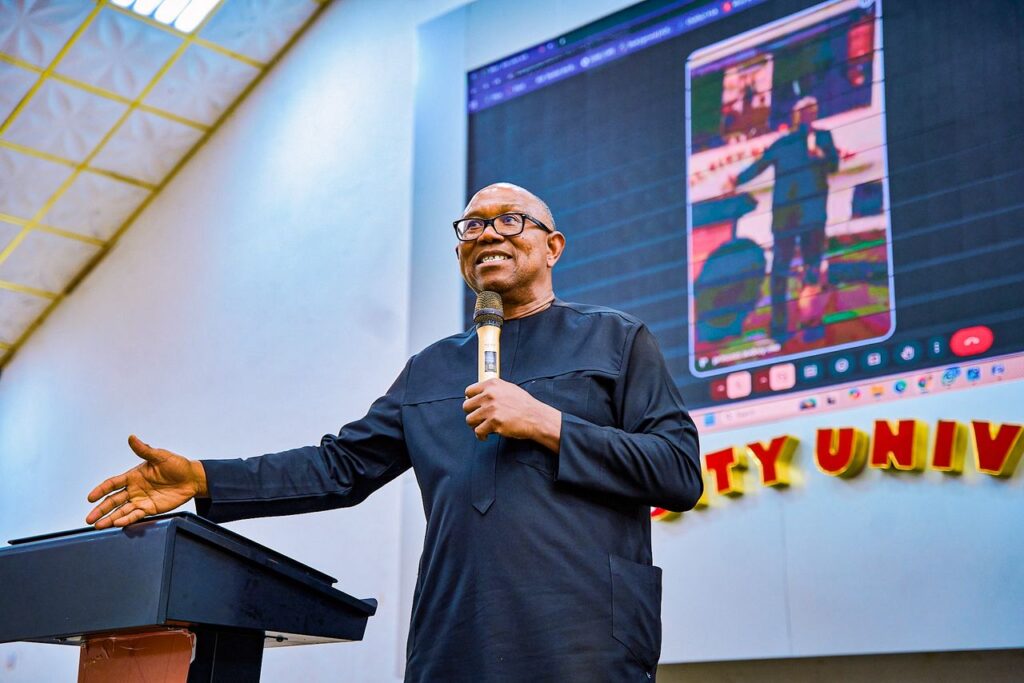
Obi, a 2023 Presidential candidate of the Labour Party (LP), made this call while delivering a lecture at Coal City University in Enugu, where he spoke on repositioning Nigeria’s education system for national development.
This is even as he commended the institution’s leadership for promoting academic excellence and fostering national dialogue.
The ADC chieftain, who highlighted the importance of education, stressed that national progress is closely tied to the quality of a country’s human capital.
“I also seized the opportunity to commend the Vice-Chancellor and the entire management of the University for their commitment to academic excellence and for providing a platform for meaningful national discourse.
READ ALSO:
“No nation rises above the quality of its education system,” he stated.
He pointed to Nigeria’s Human Development Index (HDI) score of 0.548 and rising unemployment as indicators of deeper structural challenges.
“Nigeria’s current low Human Development Index (HDI) score of 0.548 and persistent high unemployment are clear symptoms of chronic underinvestment in education and human capital development,” he said.
Obi also cited budgetary concerns, noting that Nigeria’s allocation to education remains below global standards.
“Nigeria allocates less than 10% of its budget to education, far below the 15–20% global benchmark,” he said.
He added that youth unemployment and underemployment exceed 30%, while life expectancy and literacy levels remain low.
“Youth unemployment and underemployment exceed 30%, while life expectancy remains among the lowest at 50–55 years. Literacy levels hover below average at 59% and 65%,” he said.
Drawing comparisons with countries such as Indonesia, Egypt, and South Africa, Obi noted that consistent investment in human capital has driven their progress.
“This stronger progress was through sustained and deliberate investment in education, healthcare, and broader human capital development. The difference is not in talent, but in priority and policy consistency,” he said.
The former governor called for a comprehensive overhaul of Nigeria’s education funding model, alongside stronger collaboration between the public and private sectors.
“We must move beyond rhetoric and confront these realities with urgency,” he said.
Obi also argued for the inclusion of private institutions in intervention programmes.
“It is difficult to justify excluding private universities from intervention frameworks like TETFund when they are actively contributing to national capacity building,” he added.
He emphasised that education should be seen as a strategic investment rather than a social obligation.
“Education is not charity; it is the foundation of national growth and the gateway to global competitiveness,” he said.
He concluded by expressing optimism about the country’s future if the right policies are implemented.
“With sustained investment in education and a deliberate focus on human capital development, a new Nigeria is not only possible — it is inevitable,” he said.