


- …sign MoU on data sharing
The Central Bank of Nigeria (CBN) and the National Communications Commission (NCC) have forged collaboration to curb prevalence of electronic financial fraud associated with the digital payment system by improving consumer protection.
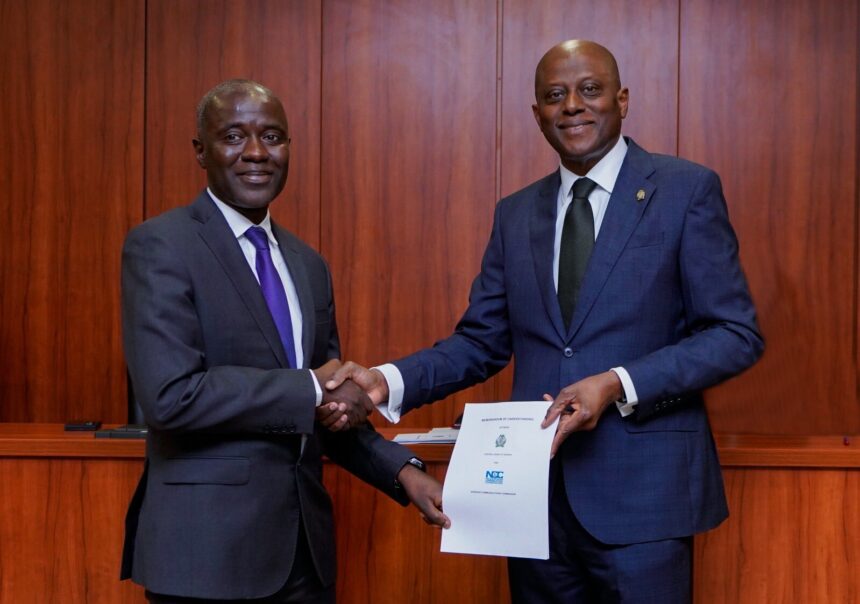
CBN Governor, Mr Olayemi Cardoso, and Executive Vice Chairman of NCC, Dr Aminu Maida, signed a Memorandum of Understanding (MoU) on data sharing and information management on Monday in Abuja. The MoU, among other objectives, seeks to enhance effective transaction monitoring and functional fraud reporting channels.
According to the Nigeria Inter-Bank Settlement System (NISS), Nigerian financial institutions lost N52.26 billion to digital payment fraud in 2024, marking a significant 196 per cent surge in losses compared to 2023. These losses primarily occurred through web, mobile, and POS channels, with 2024 serving as a peak year for fraudulent activities before a reported decline in 2025.
Speaking at the signing ceremony, which was held at CBN headquarters in Abuja, Cardoso said the rise in digital adoption had attracted sophisticated fraud schemes.
However, he added that the scale and complexity of today’s digital financial ecosystem required a more comprehensive, forwardlooking, and enduring framework. “This MoU provides thaframework. First, we are reinforcing the stability and integrity of Nigeria’s payment system.
As we deepen instant payments, expand QR-based payments, and advance open banking and API interoperability, it is essential that infrastructure across both sectors is aligned—so that transactions are reliable, services scale smoothly, and consumers enjoy safe and seamless experiences.”
In his remark, Maida said CBN and NCC must work together in the best interest of the Nigerian consumer. “The MoU also reflects our shared commitment to building a stronger digital economy—one that is trusted not only by the Nigerian people, but also by the global business community. “Our collaboration with the Central Bank is not new. Over the years, our two institutions have demonstrated the value of close regulatory coordination.
A notable and recent example is our collective effort in resolving the long-standing USSD debt impasse—an intervention that restored confidence, preserved service continuity, and safeguarded the interests of consumers, telecom operators, and financial institutions alike.
Earlier in a preliminary remark, Mrs Yusuf Rakiya Opeyemi said digital payment system depended on resilient telecommunication network. “Across Nigeria, our citizens and businesses increasingly depend on digital channels to save, pay, trade, access credit, and build livelihoods.
Those channels, in turn, depend on resilient telecommunications networks, trusted identity systems, and secure data flows. “Put simply: when the communications sector is strong, the financial system is more inclusive and more efficient; and when the financial system is sound, investment and innovation in the digital economy can thrive. That is why this MoU is not merely an administrative document—it is a practical statement of national interest,” she said.