
The Nigeria Labour Congress (NLC) has directed workers in states yet to fully implement the 2024 National Minimum Wage Act to boycott traditional indoor May Day celebrations and instead take to the streets in protest on May 1, 2026.
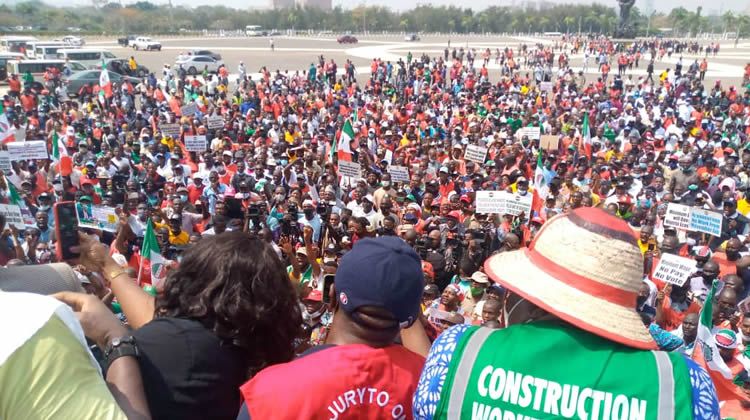
In a directive issued by its National Secretary, Comrade Emmanuel Ugboaja and sighted by newsmen on Friday, the NLC said workers in defaulting states must organise peaceful street processions to press their demands for full compliance with the new wage law.
The Labour Union described the failure of some state governments to implement the law as a “violation of workers’ rights” and an “assault on the dignity of Nigerian workers.” According to the directive, workers were to gather at labour houses, union secretariats, or public squares by 7:00 a.m. on May Day before embarking on organised marches through major streets in their respective state capitals.
The directive partly reads: “May Day, the international day of the working class, has always been a day of solemn reflection on the state of workers’ rights and a celebration of our collective efforts in building the wealth of nations.
“Regrettably, several state governments have continued to violate the 2024 National Minimum Wage Act, refusing to fully implement its key provisions, including consequential adjustments for senior workers, regular and timely payment of the new wage, and extension of coverage to local government staff, primary school teachers and health workers.”
The labour movement also ordered the suspension of all official May Day receptions or indoor ceremonies organised in collaboration with state governments that have not complied with the wage law.
“There shall be no May Day ceremonies inside government houses, banquet halls, or any enclosed venue hosted by or in collaboration with defaulting state governments. Official receptions are hereby suspended.”
Instead, the union instructed its state councils to plan protest routes that would terminate at strategic government institutions such as Government Houses, State Houses of Assembly, or offices of the Heads of Service.