



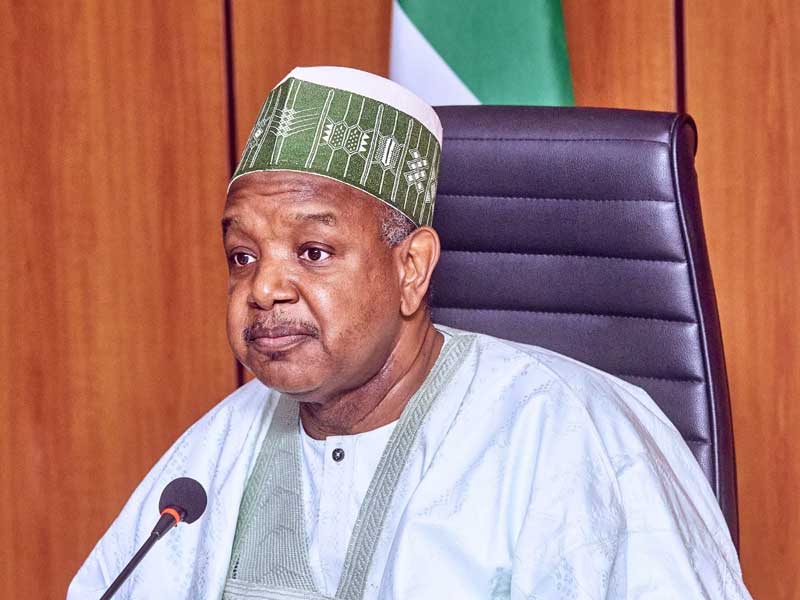
The Minister of Budget and Economic Planning, Senator Abubakar Bagudu, has made a strong case for women’s empowerment, arguing that it’s critical to Nigeria’s economic growth.
Delivering his keynote address at the World Bank Group’s Women Empowerment Policy and Jobs Forum in Abuja on Tuesday, the Minister emphasised the critical role of women in driving the country’s economic growth, saying they need to be empowered to increase their productivity.
He addressed the theme, “Women, Jobs, and Markets: Unlocking Inclusive Opportunities in Nigeria,” and said there is an urgent need to remove systemic barriers that limit their full potential.
The minister noted that women across Nigeria were deeply engaged in economic activities, including farming, trading, and small-scale production, but regretted that their contributions remained largely under-recognised and undervalued.
“The issue before us is not whether women are working hard enough,” he said, adding, “It is whether we are providing them with the right opportunities to succeed.”
He pointed out that many women continue to face structural challenges, including limited access to finance, inadequate market access, and insufficient infrastructure and support systems.
These barriers, he explained, lead to low returns despite long hours of labour, representing not only a social concern but also a significant economic inefficiency.
Bagudu stressed the need for a strategic shift from subsistence-level activities to productivity-driven enterprises, calling for investment in improved production processes, value addition, and better market integration to enable women to scale their businesses and enhance their economic impact.
He emphasised that achieving meaningful progress requires coordinated efforts across all levels of government, alongside strong collaboration with development partners and the private sector.
He also emphasised the importance of implementing practical, targeted, and responsive policies to address the diverse challenges women face across different communities.
Bagudu stated that President Bola Tinubu’s administration was already addressing these impediments through its Renewed Hope Ward Development Plan, which he explained would decentralise development by energising local economies across the country’s 8,809 wards.
According to him, this development strategy will boost local economies by providing targeted support to women and small-scale entrepreneurs, thereby increasing local productivity.
Bagudu highlighted positive outcomes from programmes supporting women in agriculture and other sectors, noting that access to finance, training, and modern technologies has consistently increased productivity, raised incomes, and made women’s businesses more sustainable.
“These are not isolated successes,” he said, pointing out, “They are models we must scale up nationwide to achieve deeper, more inclusive economic impact.”
The minister concluded by reiterating that women’s economic empowerment is central to Nigeria’s national development strategy.
He emphasised that empowering women is not about portraying them as dependent, but about recognising their strength and removing barriers so they can compete, lead, and contribute meaningfully to economic growth.
“By unlocking women’s full potential, we can accelerate job creation, reduce poverty, and achieve sustainable growth for our country,” he stated.








