


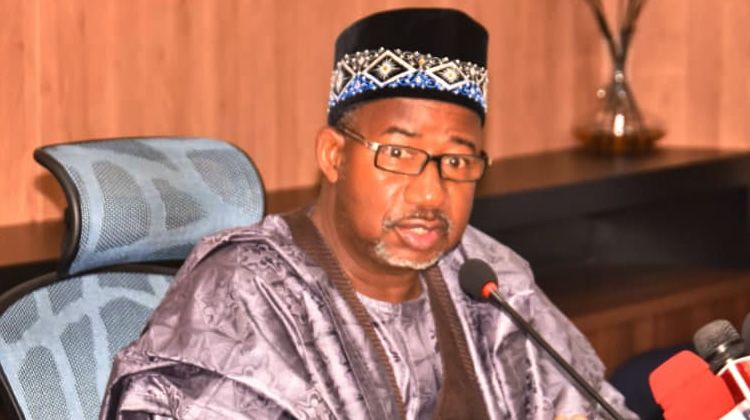

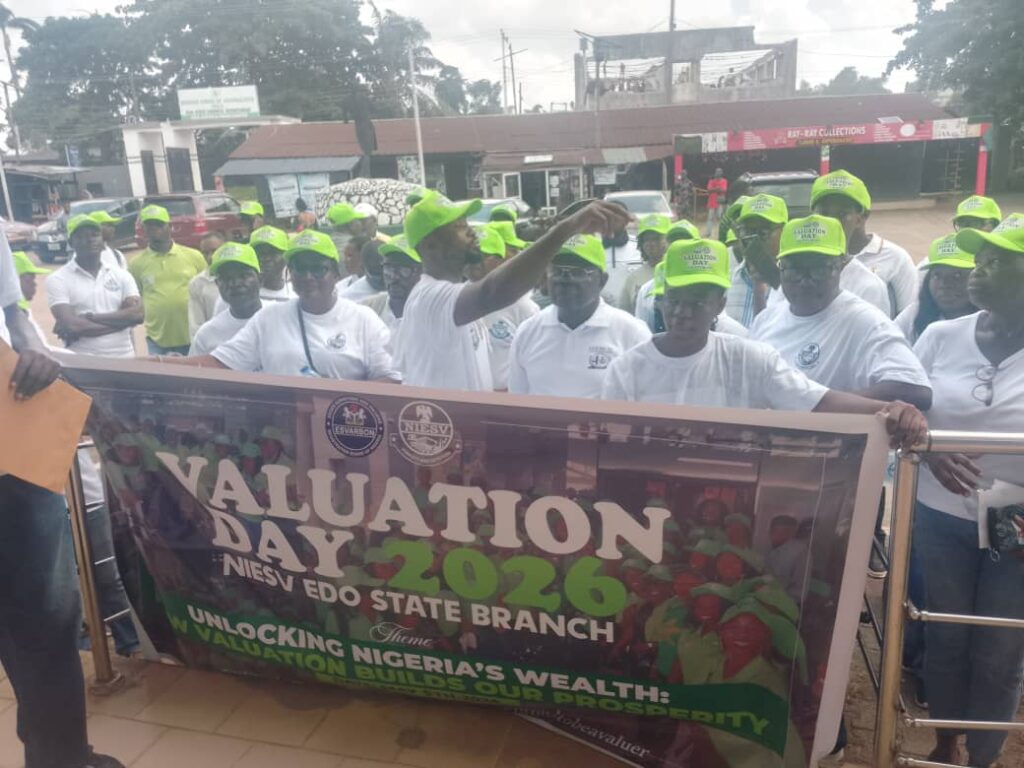
The Chairman, Nigerian Institution of Estate Surveyors and Valuers (NIESV), Edo State Branch, Rogers Isiokherhe, has said that valuation is a tool for strategic national development and not a mere technical exercise.
Isiokherhe said valuation plays a critical role in transforming dead capital into active capital when assets are properly valued and documented, adding that they can be used as collateral for loans and credit.
Speaking at the Press Centre of the Nigerian Union of Journalists, Edo State Council, on Tuesday during a rally to mark the 2026 Valuation Day with the theme “Unlocking Nigeria’s Wealth: How Valuation Builds Our Prosperity”, he maintained that “government must embrace data,” adding that “reliable property databases, market information systems, and valuation standards are the backbone of a modern economy.”
Isiokherhe said Nigeria’s prosperity will not come from discovering new wealth, but from recognising and maximising the wealth it already has.
“I stand before you today to speak on a subject that is both technical and transformative — valuation, and its critical role in unlocking Nigeria’s wealth and building sustainable prosperity. Nigeria is not a poor country. Let us be clear about that. We are a nation richly blessed with land, natural resources, vibrant cities, and an energetic population. Yet, despite these immense assets, we continue to grapple with poverty, inequality, and underdevelopment.
“The question is not whether wealth exists, it is whether we truly understand, measure, and utilise it effectively. This is where valuation comes in.
“Valuation, at its core, is the science and art of determining the true worth of assets — land, buildings, infrastructure, businesses, and even intangible resources. It provides the foundation upon which economies are structured, investments are made, and prosperity is built.
“One of the greatest challenges facing Nigeria today is what economists describe as dead capital. Across our cities and rural communities, millions of properties exist without proper documentation, without clear titles, and without recognised market value.”
He said such assets, though physically present, cannot be leveraged for credit, investment, or economic growth, adding that “they are, in essence, invisible to the formal economy.”
Continuing, he said: “Imagine a Nigeria where every parcel of land is properly titled, every property accurately valued, and every asset integrated into the financial system.
“That is not just administrative reform — it is economic liberation. Valuation plays a critical role in transforming dead capital into active capital. When assets are properly valued and documented, they can be used as collateral for loans and credit.
“They attract both local and foreign investment, they increase government revenue through fair and transparent taxation, and they create confidence in the economy.”
“For a country like Nigeria, striving for diversification beyond oil, valuation becomes even more important. Real estate alone contributes significantly to GDP in developed economies, not just because land exists, but because its value is properly captured, managed, and optimised. Furthermore, valuation ensures equity and fairness.” He said.








